CM Mohan Yadav Outlines Tribal Welfare Push in MP
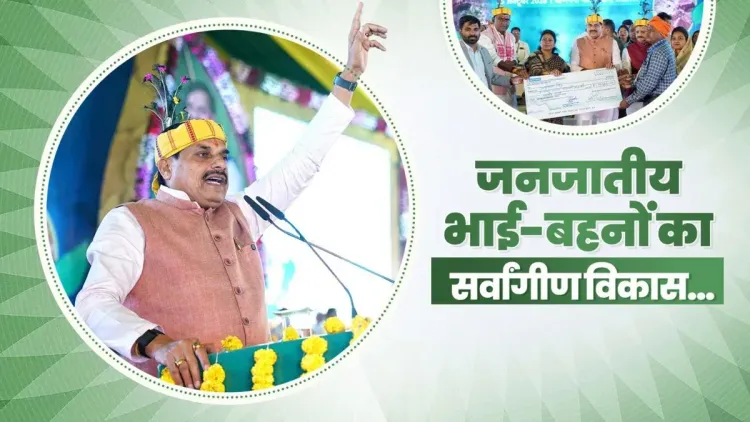
Synopsis
MP CM Dr. Mohan Yadav highlights a tribal welfare package: 75% bonus for tendu leaf collectors, MSP on 32 minor forest produces, ₹1,500 aid for Baiga, Bharia and Sahariya women, 17,000 homes and water to 28,000 households in Shahdol.
Key Takeaways
Tendu leaf collectors in Madhya Pradesh are receiving a 75% bonus over the base procurement price under the state's MFP policy.
A minimum support price mechanism covers 32 minor forest produce items , aimed at stabilising year-round income for forest-dependent tribal households.
Women from the Baiga, Bharia, and Sahariya Particularly Vulnerable Tribal Groups are receiving direct financial assistance of ₹1,500 each.
Approximately 17,000 houses have been constructed for Baiga families in Shahdol district , eastern Madhya Pradesh.
Piped drinking water has been extended to 28,000 households in Shahdol as part of the state's water delivery drive.
The interventions align with the national MSP for MFP framework introduced in 2013 and the Forest Rights Act of 2006 .
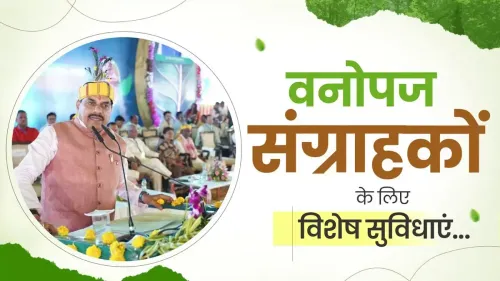
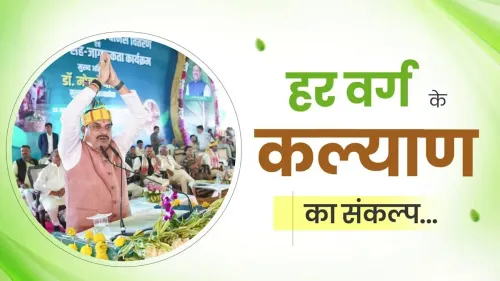
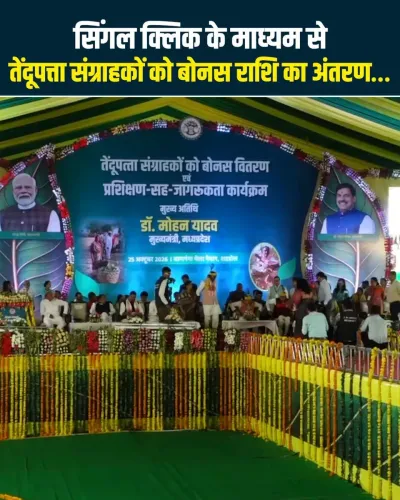
Forests, families, and a long-pending promise of economic dignity — Madhya Pradesh Chief Minister Dr. Mohan Yadav on Sunday, 25 October 2026, detailed a cluster of welfare interventions targeting the state's most vulnerable tribal communities, anchoring his account in the specific language of numbers: housing, water, bonuses, and price guarantees.
The Chief Minister's post, shared in Hindi, states that tendu leaf collectors are receiving a 75% bonus, that a minimum support price (MSP) covers 32 minor forest produce (MFP) items, and that women from the Baiga, Bharia, and Sahariya communities — three of Madhya Pradesh's Particularly Vulnerable Tribal Groups — are receiving a direct financial assistance of ₹1,500. In Shahdol district, he says, approximately 17,000 homes have been constructed for Baiga families and piped water has been extended to 28,000 households.
Who are the Baiga, Bharia, and Sahariya — and why do they need targeted support?
These three groups carry a formal designation that marks out their particular vulnerability. India classifies communities as Particularly Vulnerable Tribal Groups (PVTGs) — a category that acknowledges pre-agricultural lifestyles, declining or stagnant populations, and acute socio-economic marginalisation. The Baiga are concentrated across eastern Madhya Pradesh and parts of Chhattisgarh, traditionally practising shifting cultivation and depending heavily on the forest floor for sustenance. The Sahariya straddle Madhya Pradesh and Rajasthan, and the Bharia are found in districts including Shahdol, with livelihoods rooted in minor forest produce collection.
For all three, cash income is seasonal, sporadic, and hostage to market rates for forest goods — which is precisely where the MSP mechanism is designed to intervene. The national framework for MFP price support was introduced in 2013 by the Ministry of Tribal Affairs, building on the foundational rights established by the Scheduled Tribes and Other Traditional Forest Dwellers (Recognition of Forest Rights) Act, 2006. Madhya Pradesh, with one of India's largest Scheduled Tribe populations, sits at the centre of that policy architecture.
Tendu leaf, 32 produces, and the economics of the forest floor
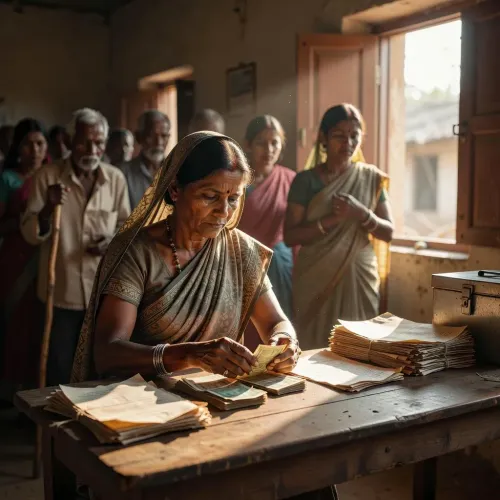
Tendu patta — the leaf used to roll traditional bidis — is the single most significant minor forest produce collected seasonally across the state. A 75% bonus over the base procurement price represents a meaningful top-up for collectors whose annual income cycles around this brief harvest window. The extension of MSP protection to 32 MFP items — a list that includes mahua, lac, and other forest goods — is designed to smooth the wider income curve across the year, reducing the vulnerability that comes with dependence on a single seasonal crop.
Shahdol's 17,000 homes and the infrastructure baseline
Shahdol, a district in eastern Madhya Pradesh with a substantial tribal population, is cited by Dr. Yadav as the focus of housing and water delivery. The claim of ~17,000 homes built for Baiga families and water connections reaching 28,000 households places these interventions within a broader national push — through the Pradhan Mantri Awas Yojana (Gramin) framework and the Jal Jeevan Mission — to bring basic infrastructure to PVTG habitations that have historically been last in line.
Madhya Pradesh governments across political cycles have periodically raised MFP procurement prices and announced PVTG-targeted housing drives, typically aligned with budget cycles and election calendars. The current announcements follow that pattern, with the state's tribal sub-plan and central PVTG development programmes providing the funding architecture. What will determine their lasting impact is the pace of actual disbursement and infrastructure completion — a question the next state budget and field-level progress reports will begin to answer.
For the women of Baiga, Bharia, and Sahariya households waiting on ₹1,500 and a roof that doesn't leak, the arithmetic of intent must eventually become the arithmetic of delivery.
Point of View
MSP coverage, housing counts and water connections — signals a deliberate shift toward outcome-based political communication on tribal welfare, a constituency that has historically been courted with promises rather than numbers. The focus on PVTGs, India's most marginalised forest communities, also reflects the competitive political geography of eastern Madhya Pradesh, where districts like Shahdol carry significant Scheduled Tribe voter weight. Anchoring the message in the ₹1,500 direct cash transfer to women of three named groups is a calculated move that personalises an otherwise abstract policy architecture. Whether the stated figures translate into verified ground-level delivery will be the real test — and one that civil society and opposition benches are likely to press in the coming legislative session.
NationPress
25 Oct 2026
Frequently Asked Questions
What is the 75% bonus announced for tendu patta collectors in Madhya Pradesh?
According to CM Dr. Mohan Yadav, tendu leaf collectors in Madhya Pradesh are receiving a 75% bonus over the base procurement price, providing a significant income supplement during the seasonal harvest window.
Which 32 minor forest produces have MSP in Madhya Pradesh?
The state has placed 32 minor forest produce items under a minimum support price mechanism. These include major items such as tendu, mahua and lac, following the national MSP for MFP framework introduced in 2013 by the Ministry of Tribal Affairs.
Who are the Baiga, Bharia, and Sahariya tribes in Madhya Pradesh?
The Baiga, Bharia and Sahariya are Particularly Vulnerable Tribal Groups (PVTGs) in Madhya Pradesh — communities formally recognised for pre-agricultural lifestyles, forest dependence, and acute socio-economic marginalisation, making them priority targets for state welfare programmes.
What welfare work has been done for tribal communities in Shahdol district?
CM Dr. Mohan Yadav states that approximately 17,000 homes have been built for Baiga families in Shahdol, and piped drinking water has been extended to 28,000 households in the district.
What is the ₹1,500 assistance for Baiga, Bharia and Sahariya women?
Women from the Baiga, Bharia and Sahariya PVTG communities are receiving a direct financial assistance amount of ₹1,500 as part of Madhya Pradesh's targeted support for Particularly Vulnerable Tribal Group households.