CM Mohan Yadav Highlights Modi Govt Welfare Push in MP
Synopsis
Chief Minister Mohan Yadav on June 14, 2026 credited PM Modi's leadership for ensuring pucca housing, toilets, LPG and free foodgrain for every poor person, while linking state scheme Ladli Behna Yojana to the broader welfare drive in Madhya Pradesh.
Key Takeaways
Mohan Yadav stated on June 14, 2026 that every poor person in India is receiving welfare benefits under PM Narendra Modi's leadership.
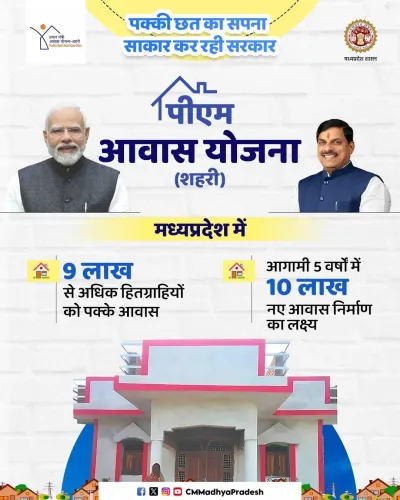
Four specific entitlements were cited: pucca houses (PMAY), toilets (Swachh Bharat Mission), LPG cooking gas (Ujjwala Yojana), and free foodgrain (PMGKAY).
Pradhan Mantri Awas Yojana was launched in 2015 and PM Ujjwala Yojana in 2016 to address housing and clean fuel gaps among BPL households.
PMGKAY , started in 2020 , has been extended in phases to continue free foodgrain distribution to eligible beneficiaries.
The post tagged @mp_wcdmp and used #LadliBahnaMP , connecting the central welfare narrative to Madhya Pradesh's own 2023 women's financial support scheme .
Women are the primary named beneficiaries across both central and state schemes, with LPG connections and cash transfers issued in women's names.
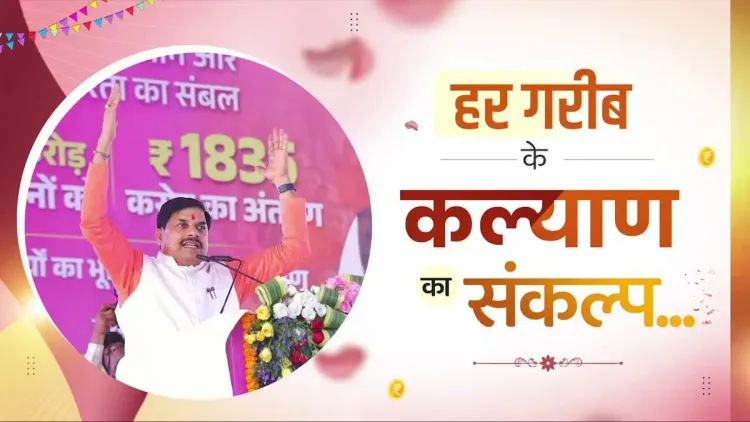
The Chief Minister's Office of Madhya Pradesh posted on X on Sunday, June 14, 2026, quoting Chief Minister Dr. Mohan Yadav as saying that under the leadership of Prime Minister Narendra Modi, every poor person in the country is being uplifted through a basket of core welfare entitlements — permanent housing, toilets, cooking gas, and free foodgrain.
Context
In the post, CM Mohan Yadav stated: 'माननीय प्रधानमंत्री श्री नरेन्द्र मोदी जी के नेतृत्व में देश में हर गरीब का कल्याण हो रहा है' ('Under the leadership of honourable Prime Minister Narendra Modi, the welfare of every poor person in the country is being ensured'). He specifically cited four entitlements being delivered to every person in need: a pucca (permanent) house, a toilet, cooking gas (LPG), and free foodgrain. The post also tagged @mp_wcdmp, the Madhya Pradesh Women and Child Development Department, and carried the hashtags #CMMadhyaPradesh, #MadhyaPradesh, and #LadliBahnaMP.
Policy Backdrop
Each of the four entitlements cited maps to a major central government programme. Pradhan Mantri Awas Yojana (PMAY), launched in 2015, aims to provide pucca houses to rural and urban poor across India. The Swachh Bharat Mission, initiated in 2014, drove construction of household toilets to achieve open-defecation-free status in villages and towns.
Pradhan Mantri Ujjwala Yojana, launched in 2016, extended LPG connections to women from below-poverty-line households, replacing dependence on solid fuels. The Pradhan Mantri Garib Kalyan Anna Yojana (PMGKAY), which began in 2020 and has been extended in successive phases under the National Food Security Act framework, provides free foodgrain to eligible beneficiaries.
The hashtag #LadliBahnaMP in the post points to Ladli Behna Yojana, a Madhya Pradesh state scheme launched in 2023 that provides monthly direct financial transfers to eligible women, complementing the central welfare architecture at the state level.
Stakeholders and Impact
The primary beneficiaries of these converging programmes are below-poverty-line (BPL) families, women-headed households, and rural poor communities across Madhya Pradesh and the rest of India. Women are particularly central to the delivery model: Ujjwala Yojana connections are issued in women's names, and Ladli Behna Yojana places cash transfers directly in women's accounts.
The tagging of @mp_wcdmp (Women and Child Development, Madhya Pradesh) signals that the state government is framing these welfare outcomes as part of a broader women's empowerment agenda, linking central provisioning with state-level financial support mechanisms.
What's Next
Attention will now turn to district-level saturation reports for PMAY and Ujjwala Yojana in Madhya Pradesh, which would indicate how close the state is to universal coverage of these entitlements. Any fresh budget allocations or scheme extensions in the next Union Budget or Madhya Pradesh state budget cycle will determine whether the current delivery pace is sustained or accelerated. The continued invocation of Ladli Behna Yojana alongside central schemes suggests the state government will keep positioning women beneficiaries as the visible face of its welfare narrative ahead of future electoral cycles.
Point of View
Ladli Behna Yojana is woven into a post nominally about central entitlements, extending the political salience of both tiers of government. The enumeration of four concrete deliverables — house, toilet, gas, grain — reflects a deliberate shift in BJP's governance communication from aspirational messaging toward visible, tangible provisioning. Tagging the Women and Child Development department signals that welfare delivery is being institutionally framed as women's empowerment, a framing that carries electoral utility in a state where women voters have been a decisive constituency. Watching actual saturation data for these schemes in Madhya Pradesh's districts will be essential to assess whether the communication matches on-ground delivery.
NationPress
13 Sept 2026
Frequently Asked Questions
What welfare schemes did CM Mohan Yadav mention in his June 2026 post?
CM Mohan Yadav cited four central government entitlements: pucca houses under Pradhan Mantri Awas Yojana, toilets under Swachh Bharat Mission, LPG cooking gas under PM Ujjwala Yojana, and free foodgrain under PM Garib Kalyan Anna Yojana.
What is Ladli Behna Yojana and why was it mentioned?
Ladli Behna Yojana is a Madhya Pradesh state scheme launched in 2023 that provides monthly direct financial transfers to eligible women. It was referenced via the hashtag #LadliBahnaMP in the post, linking the state scheme to the broader welfare narrative.
When was Pradhan Mantri Ujjwala Yojana launched and who does it benefit?
PM Ujjwala Yojana was launched in 2016. It provides LPG cooking gas connections to women from below-poverty-line households, reducing dependence on solid fuels and improving indoor air quality.
Is free foodgrain still being distributed under PMGKAY in 2026?
PM Garib Kalyan Anna Yojana began in 2020 and has been extended in successive phases under the National Food Security Act framework. CM Mohan Yadav's June 2026 statement refers to its continued distribution, though specific extension details for 2026 would require official government notification.
Who is the Chief Minister of Madhya Pradesh in 2026?
Dr. Mohan Yadav has been the Chief Minister of Madhya Pradesh since December 2023. The post was made by the official Chief Minister's Office account on X, quoting his statement on central welfare schemes.