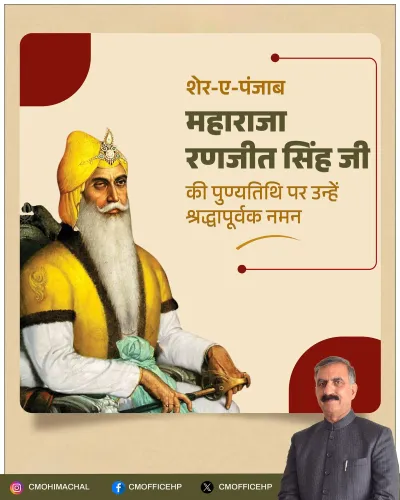
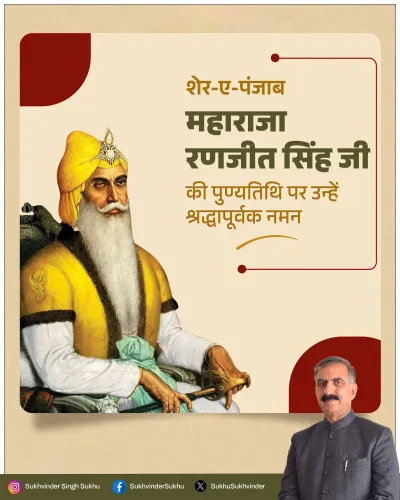
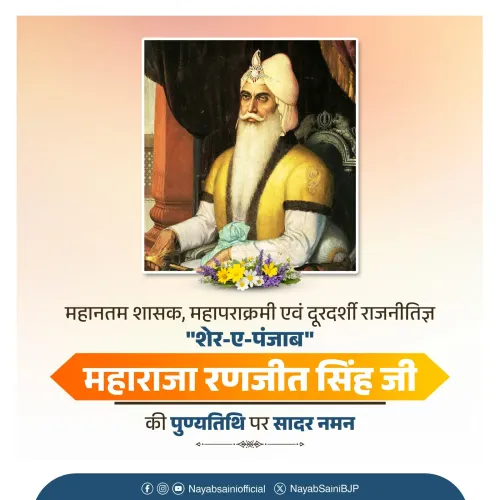
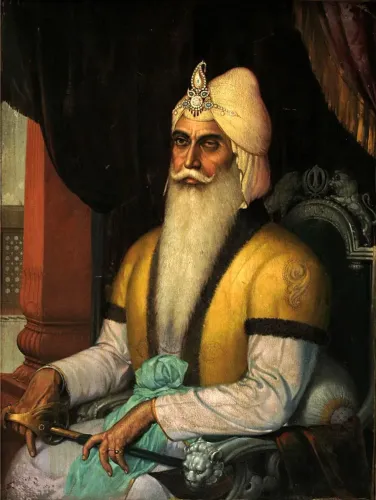
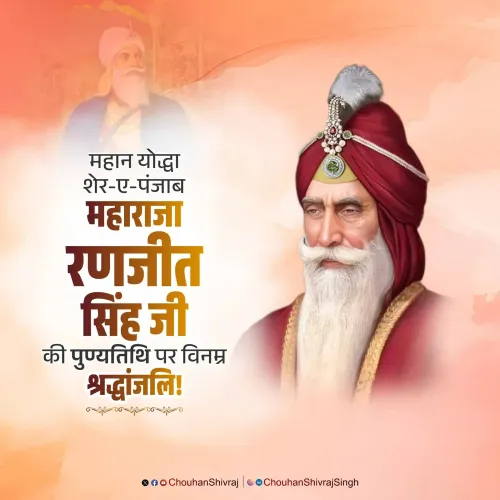
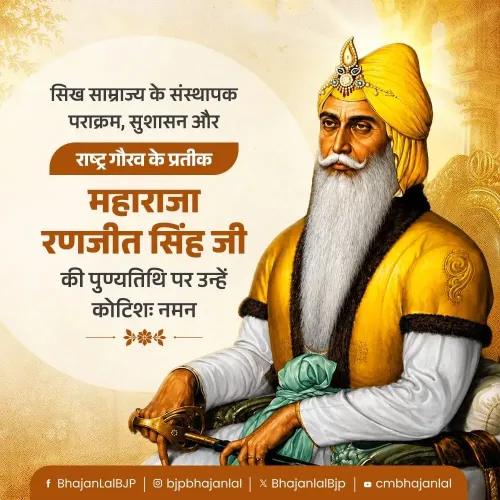
CM Mohan Yadav pays tribute to Maharaja Ranjit Singh on death anniversary
Synopsis
Madhya Pradesh Chief Minister Dr. Mohan Yadav marked the death anniversary of Maharaja Ranjit Singh on 27 June 2026, lauding the Sikh Empire founder's bravery, visionary leadership and devotion to national unity, in a tribute shared on his official X account.
Key Takeaways
Mohan Yadav , Chief Minister of Madhya Pradesh , posted a tribute to Maharaja Ranjit Singh on his death anniversary, 27 June 2026 .
He described the ruler's courage, far-sighted leadership and commitment to national unity as leaving an 'indelible mark on Indian history.' Maharaja Ranjit Singh founded the Sikh Empire in 1801 and ruled until his death on 27 June 1839 , earning the title Sher-e-Punjab .
The tribute is part of a broader BJP practice of publicly honouring pre-colonial regional rulers on their birth and death anniversaries.
The post holds particular significance for the Sikh community and residents of Punjab , whose cultural identity is closely linked to Maharaja Ranjit Singh's legacy.
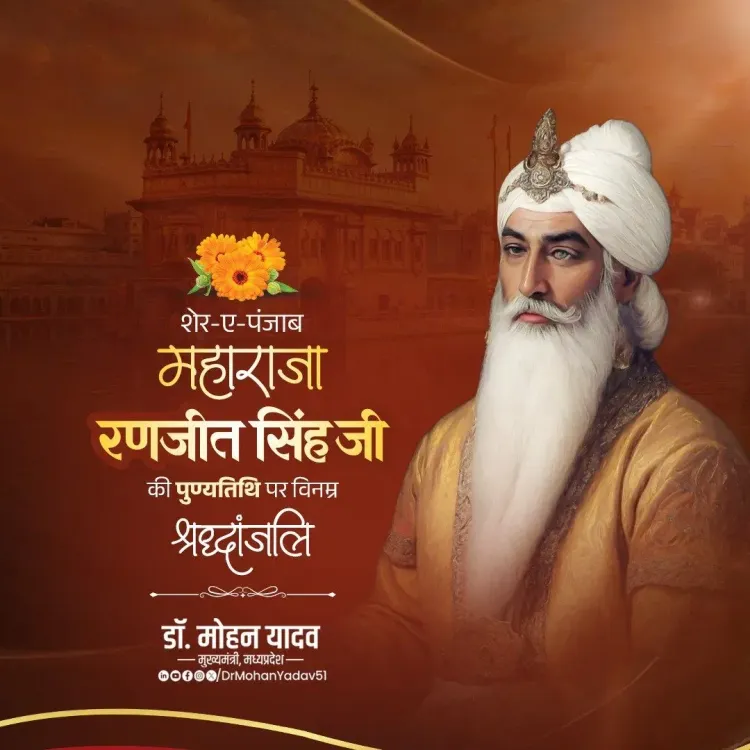
Madhya Pradesh Chief Minister Dr. Mohan Yadav on Saturday, 27 June 2026 paid tribute to Maharaja Ranjit Singh, the founder of the Sikh Empire, on his death anniversary, hailing the 19th-century ruler's courage, vision and commitment to national unity.
Context
Posting on his official X account, Dr. Mohan Yadav wrote: 'Sher-e-Punjab Maharaja Ranjit Singh ji ki punyatithi par vinamra shraddhanjali arpit karta hoon' — 'I humbly pay tribute on the death anniversary of Sher-e-Punjab Maharaja Ranjit Singh.' The Chief Minister described the ruler's unparalleled bravery, far-sighted leadership and dedication to the unity and self-respect of the nation as having left an indelible mark on Indian history. He added that Maharaja Ranjit Singh's inspiring life continues to motivate all to march forward on the path of service to the nation.
Policy Backdrop
Maharaja Ranjit Singh, born in 1780, unified the fragmented Sikh confederacies and established the Sikh Empire in 1801, ruling until his death on 27 June 1839. Widely called Sher-e-Punjab — 'Lion of Punjab' — he modernised his administration and military, and maintained sovereignty against British expansion in the subcontinent for nearly four decades. His reign is remembered as a high-water mark of indigenous governance in pre-colonial northern India.
Leaders of the Bharatiya Janata Party (BJP), both at the Centre and in the states, regularly mark the death and birth anniversaries of regional rulers such as Maharaja Ranjit Singh, Chhatrapati Shivaji Maharaj and Maharana Pratap. These tributes consistently foreground themes of territorial integrity, military valour and resistance to external domination, weaving regional martial histories into a broader national narrative of indigenous sovereignty.
Stakeholders and Impact
The tribute carries resonance for the Sikh community across India and particularly for residents of Punjab, whose historical and cultural identity is closely tied to Maharaja Ranjit Singh's legacy. Such public acknowledgements from chief ministers of non-Punjab states are seen by community leaders as recognition of the Sikh Empire's pan-Indian significance rather than merely a regional one.
For Madhya Pradesh, the post reinforces the state government's practice of engaging with a wide canvas of Indian historical figures, signalling an inclusive approach to the country's pre-colonial heritage. Similar tributes from other BJP-governed states and central leadership are expected on this date each year.
What's Next
Commemorations marking Maharaja Ranjit Singh's death anniversary on 27 June are typically observed in Punjab and among Sikh organisations nationwide. Cultural events, exhibitions and community gatherings may be held to honour his legacy. Whether state governments translate such tributes into specific cultural or educational programmes — such as exhibitions or curriculum inclusions — remains a point of interest for observers tracking the BJP's engagement with regional histories.
Point of View
Extending the party's cultural outreach beyond its core base. By invoking the Sikh Empire founder's legacy from a Hindi-heartland state like Madhya Pradesh, the message signals that Ranjit Singh belongs to a shared national heritage rather than a Punjab-exclusive one. This approach has become a consistent feature of BJP statecraft — using anniversary tributes to stitch together a composite historical narrative that emphasises indigenous unity and resistance. The long-term political dividend lies in broadening appeal among communities who identify with these figures, without requiring any specific policy commitment.
NationPress
27 Jun 2026
Frequently Asked Questions
When did Maharaja Ranjit Singh die?
Maharaja Ranjit Singh died on 27 June 1839 , marking the end of his nearly four-decade reign over the Sikh Empire.
Why is Maharaja Ranjit Singh called Sher-e-Punjab?
Maharaja Ranjit Singh earned the title Sher-e-Punjab , meaning 'Lion of Punjab,' for unifying the fragmented Sikh confederacies, modernising administration and successfully defending Punjab's sovereignty against British expansion.
What did CM Mohan Yadav say about Maharaja Ranjit Singh?
CM Dr. Mohan Yadav paid tribute on the ruler's death anniversary, praising his unparalleled courage, far-sighted leadership and dedication to national unity, saying his inspiring life motivates all to serve the nation.
Why do BJP leaders pay tribute to Maharaja Ranjit Singh?
BJP leaders across states regularly mark the anniversaries of pre-colonial rulers like Maharaja Ranjit Singh to highlight themes of indigenous sovereignty, military valour and national unity as part of a broader historical narrative.
When was the Sikh Empire founded?
The Sikh Empire was founded by Maharaja Ranjit Singh in 1801 after he unified the Sikh confederacies, and it remained a major power in the subcontinent until 1849.