Mahua Moitra Questions Ram Mandir Oversight, FIR Parity

Synopsis
TMC MP Mahua Moitra has publicly questioned alleged large-scale financial mismanagement at the Ram Mandir in Ayodhya, asking whether Hindu devotees' sentiments are hurt and why no FIRs have been filed with the same speed seen in other cases involving religious offence.
Key Takeaways
TMC MP Mahua Moitra posted on 27 June 2026 alleging 'loot and pillage of monstrous scale' at the Ram Mandir in Ayodhya .
She questioned whether the alleged financial irregularities hurt the religious sentiments of millions of Hindu devotees.
Moitra drew a contrast with the speed of FIR registration in cases involving perceived offences to Hindu sentiment, citing examples such as 'biryani on Ganges' and Opposition leader statements.
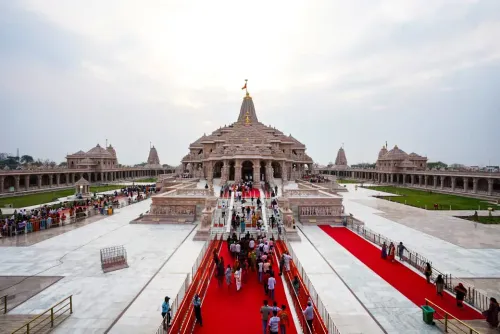
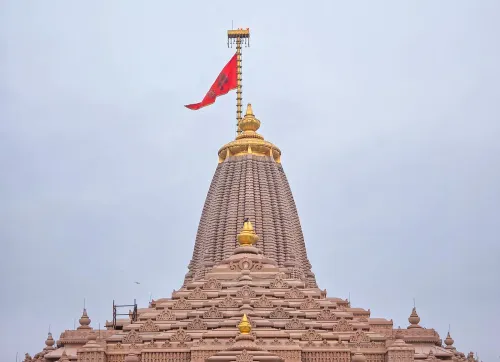
The Ram Mandir was inaugurated on 22 January 2024 and is managed by the Shri Ram Janmabhoomi Teerth Kshetra Trust , which received donations from devotees across India.
The specific financial allegations in the post could not be independently verified at the time of publication.
The post is likely to intensify calls for a formal parliamentary or judicial audit of the Trust's finances.
TMC MP Mahua Moitra on Saturday, 27 June 2026 sharply questioned the transparency of financial management at the Ram Mandir in Ayodhya, while drawing a pointed contrast with what she described as the speed with which authorities file FIRs over incidents perceived to offend Hindu sentiments. Her post on X also challenged whether the alleged financial lapses at the temple complex hurt the religious sentiments of millions of Hindu devotees.
Context
Moitra's post referred to what she called 'loot and pillage of monstrous scale' at the Ram Mandir, asking: 'Are not religious sentiments of millions of Hindus hurt now?' She juxtaposed this against instances she cited — including 'biryani on Ganges' and statements by Opposition leaders — where FIRs were, in her characterisation, filed 'speedily.' The specific financial allegations she references could not be independently verified from available information at the time of publication.
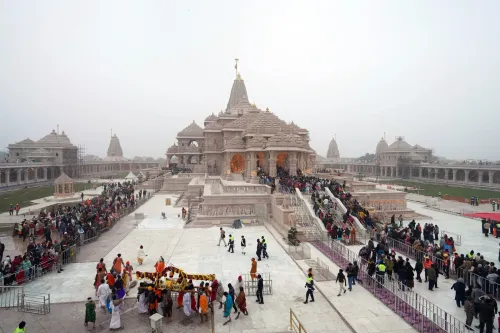
The Ram Mandir in Ayodhya, Uttar Pradesh, was inaugurated on 22 January 2024 by Prime Minister Narendra Modi, following the Supreme Court of India's landmark November 2019 verdict that directed the disputed site be allocated for the temple's construction. The project is overseen by the Shri Ram Janmabhoomi Teerth Kshetra Trust, which was constituted to manage construction and administration using public donations and government facilitation.
Policy Backdrop
Questions about the financial governance of the Shri Ram Janmabhoomi Teerth Kshetra Trust have surfaced periodically in parliamentary and public discourse since the temple's inauguration. The Trust received donations from millions of Hindu devotees across India and abroad, making transparency in its accounts a matter of significant public interest.
Indian law provides several mechanisms for financial oversight of trusts of this nature, including audit by the Comptroller and Auditor General and parliamentary scrutiny. Opposition parties have previously sought formal audits and tabled questions in Parliament on the Trust's expenditure and procurement processes, though no official audit findings have been publicly established at the time of this report.
Stakeholders and Impact
The post touches a politically sensitive intersection: the governance of a site that carries profound religious significance for a vast section of India's Hindu population. Mahua Moitra, who has consistently raised issues of alleged institutional bias and selective law enforcement, frames the argument in terms of equal application of the law — asking why the same urgency that drives FIR registration in cases involving perceived religious offence is absent when the institution itself is allegedly mismanaged.
The Shri Ram Janmabhoomi Teerth Kshetra Trust, Uttar Pradesh state authorities, and the Bharatiya Janata Party, which has positioned the Ram Mandir as a civilisational milestone, are the primary institutional stakeholders. Hindu devotees who contributed to the temple's construction through donations are directly affected by any questions of financial accountability.
What's Next
Moitra's post is likely to prompt demands for a formal parliamentary question or an audit motion regarding the Trust's finances. Whether ruling party leaders or the Trust itself responds with a rebuttal or financial disclosure will determine how far this controversy travels in the coming days.
The broader pattern of debates over selective FIR registration — a recurring theme in Indian political discourse — is unlikely to be resolved by a single social media exchange. Formal legal or legislative action, or an official statement from the Trust clarifying its accounts, would be the next material development to watch.
Point of View
The sanctity of Hindu religious sentiment — to demand accountability from institutions the establishment champions. By asking why financial lapses at a temple do not trigger the same legal urgency as a piece of biryani near a river, she targets what critics describe as a structural asymmetry in law enforcement. The move is calibrated to be difficult to dismiss without either defending the alleged lapses or acknowledging the double standard. Whether it translates into formal scrutiny of the Trust's accounts, or remains a viral political point, will test the opposition's capacity to sustain pressure on governance issues beyond social media.
NationPress
27 Jun 2026
Frequently Asked Questions
What did Mahua Moitra say about Ram Mandir?
Mahua Moitra alleged 'loot and pillage of monstrous scale' at the Ram Mandir in Ayodhya and questioned why no FIRs have been filed, contrasting this with the speed of FIR registration in cases involving perceived offences to Hindu religious sentiment.
What is the Shri Ram Janmabhoomi Teerth Kshetra Trust?
The Shri Ram Janmabhoomi Teerth Kshetra Trust is the body constituted by the government to oversee the construction and management of the Ram Mandir in Ayodhya, funded through public donations and government facilitation.
When was the Ram Mandir inaugurated?
The Ram Mandir in Ayodhya was inaugurated on 22 January 2024 by Prime Minister Narendra Modi, following the Supreme Court's November 2019 verdict on the disputed site.
Has there been any official audit of Ram Mandir funds?
No officially published audit findings on the Shri Ram Janmabhoomi Teerth Kshetra Trust's finances have been established in the public domain as of this report, though opposition parties have periodically sought parliamentary scrutiny.
What is the 'biryani on Ganges' reference Mahua Moitra made?
Mahua Moitra referenced 'biryani on Ganges' as an example of an incident for which FIRs were allegedly filed quickly on grounds of hurting Hindu religious sentiments, contrasting it with the absence of similar legal action over alleged financial irregularities at the Ram Mandir. The specific incident could not be independently verified.