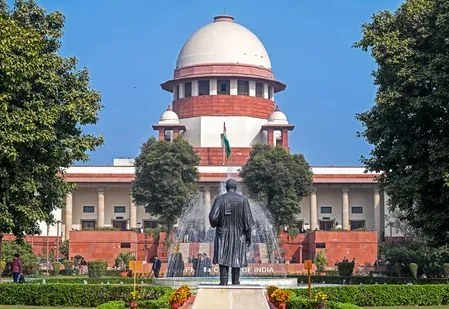
Ram Janmabhoomi Trust funds row: PIL in Supreme Court seeks CBI-led SIT probe

Synopsis
A PIL filed in the Supreme Court is demanding a CBI-led SIT probe into alleged financial irregularities at the Shri Ram Janmbhoomi Teerth Kshetra Trust — the body overseeing the Ayodhya temple. The petition argues the UP government's existing SIT lacks forensic expertise and has begun work without even registering an FIR, potentially compromising any future prosecution.
Key Takeaways
A PIL filed by advocates Ajay Kumar Rai and Dinesh Kumar Yadav before the Supreme Court on 22 June seeks a CBI-led SIT probe into the Shri Ram Janmbhoomi Teerth Kshetra Trust .
The petition alleges 'misappropriation, diversion, embezzlement and breach of trust' involving public donations collected for the Ram Temple at Ayodhya .
The petitioners argue the Uttar Pradesh government's existing SIT lacks forensic accounting expertise and has commenced without registering an FIR .
The plea invokes the Supreme Court's TTD laddoo case precedent, where the apex court replaced a state SIT with a CBI -headed multidisciplinary team.
Interim relief sought includes preservation of donation registers, audit reports, bank records, CCTV footage , and all digital data of the Trust.
The petition also calls on the Trust, UP government , and Union government to establish independent audit and oversight mechanisms for temple donations.
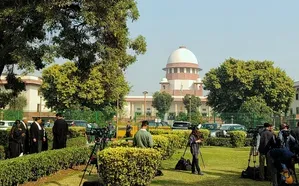
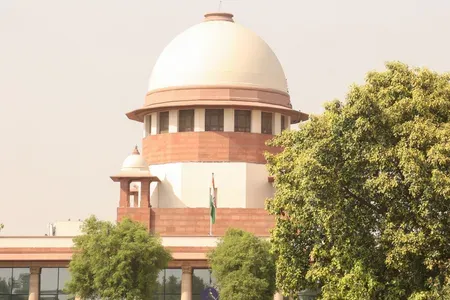
A fresh Public Interest Litigation (PIL) has been filed before the Supreme Court seeking registration of an FIR and a court-monitored investigation by a CBI-led Special Investigation Team (SIT) into allegations of financial irregularities, missing funds, and mismanagement in the affairs of the Shri Ram Janmbhoomi Teerth Kshetra Trust. The petition was moved on 22 June by advocates Ajay Kumar Rai and Dinesh Kumar Yadav under Article 32 of the Constitution.
The plea seeks a direction for a 'fair, impartial, comprehensive, and time-bound investigation' into allegations concerning donations and funds received for the construction and administration of the Ram Temple at Ayodhya.
Core Allegations in the Petition
According to the petition, allegations disclosed in media reports and other publicly available material prima facie indicate 'serious instances of dishonest misappropriation, diversion, embezzlement and breach of trust' relating to public donations and funds entrusted for religious and charitable purposes.
The petitioners contended that the handling of donations by an institution serving in a fiduciary capacity directly affects the faith and confidence of millions of devotees who have voluntarily contributed towards the construction of the Ram Temple. The plea argued that 'the truthfulness or otherwise of the allegations pertaining to the reported missing funds, accounting irregularities and other financial discrepancies concerning Shri Ram Janmbhoomi Teerth Kshetra Trust can be ascertained only through a comprehensive, independent, and professional investigation conducted by an agency possessing specialised expertise, adequate resources, technical capabilities and an established institutional framework for investigation of complex financial and economic offences.'
Why the UP Government SIT Is Deemed Insufficient
The petition questioned the adequacy of the Special Investigation Team (SIT) constituted by the Uttar Pradesh government to examine the allegations, arguing that the scope and powers of that SIT remain unclear. The petitioners argued that a fact-finding inquiry by an SIT comprising administrative officers may not possess the forensic accounting expertise, investigative infrastructure, and nationwide jurisdiction necessary to trace fund flows, identify culpable persons, and uncover the full extent of the alleged irregularities.
Critically, the plea noted that the SIT inquiry has commenced without registration of an FIR or any regular criminal case, which could affect the evidentiary value of material collected during the inquiry and undermine future prosecution, if warranted. 'The initial stages of any criminal investigation are often critical for the discovery and preservation of incriminating evidence, and delay may create opportunities for tampering with material evidence,' the petition warned.
The Tirupati Precedent Invoked
The petitioners drew a direct parallel with the Supreme Court's intervention in the Tirumala Tirupati Devasthanam (TTD) laddoo adulteration controversy, where the apex court replaced a state-appointed SIT with a multidisciplinary SIT headed by the CBI. 'The principles that weighed with this Hon'ble Court in directing an independent CBI-led or supervised investigation in the Tirumala Tirupati Devasthanam matter are equally attracted to the facts and circumstances of the present case,' the plea submitted.
Interim Relief and Regulatory Reforms Sought
As interim relief, the petitioners have requested the apex court to direct preservation of all physical, digital, and financial records of the Trust — including donation registers, audit reports, bank account details, CCTV footage, servers, hard disks, and other material relating to the receipt and utilisation of donations. The plea also sought directions restraining the destruction, alteration, transfer, or tampering of any records, assets, funds, or electronic data connected with the allegations under scrutiny.
Beyond the probe itself, the petition has sought directions to the Trust, the Uttar Pradesh government, and the Union government to establish regulatory, supervisory, and audit mechanisms for ensuring transparency and accountability in the receipt, management, and utilisation of donations and assets. The Supreme Court is yet to list the matter for hearing.
Point of View
Which makes any independent scrutiny of its finances both necessary and fraught. The petitioners' invocation of the TTD precedent is legally astute — the Supreme Court has shown willingness to override state-appointed SITs when institutional credibility is at stake. The more pointed concern, however, is procedural: commencing an inquiry without an FIR is not just an irregularity, it is a structural flaw that could unravel any prosecution downstream. Whether the Supreme Court agrees to hear this PIL will itself be a signal of how far judicial oversight of high-profile religious trusts can extend.
NationPress
21 Sept 2026
Frequently Asked Questions
What is the PIL filed in the Supreme Court about the Ram Janmabhoomi Trust?
The PIL seeks registration of an FIR and a CBI-led SIT investigation into alleged financial irregularities, missing funds, and mismanagement of donations at the Shri Ram Janmbhoomi Teerth Kshetra Trust, which oversees the Ram Temple at Ayodhya. It was filed on 22 June by advocates Ajay Kumar Rai and Dinesh Kumar Yadav under Article 32 of the Constitution.
Why are the petitioners challenging the UP government's SIT?
The petitioners argue that the Uttar Pradesh government's SIT lacks the forensic accounting expertise, investigative infrastructure, and nationwide jurisdiction needed to probe complex financial offences. They also note that the SIT began its inquiry without registering an FIR, which could compromise the evidentiary value of findings and undermine future prosecution.
Which legal precedent does the PIL cite to support a CBI-led probe?
The petition cites the Supreme Court's intervention in the Tirumala Tirupati Devasthanam laddoo adulteration case, where the apex court replaced a state-appointed SIT with a multidisciplinary SIT headed by the CBI. The petitioners argue the same principles apply to the Ram Janmabhoomi Trust matter.
What interim relief has been sought in the PIL?
The petitioners have sought a Supreme Court direction to preserve all physical, digital, and financial records of the Trust — including donation registers, audit reports, bank account details, CCTV footage, and servers — and to restrain any destruction, alteration, or tampering of these records pending investigation.
What broader reforms does the PIL demand?
Beyond the probe, the PIL seeks directions to the Trust, the Uttar Pradesh government, and the Union government to establish regulatory, supervisory, and independent audit mechanisms for the receipt, management, and utilisation of donations and assets held by the Trust.