Supreme Court to hear PILs on Ram Temple Trust financial irregularities on July 13

Synopsis
The Supreme Court is set to hear three PILs on July 13 demanding a court-supervised probe into alleged financial irregularities at the Ayodhya Ram Temple Trust — including calls for a CBI takeover, forensic audit, and an independent oversight committee. The case could redefine judicial accountability over major religious trusts in India.
Key Takeaways
A Bench of CJI Surya Kant , Justice Joymalya Bagchi , and Justice V.
Mohana will hear the PILs on 13 July .
Petitions filed by advocate Narendra Kumar Goswami , petitioner Ajay Kumar Rai , and RJD MP Sudhakar Singh are listed before the court.
The pleas seek a forensic audit, preservation of CCTV footage and financial records, and a sealed SIT status report.
MP Sudhakar Singh has sought transfer of the probe to the CBI under direct Supreme Court supervision.
An earlier urgent hearing request by Goswami was declined; the matter was directed to be listed post-summer vacation.
The Uttar Pradesh government had constituted a three-member SIT , whose findings reportedly triggered the petitions.
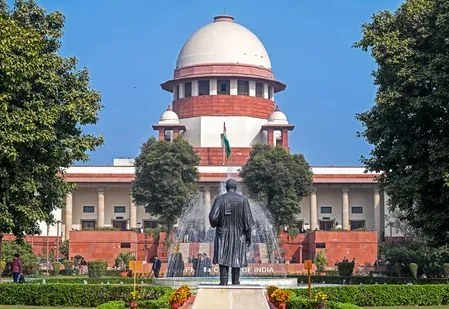
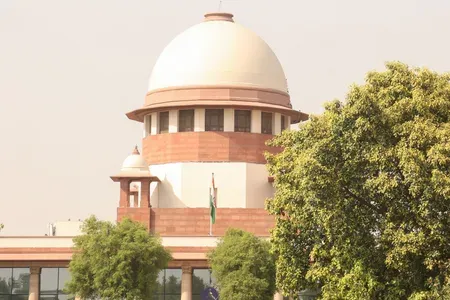
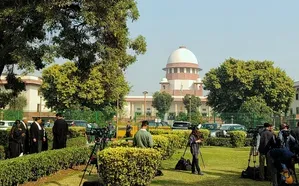
The Supreme Court of India is set to hear, on 13 July, a batch of public interest litigations (PILs) demanding a court-supervised investigation into alleged financial irregularities in the management of donations and offerings at the Shri Ram Janmabhoomi Teerth Kshetra Trust in Ayodhya. The case list published on the apex court's official website confirms the matter will be taken up by a Bench comprising Chief Justice of India Surya Kant, Justice Joymalya Bagchi, and Justice V. Mohana.
Petitions Before the Court
Three separate petitions are listed for hearing. The first is a writ petition filed by advocate Narendra Kumar Goswami, who has moved the court in person. The second is a criminal writ petition filed by Ajay Kumar Rai and another petitioner against the Trust and others. The third has been moved by Rashtriya Janata Dal (RJD) Member of Parliament Sudhakar Singh, who has sought a transfer of the ongoing probe to the Central Bureau of Investigation (CBI) under direct Supreme Court monitoring.
What the Petitions Seek
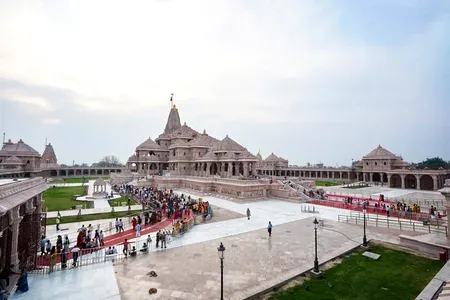
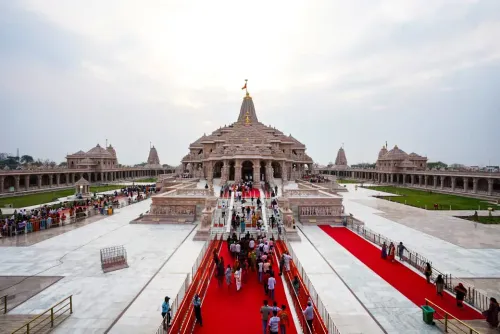
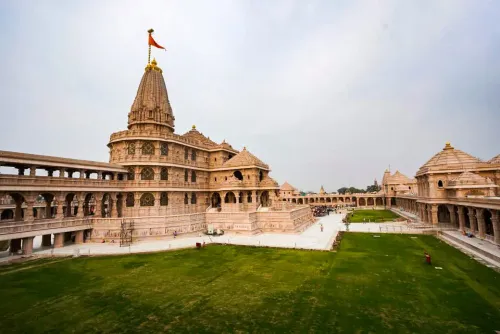
Goswami's petition calls for the immediate preservation of all records, CCTV footage, and digital logs relating to donations and offerings at the Ram Janmabhoomi temple. It also seeks a sealed status report of the ongoing Special Investigation Team (SIT) probe constituted by the Uttar Pradesh government, and an independent forensic audit of all donations and valuables received by the Trust since its inception.
The plea argues that offerings made to a deity in a public temple constitute 'sacred trust property' vesting in the deity as a juristic person, and that those handling such offerings are fiduciaries bound by duties of transparency, accountability, and preservation. It further urges the court to direct the formulation of minimum constitutional safeguards for transparent handling of donations in temples of national importance.
MP Sudhakar Singh's petition goes further, seeking the appointment of a temporary court-monitored oversight committee comprising retired judicial officers and financial experts, restrictions on major financial decisions pending the investigation, a comprehensive forensic audit, and mandatory publication of audited financial statements and donation logs on the Trust's official website.
Background: Earlier Attempt at Urgent Hearing
This is not the first time Goswami has approached the Supreme Court on the matter. An earlier request for an urgent hearing was declined when the petition was mentioned before a Bench of Justice M.M. Sundresh and Justice Sheel Nagu. While Goswami contended that the allegations were 'very serious' and warranted immediate listing, the Bench questioned the urgency and directed that the matter be taken up after the court reopened following the summer vacation.
The petitions draw on public reports and the Uttar Pradesh government's constitution of a three-member SIT, which reportedly revealed alleged irregularities, misappropriation, and mishandling of donations at the temple, according to the plea.
What Happens Next
With the Bench now formally scheduled to hear the petitions on 13 July, the court may issue directions on whether a court-monitored probe or forensic audit will be ordered, or whether it will call for a response from the Trust and the state government. The outcome could set a significant precedent for judicial oversight of large religious trusts managing public donations across India.
Point of View
But the broader constitutional question it raises: who oversees public donations to large religious institutions, and under what framework? India has no uniform law governing temple trusts of national scale, and a court-monitored forensic audit, if ordered, could set a precedent that reaches well beyond Ayodhya. The Uttar Pradesh government's own SIT formation is a double-edged signal — it acknowledges that something warranted investigation, yet state-run probes into politically sensitive institutions carry inherent credibility risks. The push for CBI transfer and an independent oversight committee reflects that concern directly.
NationPress
9 Oct 2026
Frequently Asked Questions
Why is the Supreme Court hearing PILs about the Ram Temple Trust?
The Supreme Court is hearing PILs filed by advocate Narendra Kumar Goswami, petitioner Ajay Kumar Rai, and RJD MP Sudhakar Singh, alleging financial irregularities in the handling of donations at the Shri Ram Janmabhoomi Teerth Kshetra Trust in Ayodhya. The petitions seek a court-monitored probe, forensic audit, and greater transparency in temple finances.
When will the Supreme Court hear the Ram Temple Trust PILs?
The Supreme Court is scheduled to hear the batch of PILs on 13 July, before a Bench comprising CJI Surya Kant, Justice Joymalya Bagchi, and Justice V. Mohana, as per the court's official cause list.
What does RJD MP Sudhakar Singh's petition seek?
MP Sudhakar Singh's petition seeks transfer of the ongoing probe to the CBI under direct Supreme Court monitoring. It also calls for a court-appointed oversight committee of retired judicial officers and financial experts, a forensic audit, restrictions on major financial decisions pending investigation, and mandatory publication of audited financial statements on the Trust's website.
What is the SIT probe mentioned in the petitions?
The Uttar Pradesh government constituted a three-member Special Investigation Team (SIT) to probe alleged irregularities in the handling of donations at the Ram Janmabhoomi temple. According to the petitions, the SIT's constitution itself indicated that irregularities, misappropriation, and mishandling of donations had allegedly come to light.
Why was an urgent hearing on the Ram Temple Trust PILs denied earlier?
Advocate Narendra Kumar Goswami had sought an urgent hearing before a Bench of Justice M.M. Sundresh and Justice Sheel Nagu, arguing the allegations were 'very serious'. The Bench questioned the urgency and directed that the matter be listed after the Supreme Court reopened following the summer vacation.