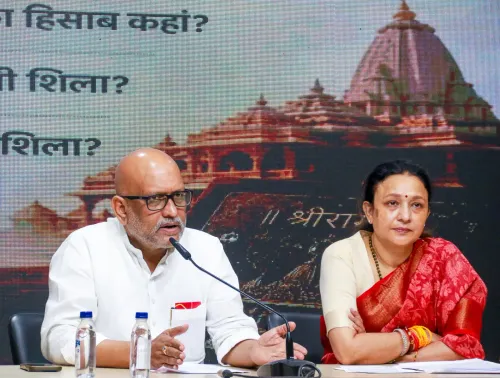
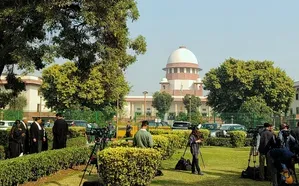
Supreme Court declines urgent listing of Ram Temple donation PIL
Synopsis
The Supreme Court declined urgent listing of a PIL demanding a forensic audit and court-monitored probe into the Shri Ram Janmabhoomi Teerth Kshetra Trust's donation handling — but assured the petitioner a date will be set. With a UP government SIT already probing alleged misappropriation and preliminary findings submitted, the case puts temple financial accountability squarely in the judicial spotlight.
Key Takeaways
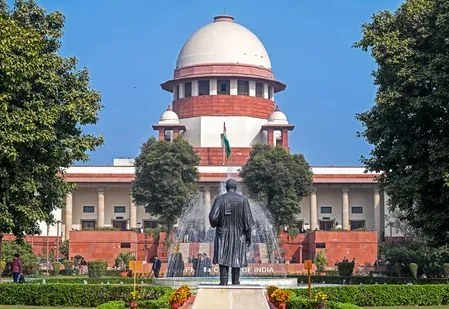
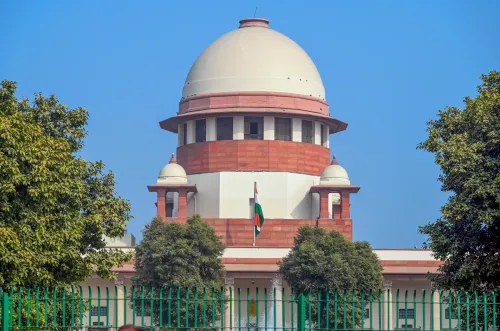
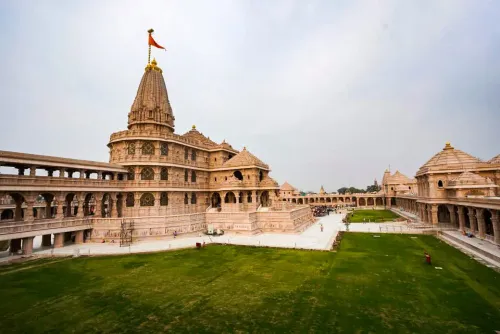
The Supreme Court on 25 June declined urgent listing of a PIL on alleged financial irregularities at the Ram Janmabhoomi temple , Ayodhya .
A Bench of Justices B.V.
Nagarathna and Joymalya Bagchi assured petitioner Narendra Kumar Goswami the matter would be listed by the registry.
The PIL seeks a court-monitored probe, forensic audit, and preservation of CCTV footage , DVR recordings , and digital payment logs from the temple.
A three-member SIT led by Lucknow Divisional Commissioner Vijay Vishwas Pant has submitted preliminary findings to the Uttar Pradesh government.
The petition clarifies it targets only the secular administration of donations, not religious rituals or customs.
The Supreme Court on Thursday, 25 June declined to grant urgent listing to a Public Interest Litigation (PIL) seeking a court-monitored probe and forensic audit into the handling of donations and offerings received by the Shri Ram Janmabhoomi Teerth Kshetra Trust, while assuring the petitioner that the matter would be scheduled by the apex court registry. The PIL pertains to alleged financial irregularities at the Ram Janmabhoomi temple in Ayodhya.
What the Petitioner Sought
Advocate Narendra Kumar Goswami, appearing as petitioner-in-person, told a Bench of Justices B.V. Nagarathna and Joymalya Bagchi that his immediate prayer was limited to securing an urgent listing to ensure the preservation of critical evidence. He sought directions for the preservation and production of CCTV footage, DVR recordings, and digital payment logs and transaction records relating to donations at the temple.
The Justice Nagarathna-led Bench responded: 'The registry will list it. You will get a date.'
Key Demands in the PIL
The petition seeks a court-monitored investigation and independent forensic audit of all donations, offerings, and valuables received by the Shri Ram Janmabhoomi Teerth Kshetra Trust since its inception. It also prays for a sealed status report from an ongoing Special Investigation Team (SIT) probe constituted by the Uttar Pradesh government.
According to the plea, offerings made to a deity in a public temple constitute 'sacred trust property' vesting in the deity as a juristic person, with those handling such offerings bound by duties of transparency, accountability, and preservation. The petition has further urged the court to direct the formulation of minimum constitutional safeguards for transparent handling of public temple donations at temples of national importance.
Background and SIT Probe
The cause of action, as stated in the petition, arose following public reports of alleged irregularities and the subsequent constitution of a three-member SIT by the Uttar Pradesh government to investigate allegations of misappropriation and mishandling of donations at the Ram Janmabhoomi temple. The SIT, headed by Lucknow Divisional Commissioner Vijay Vishwas Pant, recently submitted its preliminary findings to the state government, with a detailed investigation into the alleged embezzlement of temple funds reportedly still underway.
Scope Clarified
The petitioner was explicit in clarifying that the PIL is confined strictly to the secular administration of donations and does not seek any interference in religious rituals, customs, or denominational matters. The apex court registry is expected to assign a hearing date in due course.
Point of View
But the underlying PIL touches a politically sensitive nerve — public accountability for one of India's highest-profile religious trusts. The parallel SIT probe by the Uttar Pradesh government adds a layer of complexity: if state-level findings point to irregularities, pressure on the apex court to intervene could intensify. What is notable is the legal framing — casting temple offerings as 'sacred trust property' with the deity as juristic person is a well-established doctrine, but applying it to demand forensic audits of a trust of this scale and political symbolism is largely uncharted territory. The real test will be whether the court, once it lists the matter, is willing to examine the Trust's financial administration independently of the SIT process already underway.
NationPress
24 Sept 2026
Frequently Asked Questions
Why did the Supreme Court decline urgent listing of the Ram Temple donation PIL?
The Supreme Court did not reject the PIL outright — it declined to grant it urgent listing, a procedural step. The Bench assured petitioner Narendra Kumar Goswami that the apex court registry would assign a hearing date in due course.
What does the PIL on Ram Temple donations demand?
The PIL seeks a court-monitored investigation and independent forensic audit of all donations, offerings, and valuables received by the Shri Ram Janmabhoomi Teerth Kshetra Trust since its inception. It also demands preservation of CCTV footage, DVR recordings, and digital payment logs, as well as a sealed status report from the ongoing SIT probe.
What is the SIT probing in the Ram Temple donation case?
The Uttar Pradesh government constituted a three-member Special Investigation Team (SIT), headed by Lucknow Divisional Commissioner Vijay Vishwas Pant, to probe allegations of misappropriation and mishandling of donations at the Ram Janmabhoomi temple. The SIT has submitted its preliminary findings to the state government, with a detailed investigation reportedly ongoing.
Who filed the PIL and on what legal basis?
Advocate Narendra Kumar Goswami filed the PIL as petitioner-in-person. The petition argues that offerings made to a deity in a public temple constitute 'sacred trust property' vesting in the deity as a juristic person, making those who handle such offerings fiduciaries bound by transparency and accountability.
Does the PIL interfere with religious practices at the Ram Temple?
No. The petitioner explicitly clarified that the PIL is confined to the secular administration of donations and does not seek any interference in religious rituals, customs, or denominational matters at the Ram Janmabhoomi temple.