SC issues notice to Ram Janmabhoomi Trust, seeks UP SIT report by July 20
Synopsis
The Supreme Court has formally stepped into the controversy over alleged financial irregularities at the Ayodhya Ram temple, issuing notice to the Shri Ram Janmabhoomi Teerth Kshetra Trust and ordering the UP SIT to submit a sealed status report by 20 July. With an RJD MP pushing for a CBI takeover and petitioners demanding forensic audits, the case could set a landmark precedent for judicial oversight of major religious trusts in India.
Key Takeaways
The Supreme Court issued notice to the Shri Ram Janmabhoomi Teerth Kshetra Trust on 14 July 2025 over alleged financial irregularities in temple donation handling.
A Bench led by CJI Surya Kant directed the UP SIT to submit a sealed status report, including details of its composition, before the next hearing.
The matter is posted for further hearing on 20 July 2025 .
Petitioners include advocate Narendra Kumar Goswami , Ajay Kumar Rai , and RJD MP Sudhakar Singh , who has sought transfer of the probe to the CBI .
Solicitor General Tushar Mehta opposed sharing the status report with petitioners, citing the ongoing investigation; the court declined the request at this stage.
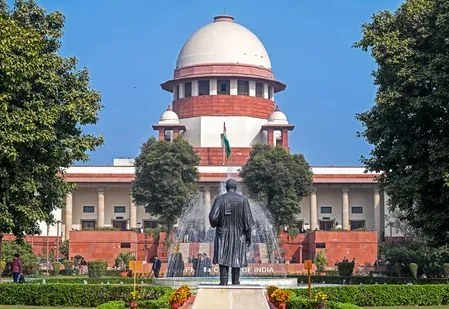
The Supreme Court on Monday, 14 July 2025, issued notice to the Shri Ram Janmabhoomi Teerth Kshetra Trust and directed the Uttar Pradesh government's Special Investigation Team (SIT) to submit a detailed status report before the apex court, in connection with a batch of petitions alleging financial irregularities in the handling of donations and offerings at the Ram temple in Ayodhya. The matter has been posted for further hearing on 20 July.
What the Supreme Court Directed
A Bench headed by Chief Justice of India (CJI) Surya Kant, and comprising Justice Joymalya Bagchi and Justice V. Mohana, ordered the UP SIT to place before the court a comprehensive status report, including full particulars of the SIT's composition. The court's order noted: 'Since some FIRs have already been registered and an SIT has been constituted to investigate, we direct the SIT constituted by the State of Uttar Pradesh to submit a status report before this Court. The status report shall also give full particulars of the composition of the SIT.'
The Bench made clear it was taking cognisance of an ongoing investigation rather than ordering a fresh one, signalling a supervisory rather than interventionist posture — at least at this stage.
Who Filed the Petitions
The batch of petitions before the court includes a writ petition filed by advocate Narendra Kumar Goswami in his personal capacity, a criminal writ petition by Ajay Kumar Rai, and a separate plea moved by Rashtriya Janata Dal (RJD) Member of Parliament Sudhakar Singh.
Goswami's petition seeks preservation of all records, CCTV footage, and digital logs relating to temple donations, along with a sealed SIT status report and an independent forensic audit of all donations and offerings received by the Trust since its inception. The petition argues that offerings made to a deity in a public temple constitute 'sacred trust property' vesting in the deity as a juristic person, and that those handling such offerings are fiduciaries bound by transparency and accountability.
RJD MP Sudhakar Singh has gone further, seeking transfer of the probe to the Central Bureau of Investigation (CBI) under direct Supreme Court monitoring. His petition additionally seeks appointment of a temporary court-monitored oversight committee of retired judicial officers and financial experts, restrictions on major financial decisions pending investigation, a comprehensive forensic audit, and publication of audited financial statements and donation logs on the Trust's official website.
Government's Position
Solicitor General Tushar Mehta, appearing for both the Centre and the Uttar Pradesh government, submitted that formal notice to government authorities may not be necessary, as they would be assisting the apex court in the matter. He informed the Bench that the SIT's status report would be placed before the court in a sealed cover.
When petitioners requested that a copy of the status report be furnished to them as well, the Solicitor General opposed the request, citing the ongoing nature of the investigation. The Supreme Court declined the request at this stage, remarking: 'We will see later. It's an ongoing investigation. You know the law. We have passed an order.'
Why This Case Matters
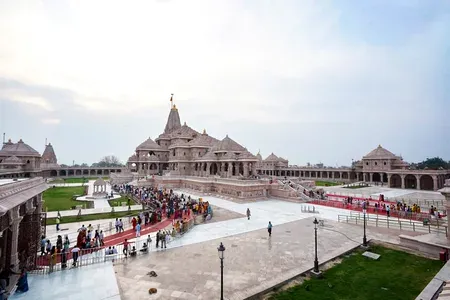
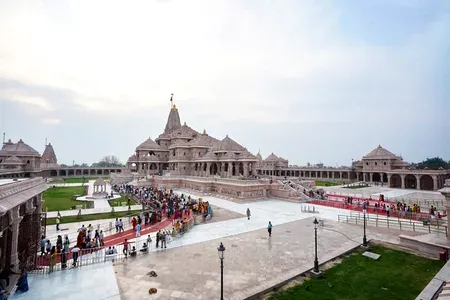
The Shri Ram Janmabhoomi Teerth Kshetra Trust was established by the Centre in 2020 following the Supreme Court's landmark 2019 Ayodhya verdict, and has since overseen the construction and administration of the Ram temple — one of India's most prominent religious sites. The temple receives donations from millions of devotees, making the accountability of its finances a matter of significant public interest.
Notably, this is among the first instances where the Supreme Court has formally engaged with petitions challenging the financial governance of the Trust, lending institutional weight to what had until now largely been a political and media debate. How the court ultimately proceeds — whether it expands scrutiny or defers to the ongoing SIT process — will set a precedent for judicial oversight of major religious endowments in India.
The next hearing is scheduled for 20 July, when the SIT's sealed status report is expected to be placed before the Bench.
Point of View
Yet its financial governance has operated with limited public transparency since inception. The sealed-cover approach for the SIT report, while legally defensible for an active investigation, risks reinforcing perceptions of opacity that triggered these petitions in the first place. The real test will come on 20 July: whether the court expands its supervisory role or closes the door on independent forensic oversight will determine whether this is a turning point for temple finance accountability in India — or another procedural cycle that ends without structural reform.
NationPress
12 Oct 2026
Frequently Asked Questions
Why has the Supreme Court issued notice to the Ram Janmabhoomi Teerth Kshetra Trust?
The Supreme Court issued notice to the Trust on 14 July 2025 in response to a batch of petitions alleging financial irregularities in the handling of donations and offerings at the Ayodhya Ram temple. The court also directed the UP SIT to submit a status report before the next hearing on 20 July.
What is the UP SIT investigating in the Ram temple case?
The Uttar Pradesh government constituted a Special Investigation Team (SIT) to probe alleged financial irregularities in the management of donations and offerings received by the Shri Ram Janmabhoomi Teerth Kshetra Trust. Several FIRs have already been registered in connection with the matter.
Who filed the petitions before the Supreme Court?
The petitions were filed by advocate Narendra Kumar Goswami, Ajay Kumar Rai, and RJD MP Sudhakar Singh. Goswami's petition seeks preservation of records and a forensic audit; Singh's petition seeks a CBI probe under direct Supreme Court monitoring.
Will petitioners get a copy of the SIT status report?
Not at this stage. Solicitor General Tushar Mehta opposed sharing the report with petitioners, citing the ongoing investigation, and the Supreme Court declined the request, saying it would consider the matter later.
What happens next in the Ram Janmabhoomi Trust case?
The Supreme Court has scheduled the next hearing for 20 July 2025, when the UP SIT is expected to place its sealed status report — including details of the SIT's composition — before the Bench for further consideration.