ADB approves $57.4 million clean energy package for Sri Lanka
Synopsis
The ADB's $57.4 million package for Sri Lanka goes beyond a standard clean energy grant — it introduces a virtual net metering model that lets consumers who cannot afford or install solar panels still benefit from rooftop solar credits. Backed by EU and Japanese grants alongside a concessional loan, the project targets MSMEs and community groups historically excluded from the renewable energy transition.
Key Takeaways
The Asian Development Bank (ADB) approved a $57.4 million financing package for Sri Lanka on 27 June 2025 .
The package includes a $35 million concessional loan, a $16.9 million EU grant , and a $5.5 million Japan Fund grant .
Total project cost, including counterpart funding, is estimated at $80.5 million .
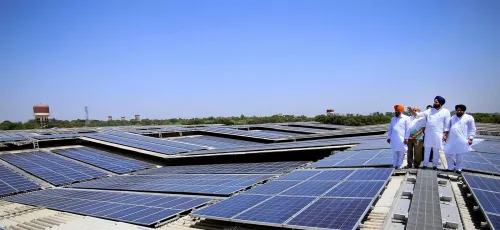
The project will support approximately 25 megawatt-peak of rooftop solar and modernise distribution networks.
MSMEs and community organisations unable to install solar panels will benefit via a social compensation mechanism .
A green skills training facility and women's participation initiatives are also part of the project scope.
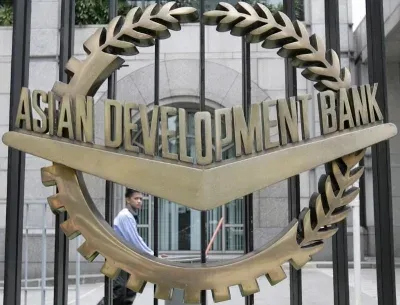
The Asian Development Bank (ADB) has approved a $57.4 million financing package to help Sri Lanka expand access to affordable clean energy and curb greenhouse gas emissions, the bank announced on Friday, 27 June. The package backs a rooftop solar aggregation model that allows consumers to benefit from solar power without installing panels on their own premises.
How the Financing Is Structured
The total package comprises a $35 million concessional loan, a $16.9 million grant from the European Union, and a $5.5 million grant from the Japan Fund for the Joint Crediting Mechanism. Additional counterpart funding from implementing agencies will raise the total estimated project cost to $80.5 million, according to the ADB.
How the Solar Model Works
The Rooftop Solar Aggregation and Virtual Net Metering Project will help two government-owned power utilities establish a scalable, utility-led model. Large rooftop solar systems will pool generated electricity, with credits virtually distributed to eligible consumers — including those who cannot install panels due to financial or space constraints. The project is expected to support approximately 25 megawatt-peak of rooftop solar installations.
Who Benefits and How
The scheme specifically targets micro, small and medium-sized enterprises (MSMEs) and community organisations that have been locked out of direct solar adoption. A social compensation mechanism will allocate electricity cost reductions to these groups. The project will also modernise and digitalise distribution networks of the two utilities, strengthening the grid for greater uptake of distributed renewable energy.
What the ADB Said
ADB Country Director for Sri Lanka Shannon Cowlin said the project would 'widen access to affordable renewable energy, strengthen grid readiness and support a more resilient and inclusive power sector.' Beyond infrastructure, the project will establish a training facility for green skills development, promote women's participation in the clean energy sector, and build capacity in advanced low-carbon technologies.
Broader Context
This comes amid Sri Lanka's ongoing effort to rebuild its economy and energy infrastructure following a severe financial crisis. The country has set ambitious renewable energy targets, and multilateral support of this scale — combining concessional debt with EU and Japanese grant funding — signals growing international confidence in Colombo's reform trajectory. The virtual net metering model, if it scales, could serve as a replicable blueprint for other energy-constrained economies in South and Southeast Asia.
Point of View
This project attempts to decouple clean energy access from asset ownership. Whether the two unnamed government utilities can execute a digitalised, scalable distribution model without the governance lapses that have historically plagued Sri Lanka's power sector remains the central risk. The EU and Japan's grant co-financing also signals that Colombo's post-crisis reform credibility is holding — at least among multilateral partners.
NationPress
25 Sept 2026
Frequently Asked Questions
What is the ADB's $57.4 million financing package for Sri Lanka?
It is a multilateral financing package approved on 27 June 2025 to expand clean energy access in Sri Lanka through rooftop solar aggregation and virtual net metering. The package includes a $35 million concessional loan, a $16.9 million EU grant, and a $5.5 million Japan Fund grant, with total project costs reaching $80.5 million including counterpart funding.
What is virtual net metering and how will it help Sri Lankans?
Virtual net metering allows consumers to receive credits from solar power generated at remote or aggregated rooftop installations without needing panels on their own buildings. This means MSMEs and households that cannot afford or physically install solar panels can still benefit from reduced electricity costs through allocated credits.
Who are the main beneficiaries of this ADB project?
The primary beneficiaries are micro, small and medium-sized enterprises and community organisations in Sri Lanka that face financial or space constraints preventing direct solar installation. A social compensation mechanism will channel electricity cost reductions to these groups.
How much rooftop solar capacity will the project add?
The project is expected to support approximately 25 megawatt-peak of rooftop solar installations, alongside modernisation and digitalisation of distribution networks for the two government-owned utilities involved.
What did the ADB Country Director say about the project?
ADB Country Director for Sri Lanka Shannon Cowlin said the project would widen access to affordable renewable energy, strengthen grid readiness, and support a more resilient and inclusive power sector in Sri Lanka.