India-backed housing project in Sri Lanka: 60,000 homes, ₹1,800 crore push
Synopsis
India's housing push in Sri Lanka has quietly crossed 50,000 homes delivered across earlier phases — and phase four, now under way in Badulla's plantation belt, targets 10,000 more. With INR 18 billion committed across the full programme, the IHP is the most tangible expression of New Delhi's 'Neighbourhood First' policy and a lifeline for the Indian Origin Tamil community marking 200 years in Sri Lanka.
Key Takeaways
The Indian Housing Project (IHP) aims to construct nearly 60,000 houses across Sri Lanka , backed by grants exceeding INR 18 billion .
Phase 4 was launched with the foundation stone for 57 houses at Kannavarella Estate, Badulla District , targeting 10,000 homes across six provinces.
Earlier phases delivered or rehabilitated 46,000 houses in the Northern and Eastern Provinces and 4,000 homes for plantation-sector workers.
The project particularly benefits the Indian Origin Tamil (IOT) community, present in Sri Lanka for over 200 years .
PM Narendra Modi announced an INR 750 million multi-sectoral grant for plantation regions during his July 2023 Sri Lanka visit.
The programme aligns with India's 'Neighbourhood First' policy and is implemented through direct grant assistance from the Government of India .
An India-funded housing initiative is cementing itself as a cornerstone of Sri Lanka's post-crisis social recovery, with the latest phase targeting 10,000 new homes across six provinces for underprivileged plantation-sector families. The Indian Housing Project (IHP), backed by grant assistance from the Government of India, reflects New Delhi's sustained commitment under its 'Neighbourhood First' policy as the island nation continues rebuilding after its worst financial crisis in recent history.
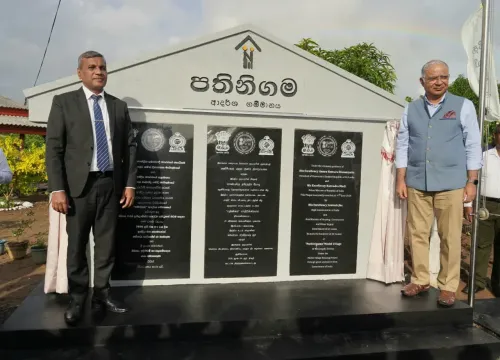
Foundation Stone Laid at Kannavarella Estate
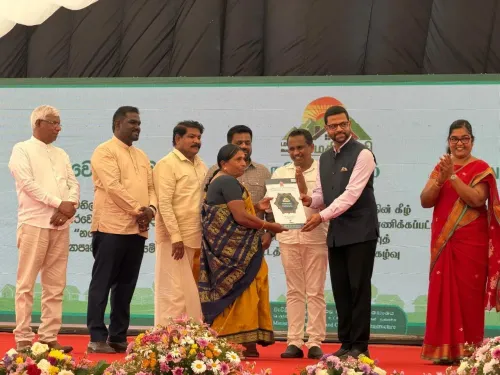
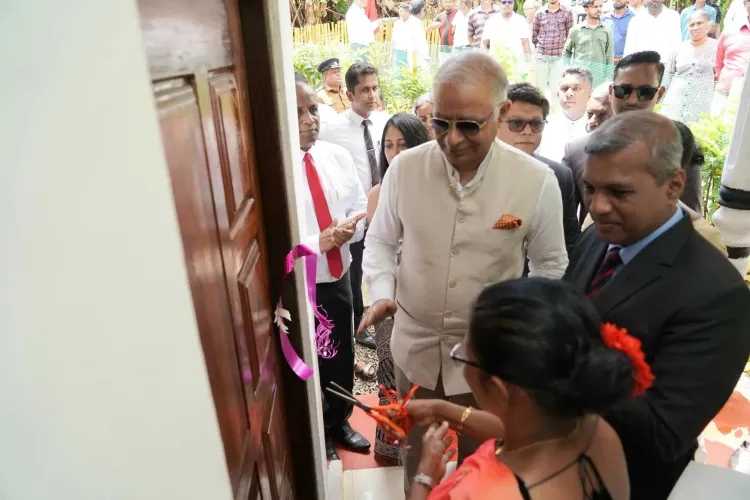
The fourth phase of the IHP was formally set in motion with the laying of the foundation stone for 57 houses at Kannavarella Estate in Badulla District. The ceremony was attended by Sri Lanka's Minister of Plantation and Community Infrastructure, K.V. Samantha Vidyaratne, and Consul General of India in Hambantota, Harvinder Singh. The presence of senior representatives from both governments at a district-level event underscores the diplomatic weight both sides attach to the programme.
Scale and Scope of the Indian Housing Project
In its entirety, the IHP envisions the construction of nearly 60,000 houses across Sri Lanka, backed by an investment exceeding INR 18 billion. The first two phases focused on constructing or rehabilitating 46,000 houses in the war-affected Northern and Eastern Provinces. The third phase delivered 4,000 homes for plantation-sector workers, while the ongoing fourth phase shifts focus to six provinces with a combined target of 10,000 units for families in the plantation sector.
Significance for the Indian Origin Tamil Community
The project holds particular resonance for the Indian Origin Tamil (IOT) community, which has contributed to Sri Lanka's economy for more than two centuries yet continues to face persistent socio-economic challenges. According to reports, access to safe and quality housing is expected to play a meaningful role in restoring livelihoods and strengthening communities for this historically marginalised group. The initiative has been described as going 'beyond merely laying bricks and mortar' — restoring dignity to thousands of vulnerable families.
Modi's 2023 Grant Package and Bilateral Context
During his visit to Sri Lanka in July 2023, Prime Minister Narendra Modi announced a multi-sectoral grant package worth INR 750 million to support development in the plantation regions, timed to coincide with the IOT community's 200th anniversary of its presence in Sri Lanka. The IHP sits within this broader diplomatic architecture, serving as a tangible expression of bilateral solidarity at a time when Sri Lanka is navigating a fragile economic recovery.
What Comes Next
With the fourth phase now formally under way, attention will turn to the pace of construction across the six target provinces and whether the 10,000-unit target can be met on schedule. The programme's track record — having delivered or rehabilitated more than 50,000 homes across earlier phases — lends credibility to the current rollout, though execution in remote plantation districts typically presents logistical challenges. India's continued grant-based engagement positions it as Sri Lanka's most active bilateral development partner in the housing sector.
Point of View
000 homes, INR 18 billion, four phases — makes it one of India's largest bilateral welfare commitments anywhere in South Asia, yet it receives a fraction of the diplomatic attention that trade or security deals attract. The focus on Sri Lanka's plantation sector is strategically astute: the Indian Origin Tamil community is both economically significant and historically underserved, making housing investment a high-visibility, low-controversy entry point for Indian soft power. What the programme still lacks is a transparent, publicly accessible completion and quality-audit framework — without which the headline numbers, however impressive, remain difficult to independently verify. As Sri Lanka courts multiple development partners in its post-crisis recovery, India's grant-based model stands in contrast to loan-heavy alternatives, but sustained delivery on the ground will matter more than ceremony-day optics.
NationPress
16 Sept 2026
Frequently Asked Questions
What is the Indian Housing Project in Sri Lanka?
The Indian Housing Project (IHP) is a grant-funded initiative by the Government of India that aims to construct or rehabilitate nearly 60,000 houses across Sri Lanka, with a total investment exceeding INR 18 billion. It spans four phases targeting war-affected provinces and plantation-sector communities.
What does Phase 4 of the Indian Housing Project cover?
Phase 4 targets the construction of 10,000 houses across six provinces in Sri Lanka, with a focus on underprivileged families in the plantation sector. It was formally launched with the laying of the foundation stone for 57 houses at Kannavarella Estate in Badulla District.
How many homes have been built under the IHP so far?
The first two phases resulted in the construction or rehabilitation of 46,000 houses in Sri Lanka's Northern and Eastern Provinces, while the third phase delivered 4,000 homes for plantation-sector workers — totalling over 50,000 units before the current phase began.
Why does the project matter for the Indian Origin Tamil community?
The Indian Origin Tamil (IOT) community has lived and worked in Sri Lanka's plantation sector for more than two centuries but continues to face significant socio-economic challenges. The IHP directly targets plantation-sector housing, aiming to restore livelihoods and dignity for this historically marginalised group.
What did PM Modi announce during his 2023 Sri Lanka visit?
During his July 2023 visit to Sri Lanka, Prime Minister Narendra Modi announced a multi-sectoral grant package worth INR 750 million to support development in the plantation regions, timed to mark the 200th anniversary of the Indian Origin Tamil community's presence in Sri Lanka.