India's Sri Lanka aid crosses USD 7.5 billion, covers all 25 districts
Synopsis
India's development assistance to Sri Lanka has crossed USD 7.5 billion — spanning all 25 districts and backed by over USD 850 million in grants. With a fresh MoU for a disaster-zone hospital and renewed Colombo Plan engagement, New Delhi is cementing its role as Colombo's most consequential development partner at a time when the region's financing choices are under close scrutiny.
Key Takeaways
India's total development assistance to Sri Lanka has exceeded USD 7.5 billion , covering all 25 districts .
More than USD 850 million of the total has been provided as grants.
An MoU signed on 14 July commits SLR 600 million in Indian grant funding for medical equipment at Deniyaya Base Hospital , part of a USD 450 million post-Cyclone Ditwah package.
High Commissioner Santosh Jha met Colombo Plan Secretary General Chulamanee Chartsuwan on 21 July , reaffirming India's support to the Plan's Capacity Building Programme.
Projects are implemented using local materials and manpower, supporting the Sri Lankan economy directly.
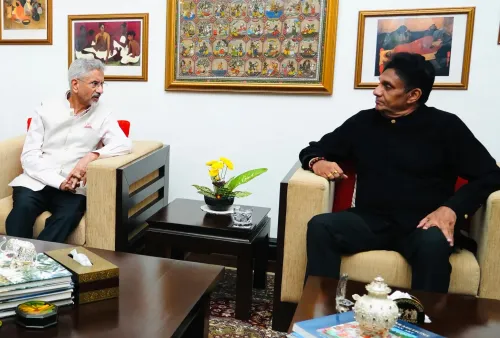
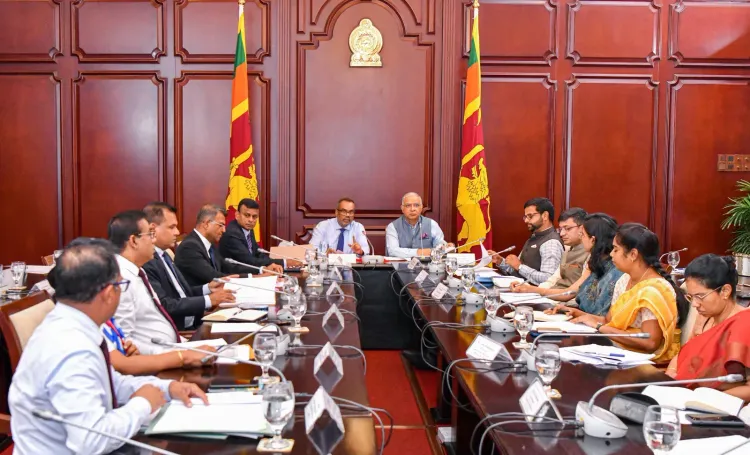
India's cumulative development assistance to Sri Lanka has surpassed USD 7.5 billion, covering all 25 districts of the island nation across sectors including housing, healthcare, education, railways, and energy. The milestone was detailed by India's High Commissioner to Sri Lanka, Santosh Jha, during a review meeting on India-assisted development projects held with Sri Lanka's Minister of Labour and Foreign Employment, Anil Jayantha Fernando, on 31 July.
Scale and Scope of Assistance
Of the total outlay, more than USD 850 million has been provided in the form of grants. According to a post by the Indian High Commission in Colombo, the assistance is people-oriented and spans livelihood support, industrial development, transport, and capacity-building, in addition to physical infrastructure. Projects have been implemented using local materials and manpower, a design choice that reportedly bolsters the host economy rather than bypassing it.
India's development partnership with Sri Lanka is framed around priorities set by the Sri Lankan government and its citizens — a principle the High Commission has consistently highlighted to distinguish this model from donor-driven frameworks.
Deniyaya Hospital MoU
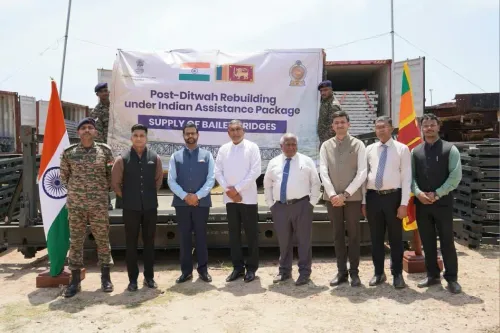
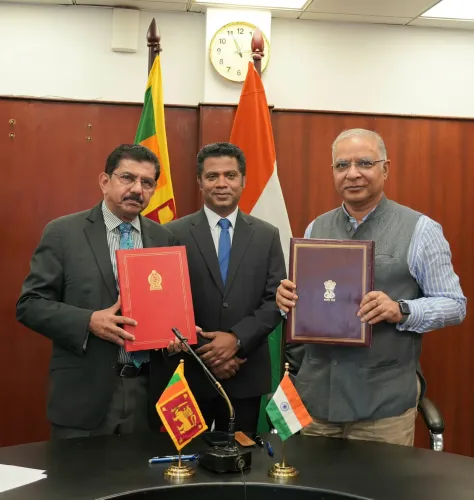
On 14 July, High Commissioner Jha and Sri Lanka's Ministry of Health Secretary Anil Jasinghe signed a Memorandum of Understanding (MoU) for an Indian grant of SLR 600 million to supply medical equipment to the Base Hospital in Deniyaya. The hospital is being relocated by the Sri Lankan government as a disaster preparedness measure, given its current position in a disaster-prone zone. Delivery and installation of equipment is aligned with the final phases of construction, which is projected for completion within three years. The project falls under India's USD 450 million assistance package announced for reconstruction and rehabilitation following Cyclone Ditwah.
Colombo Plan Engagement
On 21 July, Jha met Chulamanee Chartsuwan, the new Secretary General of the Colombo Plan, and reaffirmed India's continued support to the Plan's Capacity Building Programme. Discussions covered initiatives proposed in the organisation's 75th anniversary year and the broader direction of the inter-governmental body. The Colombo Plan comprises 26 member countries and operates on a self-help and mutual-help model aimed at human capital development and south-south cooperation.
Strategic Significance
India's development footprint in Sri Lanka has grown sharply in the years following Colombo's economic crisis, with New Delhi positioning itself as a first-responder partner rather than a transactional lender. Notably, the emphasis on grants — over USD 850 million of the total — signals a deliberate effort to distinguish India's model from debt-heavy alternatives in the region. As bilateral ties deepen, the review meeting underscores that project oversight and accountability are now built into the partnership architecture.
Point of View
Local-material implementation, and district-level coverage suggest a deliberate soft-power architecture, not just aid delivery. What is less clear is whether independent outcome assessments accompany this spending, or whether the numbers reflect commitments rather than verified disbursements. As India's neighbourhood-first policy faces stress-tests from competing regional powers, the Sri Lanka partnership is increasingly a template — and its credibility depends on transparent reporting of what these projects have actually delivered on the ground.
NationPress
15 Sept 2026
Frequently Asked Questions
How much has India spent on development projects in Sri Lanka?
India's total development assistance to Sri Lanka has exceeded USD 7.5 billion, of which more than USD 850 million has been provided as grants. The projects span all 25 districts of the island nation, covering housing, healthcare, education, railways, energy, and livelihoods.
What is the Deniyaya Hospital MoU about?
On 14 July, India and Sri Lanka signed an MoU under which India will provide a grant of SLR 600 million to supply medical equipment to the Base Hospital in Deniyaya. The hospital is being relocated by the Sri Lankan government due to its position in a disaster-prone area, with construction projected for completion within three years.
What is the Colombo Plan and why is India involved?
The Colombo Plan is an inter-governmental organisation of 26 member countries focused on human capital development and south-south cooperation. India reaffirmed its support to the Plan's Capacity Building Programme during High Commissioner Santosh Jha's meeting with new Secretary General Chulamanee Chartsuwan on 21 July.
Why does India's Sri Lanka assistance use local materials and manpower?
India has structured its development projects in Sri Lanka to use local materials and manpower, a design choice that directly supports the Sri Lankan economy and distinguishes the model from frameworks where external contractors capture most of the value. The Indian High Commission has cited this approach as central to the partnership's transparent character.
Is the Deniyaya Hospital project linked to Cyclone Ditwah relief?
Yes. The Deniyaya Hospital equipment grant is part of India's broader USD 450 million assistance package announced for reconstruction and rehabilitation in Sri Lanka following Cyclone Ditwah. Equipment delivery is timed to align with the final phases of the hospital's construction.