Indian Housing Project: Sri Lanka's Dissanayake hands title deeds to 165 families
Synopsis
India's 60,000-home pledge to Sri Lanka moved forward visibly on Friday as President Dissanayake personally handed title deeds to 165 families — legal ownership documents, not just keys. With 50,000 homes already built and 10,000 more underway in plantation regions, the Indian Housing Project is quietly becoming one of India's most consequential neighbourhood-diplomacy tools.
Key Takeaways
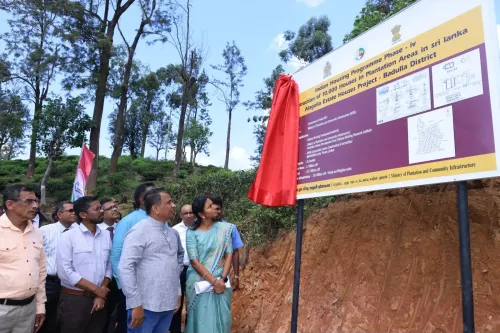
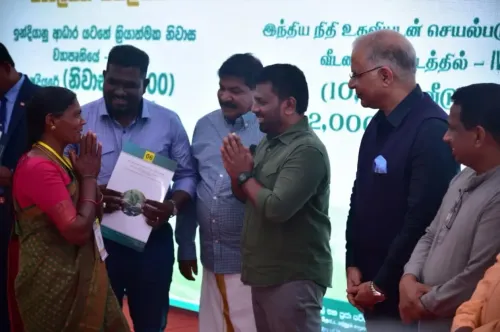
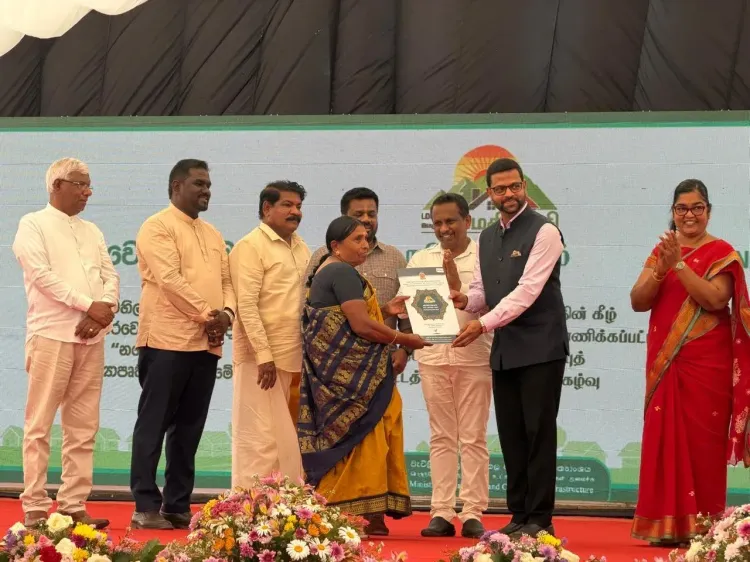
Sri Lankan President Anura Kumara Dissanayake handed over title deeds to 165 beneficiary families under Phase III of the Indian Housing Project on 28 August .
The Indian Housing Project commits to building 60,000 homes across Sri Lanka — one of India's largest overseas development initiatives.
46,000 homes in the North and East and 4,000 in plantation areas are already complete; another 10,000 are under construction.
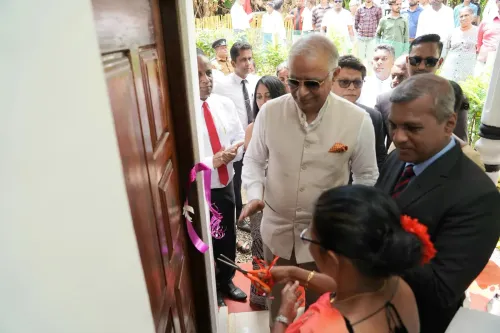
The ceremony also saw the inauguration of 'Navodayapuram' , housing 50 disaster-affected families in Poonagala .
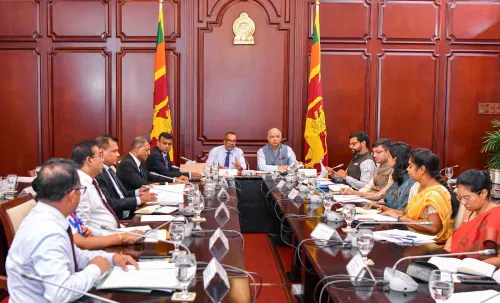
India's USD 450 million rehabilitation package for Cyclone Ditwah recovery was reviewed at a High-Level Committee meeting earlier in the week.
Sri Lankan President Anura Kumara Dissanayake, accompanied by acting High Commissioner of India Maitrey Kulkarni and a delegation of ministers and members of parliament, on Friday, 28 August handed over title deeds to 165 beneficiary families covered under Phase III of the Indian Housing Project (IHP) in Sri Lanka. The ceremony underscored the breadth of India's largest overseas development commitment — a pledge to construct 60,000 homes across the island nation.
Key Developments at the Ceremony
The title deed handover was accompanied by the inauguration of 'Navodayapuram', a housing colony built by the Government of Sri Lanka for 50 disaster-affected families in Poonagala. The event brought together senior cabinet members including Minister of Plantation and Community Infrastructure Samantha Viddyarathna and Deputy Minister Sundarlingam Pradeep, Minister of Fisheries, Aquatic and Ocean Resources Ramalingam Chandrasekar, Minister of Housing, Construction and Water Supply Dr. H. M. Sushil Ranasinghe, and Minister of Women and Child Affairs Saroja Savithri Paulraj, along with several parliamentarians.
Scale and Progress of the Indian Housing Project
According to the Indian High Commission in Sri Lanka, the IHP represents one of India's most ambitious bilateral development undertakings. Of the 60,000 houses committed, 46,000 in the North and East and 4,000 in plantation areas have already been completed. Construction of a further 10,000 homes is currently underway in the plantation regions of the country.
The High Commission noted that the 14,000 houses being built across plantation regions under Phases III and IV of the IHP specifically reaffirm India's commitment to the Indian-Origin Tamil community in Sri Lanka — a population historically linked to India and long considered among the island's most economically marginalised groups.
Broader Rehabilitation Package Under Review
The ceremony came days after the sixth meeting of the High-Level Committee on the implementation of India's USD 450 million rehabilitation package — extended in the wake of Cyclone Ditwah — reviewed progress across the railways, housing, health, education, agriculture, and disaster preparedness sectors. The committee meeting, held on Tuesday, signalled continued bilateral momentum on post-cyclone recovery.
The Indian High Commission stated that 'India remains a steadfast partner in supporting Sri Lanka's swift recovery, rehabilitation, and long-term economic resilience.'
Why This Matters
The IHP is not merely a construction programme — it is a strategic instrument of India's neighbourhood-first foreign policy, particularly aimed at strengthening ties with Sri Lanka's Tamil community. This comes amid a broader reset in India-Sri Lanka relations following President Dissanayake's election, with New Delhi keen to consolidate goodwill through tangible development outcomes rather than diplomatic optics alone. The handover of title deeds — legal ownership documents — carries significance beyond shelter, granting families formal land rights that can anchor economic mobility for generations.
With construction of the remaining 10,000 plantation-region homes underway, the final phase of the IHP is expected to close a decades-long chapter in India's developmental engagement with Sri Lanka's most vulnerable communities.
Point of View
Under a newly elected Dissanayake government seeking economic stabilisation, gives New Delhi unusual leverage to deepen the bilateral relationship through delivery rather than declaration. The real measure of the project's success, however, will be whether formal land ownership translates into economic mobility for plantation-region families — or whether it remains a symbolic gesture without accompanying livelihood infrastructure.
NationPress
12 Oct 2026
Frequently Asked Questions
What is the Indian Housing Project in Sri Lanka?
The Indian Housing Project (IHP) is one of India's largest overseas development initiatives, committing to build 60,000 homes across Sri Lanka. It targets communities in the North, East, and plantation regions, with a specific focus on uplifting the Indian-Origin Tamil community.
How many homes have been completed under the Indian Housing Project?
As of August 2025, 46,000 homes in the North and East and 4,000 in plantation areas have been completed. Construction of another 10,000 homes in plantation regions is currently underway under Phases III and IV of the project.
Who attended the title deed handover ceremony on 28 August?
The ceremony was attended by Sri Lankan President Anura Kumara Dissanayake, acting High Commissioner of India Maitrey Kulkarni, and several cabinet ministers including the ministers for Plantation, Fisheries, Housing, and Women and Child Affairs, along with members of parliament.
What is the USD 450 million rehabilitation package mentioned in the article?
It is an Indian aid package extended to Sri Lanka in the wake of Cyclone Ditwah, covering sectors including railways, housing, health, education, agriculture, and disaster preparedness. A High-Level Committee reviewed its implementation progress earlier in the same week as the ceremony.
What is 'Navodayapuram' and where is it located?
'Navodayapuram' is a housing colony built by the Government of Sri Lanka for 50 disaster-affected families, inaugurated in Poonagala as part of the same housing-sector ceremony on 28 August.