India-Sri Lanka power sector ties: HVDC link, Sampur Solar reviewed
Synopsis
India and Sri Lanka moved closer to grid-level integration on 7 August, with ministers from both sides reviewing the proposed HVDC interconnection and Sampur Solar Project. Set against a $4 billion crisis bailout and $7.18 billion in bilateral trade, this energy push is the most tangible expression yet of India's Neighbourhood First policy — and the HVDC link, if completed, would be a first for South Asia.
Key Takeaways
Union Power Minister Manohar Lal and Sri Lankan Energy Minister Anura Karunathilake met in New Delhi on 7 August 2025 .
Both sides reviewed the proposed India-Sri Lanka HVDC interconnection and the Sampur Solar Power Project .
India shared its TBCB-PPP transmission model as a potential framework for Sri Lanka's infrastructure development.
Bilateral merchandise trade stood at $7.18 billion in FY 2025-26 ; India's cumulative FDI in Sri Lanka reached $2.94 billion through 2025.
The ETCA negotiations resumed in October 2023 after a five-year pause, with the latest round in July 2024 .
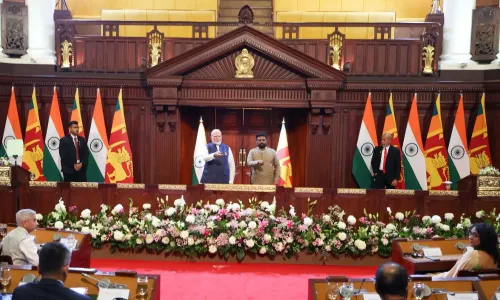
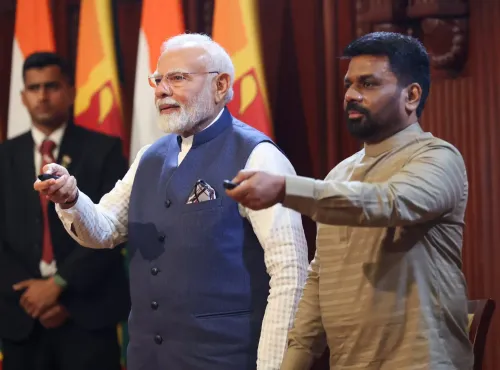
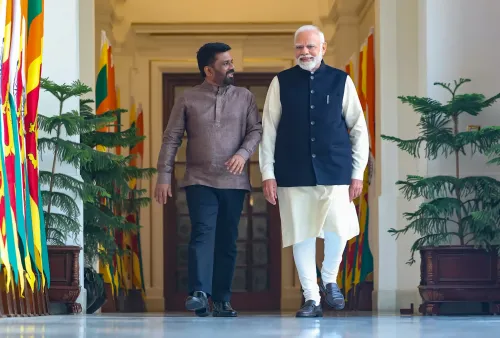
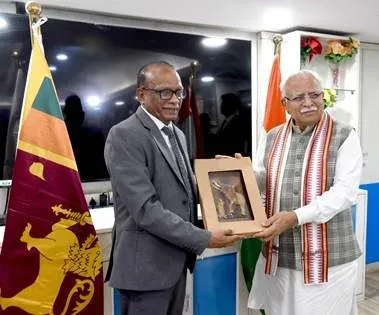
Union Power Minister Manohar Lal and Sri Lankan Ports, Civil Aviation and Energy Minister Anura Karunathilake met in New Delhi on 7 August 2025 to advance bilateral energy cooperation, reviewing the proposed India-Sri Lanka HVDC interconnection and the Sampur Solar Power Project. The talks signal a concrete push to translate India's 'Neighbourhood First' policy into grid-level integration with its island neighbour.
Key Developments from the Meeting
Both delegations reviewed progress on cross-border electricity trade, renewable energy expansion, transmission infrastructure, and capacity-building programmes. The Indian side also presented its experience with the Tariff-Based Competitive Bidding (TBCB) framework — a Public-Private Partnership (PPP) model for transmission development — as a potential template for Sri Lanka's own infrastructure planning, according to an official statement issued after the meeting.
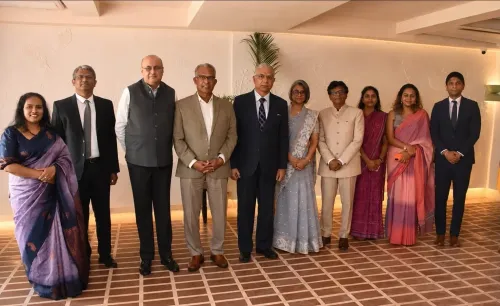
The meeting was attended by Pankaj Agarwal, Secretary, Ministry of Power, and senior Indian government officials. The Sri Lankan delegation included High Commissioner to India Mahishini Colonne alongside other senior officials.
What Both Sides Committed To
Minister Lal reiterated India's commitment to the long-standing energy partnership, while Minister Karunathilake appreciated India's continued support and conveyed Sri Lanka's intent to further expand bilateral energy cooperation. Both sides reaffirmed their commitment to sustainable development and regional energy security under existing bilateral mechanisms.
Broader Bilateral Context
The energy dialogue is set against a robust bilateral relationship anchored by India's $4 billion financial assistance during Sri Lanka's 2022 economic crisis — the single largest external support package Colombo received during that period. Cooperation has since expanded into defence, energy, and digital infrastructure.
On the trade front, merchandise trade between the two countries reached $7.18 billion in FY 2025-26, with India's exports at $5.52 billion and Sri Lanka's exports at $1.66 billion. Notably, negotiations for the Economic and Technology Cooperation Agreement (ETCA) — covering both goods and services — resumed in October 2023 after a five-year gap, with the latest round of talks held in July 2024.
India's Investment Footprint in Sri Lanka
India is among Sri Lanka's largest sources of Foreign Direct Investment (FDI), with cumulative investment of $2.94 billion through 2025. Key sectors include energy, hospitality, real estate, manufacturing, telecommunications, and banking and financial services — making the power sector partnership part of a much wider economic integration story.
With the HVDC interconnection and Sampur Solar still at the review stage, the pace of implementation will be the next critical test of whether this partnership moves from commitment to kilowatts.
Point of View
If completed, would be South Asia's first cross-border submarine power link — a genuinely historic infrastructure milestone. Yet it has been 'proposed' for several years without a financial close or construction timeline. The real question is whether Friday's review meeting advances a concrete project schedule or remains another reaffirmation of intent. India's $4 billion crisis support bought considerable goodwill in Colombo; converting that goodwill into signed power purchase agreements and grid synchronisation protocols is the harder, less photogenic work that will determine whether this partnership delivers energy security or just diplomatic optics.
NationPress
22 Sept 2026
Frequently Asked Questions
What is the India-Sri Lanka HVDC interconnection?
The India-Sri Lanka HVDC (High Voltage Direct Current) interconnection is a proposed cross-border submarine power transmission link that would allow electricity trade between the two countries' grids. It was among the key projects reviewed at the 7 August 2025 ministerial meeting in New Delhi.
What is the Sampur Solar Power Project?
The Sampur Solar Power Project is a bilateral renewable energy initiative being developed in Sri Lanka with Indian involvement. Progress on the project was reviewed at the 7 August meeting between Union Power Minister Manohar Lal and Sri Lankan Energy Minister Anura Karunathilake.
What is India's financial relationship with Sri Lanka?
India provided $4 billion in financial assistance during Sri Lanka's 2022 economic crisis and is one of its largest FDI sources, with cumulative investment of $2.94 billion through 2025. Bilateral merchandise trade reached $7.18 billion in FY 2025-26.
What is the ETCA and where do negotiations stand?
The Economic and Technology Cooperation Agreement (ETCA) is a proposed India-Sri Lanka trade pact covering both goods and services. Negotiations resumed in October 2023 after a five-year gap, with the latest round of talks held in July 2024.
What is India's TBCB framework and why was it shared with Sri Lanka?
The Tariff-Based Competitive Bidding (TBCB) framework is India's Public-Private Partnership model for developing transmission infrastructure through competitive tendering. India shared this model at the 7 August meeting as a potential template for Sri Lanka's own transmission sector development.