World Bank approves $890 million financing for India's solar rooftop program
Synopsis
The World Bank has unlocked $890 million in direct financing and will mobilise a further $4.2 billion in private capital for India's PM Surya Ghar solar rooftop scheme — targeting 10 million households and 1.7 million jobs. It is one of the largest multilateral bets yet on India's residential clean energy transition.
Key Takeaways
The World Bank approved a $890 million financing package on 10 July for India's solar rooftop programme.
The package includes an $820 million IBRD loan , a $60 million Clean Technology Fund concessional loan , and a $10 million Livable Planet Fund grant .
An additional $4.2 billion in private financing will be mobilised through commercial loans for households.
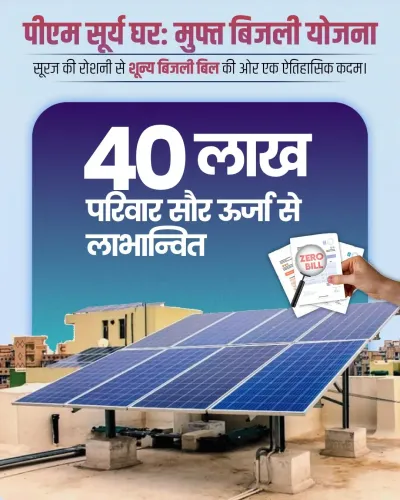
The PM Surya Ghar: Muft Bijli Yojana targets solar rooftop installation for 10 million rural and urban households .
The programme is projected to create 1.7 million job opportunities across manufacturing, installation, and services.
India aims to reach net zero by 2070 and achieve 60% non-fossil-fuel electricity by 2035 .
The World Bank's Board of Executive Directors has approved a $890 million financing package to accelerate India's national solar rooftop programme, aiming to bring clean energy to millions of homes and generate 1.7 million job opportunities across the renewable energy manufacturing, installation, and services value chain. The approval, announced on Friday, 10 July, marks a significant boost to the government's flagship PM Surya Ghar: Muft Bijli Yojana scheme.
What the Financing Package Covers
The funding structure comprises an $820 million loan from the International Bank for Reconstruction and Development (IBRD), a $60 million concessional loan from the Clean Technology Fund, and a $10 million grant from IBRD's Livable Planet Fund. Beyond this, the World Bank will mobilise an additional $4.2 billion in private financing through commercial loans, enabling households to install solar rooftop systems.
The PM Surya Ghar Scheme and Its Targets
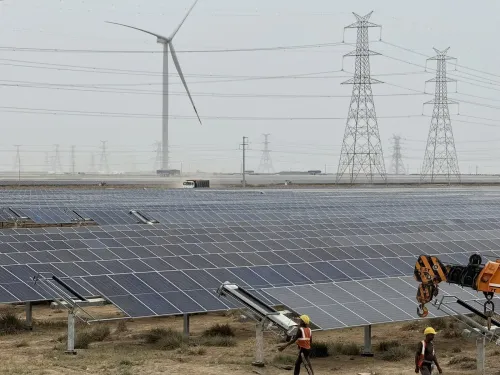
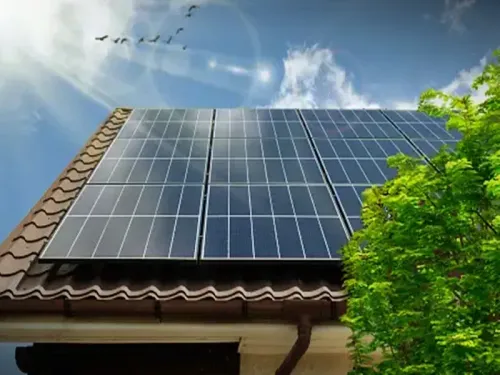
Launched by the Government of India, the PM Surya Ghar: Muft Bijli Yojana programme aims to incentivise solar rooftop installations for 10 million rural and urban households nationwide. The scheme is designed to reduce household electricity costs, curb dependence on grid power, and encourage local manufacturing of solar rooftop equipment. While large-scale solar capacity in India has expanded rapidly, residential adoption has remained limited — a gap this programme directly targets.
World Bank's Decade-Long Commitment to Indian Solar
'The World Bank has been supporting India's solar rooftop sector for over a decade, mobilising more than $2 billion to catalyse market growth from 500 MW to over 27 GW of installed capacity,' said Paul Proccee, World Bank Acting Country Director for India. 'This new financing will help India scale up residential solar, while creating job opportunities across the supply chain and installation ecosystem.'
Moez Cherif, Task Team Leader of the programme, highlighted the structural change the financing aims to deliver: 'The programme will transform the residential solar market by removing financial barriers and building the capacity of distribution companies, banks, and vendors to deliver integrated service solutions. Through collateral-free financing, households can install solar power and significantly reduce their monthly electricity bills.'
India's Broader Clean Energy Commitments
India has committed to achieving net zero emissions by 2070 and raising non-fossil-fuel-based energy resources to 60 per cent of its electricity mix by 2035. This World Bank approval aligns directly with those targets, providing both capital and institutional support to close the residential solar gap. Notably, this is the latest in a series of multilateral interventions backing India's energy transition, underscoring growing international confidence in the country's clean energy trajectory.
What Comes Next
With collateral-free financing now on the table for households and capacity-building support extended to distribution companies and banks, the programme is positioned to unlock a segment of the solar market that policy alone has struggled to activate. The mobilisation of $4.2 billion in private capital will be a key metric to watch as implementation gets under way.
Point of View
But the real number to watch is the $4.2 billion in private capital the World Bank says it will mobilise — because institutional lending to households for rooftop solar has historically stalled on collateral requirements and distribution company risk. The PM Surya Ghar scheme has political ambition; what it has lacked is bankable last-mile delivery. Whether commercial lenders follow through at scale, and whether distribution companies build the vendor ecosystems needed, will determine if this becomes a structural shift or another well-funded pilot. India's residential solar share remains disproportionately small relative to its utility-scale gains — that gap is the real test this programme must pass.
NationPress
8 Oct 2026
Frequently Asked Questions
What did the World Bank approve for India's solar rooftop programme?
The World Bank's Board of Executive Directors approved a $890 million financing package on 10 July to accelerate India's PM Surya Ghar: Muft Bijli Yojana programme. It includes an $820 million IBRD loan, a $60 million Clean Technology Fund concessional loan, and a $10 million grant from the Livable Planet Fund.
What is the PM Surya Ghar: Muft Bijli Yojana scheme?
PM Surya Ghar: Muft Bijli Yojana is a Government of India programme that incentivises solar rooftop installation for 10 million rural and urban households. It aims to reduce household electricity costs and promote local manufacturing of solar rooftop equipment.
How many jobs will the solar rooftop programme create?
The programme is projected to generate 1.7 million job opportunities across the renewable energy manufacturing, installation, and services value chain, according to the World Bank.
How much private financing will be mobilised alongside the World Bank loan?
In addition to the $890 million direct financing, the World Bank will mobilise $4.2 billion in private financing through commercial loans, enabling households to install solar rooftop systems without collateral requirements.
How does this fit into India's broader clean energy targets?
India has committed to achieving net zero emissions by 2070 and sourcing 60 per cent of its electricity from non-fossil-fuel resources by 2035. The World Bank financing directly supports these goals by scaling up residential solar adoption, which has lagged behind India's rapidly growing utility-scale solar capacity.