CM Mohan Yadav slams Congress over SIR double standards
Synopsis
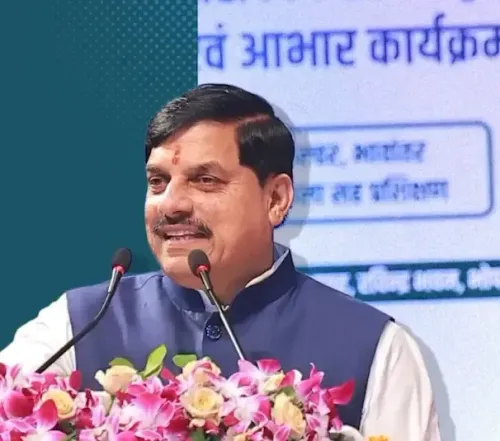
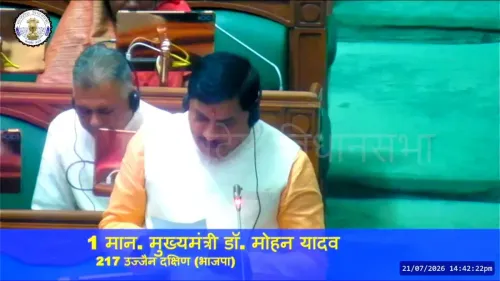
Madhya Pradesh CM Dr. Mohan Yadav called out Congress for accepting the Election Commission's SIR voter-roll revision in states it governs while opposing it elsewhere, naming Rahul Gandhi as responsible for fomenting 'anarchy' and accusing the party of a damaging double standard.
Key Takeaways
Mohan Yadav posted on October 10, 2026 , accusing Congress of hypocrisy on the Election Commission's Special Intensive Revision process.
He argued Congress endorses SIR in states it governs but rejects it in BJP-governed states — what he called a 'dual character.' Rahul Gandhi was named directly, accused of 'repeatedly attempting to create an atmosphere of anarchy' instead of honouring the democratic mandate.
Yadav invoked the foundational democratic principle that voters place parties in government or opposition, and that the opposition must respect that verdict.
He closed with the assertion that 'democracy is strengthened by facts and people's trust, not by accusations.'
A sharp political broadside landed on Saturday, October 10, 2026, when Madhya Pradesh Chief Minister Dr. Mohan Yadav publicly accused the Congress party of hypocrisy over the Special Intensive Revision (SIR) process — the Election Commission's periodic exercise to cleanse and update voter rolls — charging that the opposition endorses the process in states it governs while condemning it everywhere else.
The double-standard charge at the heart of the attack
In his post, Dr. Yadav argued that democracy is strengthened by facts and public trust, not by allegations. His central accusation: Congress accepts the SIR process as legitimate in states where it holds power, but brands the same procedure illegitimate wherever it sits in opposition. 'Yah atyant nindaniya hai' ('This is deeply condemnable'), he wrote, calling it an exposure of the party's 'dual character.'
He named Rahul Gandhi directly, accusing him and his allies of 'repeatedly attempting to create an atmosphere of anarchy in the country' rather than fulfilling what he described as the constitutional responsibility of a loyal opposition — to play its role and respect the people's mandate.
SIR — the process at the centre of the controversy
The Special Intensive Revision is an Election Commission of India exercise that systematically revisits voter lists to add eligible citizens, remove duplicates, and correct errors. The process is routine but politically charged: critics periodically allege that it is used selectively to disenfranchise voters in opposition strongholds, while supporters argue it is essential for roll accuracy ahead of elections.
Dr. Yadav's argument turns that criticism back on Congress itself — if the party governs states where SIR is ongoing and raises no objection there, its protests in BJP-governed states are, he contends, politically motivated rather than principled.
A mandate-and-mandate argument
Underlying the CM's statement is a broader claim about democratic norms. He invoked the power of the ballot — that Indian voters decide who governs and who opposes — and called on the opposition to honour that outcome rather than, as he put it, engineer disorder. 'Democracy is strengthened by facts and people's trust, not by accusations,' he wrote, closing on what amounts to a challenge: defend your position with evidence, not disruption.
Whether Congress responds with a counter-challenge on voter-roll data or reframes the debate around Election Commission autonomy will determine where this particular political skirmish travels next. For now, Dr. Mohan Yadav has drawn the line — and dared the opposition to cross it on facts, not noise.
Point of View
Pivot to procedural inconsistency as proof of bad faith rather than engage the underlying grievance. By framing SIR acceptance in Congress-governed states as a concession that undermines Congress's own protest, the CM turns a structural critique of the Election Commission into a character question about the opposition. The move also signals that as the next electoral cycle approaches, the voter-roll revision process will be one of the key battlegrounds between the ruling party and Congress — making the Election Commission's independence and methodology a live political flashpoint worth watching.
NationPress
10 Oct 2026
Frequently Asked Questions
What is the SIR process that CM Mohan Yadav mentioned?
SIR stands for Special Intensive Revision, an Election Commission of India exercise that periodically reviews and updates voter rolls by adding eligible new voters, removing deceased or duplicate entries, and correcting errors. It is a standard procedure but often becomes politically contentious around election seasons.
What exactly did CM Mohan Yadav accuse Congress of?
He accused Congress of a double standard — accepting the SIR process as valid in states where Congress is in power while opposing and condemning the same process in states governed by the BJP. He called this 'deeply condemnable' and evidence of Congress's 'dual character.'
Why did CM Mohan Yadav specifically name Rahul Gandhi?
Dr. Yadav named Rahul Gandhi as the leader driving what he characterised as attempts to create 'an atmosphere of anarchy in the country,' arguing that Gandhi and his associates are failing in the opposition's constitutional duty to respect the people's mandate and work within democratic norms.
What is the BJP's broader argument about democracy in this context?
The BJP's argument, as articulated by Dr. Yadav, is that Indian democracy is grounded in the ballot — voters decide who governs — and the opposition is obligated to honour that outcome. Challenging institutions like the Election Commission with what he calls politically motivated allegations weakens, rather than strengthens, democratic culture.
Has Congress responded to CM Mohan Yadav's charges on SIR?
No response from Congress was documented at the time of this report. The party's stance on the SIR controversy and any rebuttal to Dr. Yadav's double-standard charge is awaited.