CM Mohan Yadav: Telecom MoU to Bring Jobs to Gwalior
Synopsis
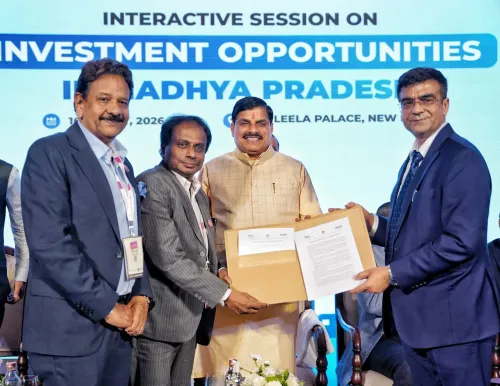
Madhya Pradesh Chief Minister Dr. Mohan Yadav announced on 30 July 2026 that a central-state MoU on the telecom sector will bring major industry investment to Gwalior, promising large-scale youth employment and positioning MP among India's fastest-growing states.
Key Takeaways
On 30 July 2026 , CM Dr.
Mohan Yadav announced an upcoming MoU between the Government of India and the Madhya Pradesh government in the telecom sector.
Gwalior is identified as the primary beneficiary city for the incoming telecom investments.
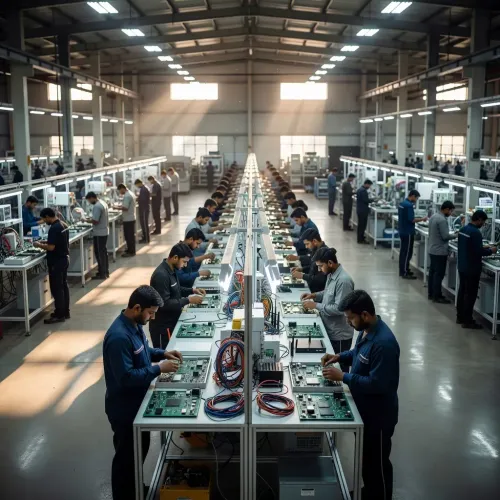
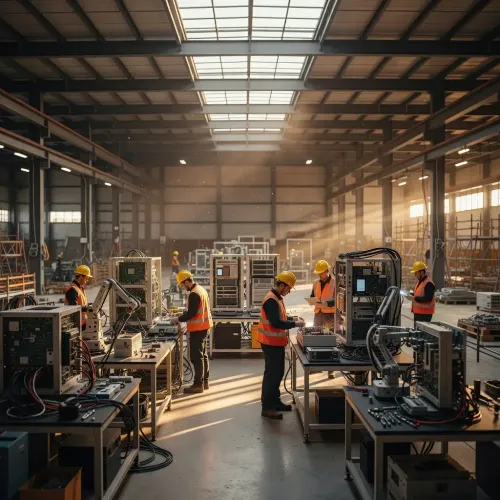
The MoU is expected to attract multiple telecom companies to invest in Madhya Pradesh , generating youth employment at scale.
The announcement aligns with the Union Cabinet's PLI Scheme for Telecom and Networking Products approved in June 2021 under Atmanirbhar Bharat.
Specific details — company names, investment figures, and job creation timelines — are yet to be made public.
Yadav described Madhya Pradesh as now among India's 'fastest-developing states.'
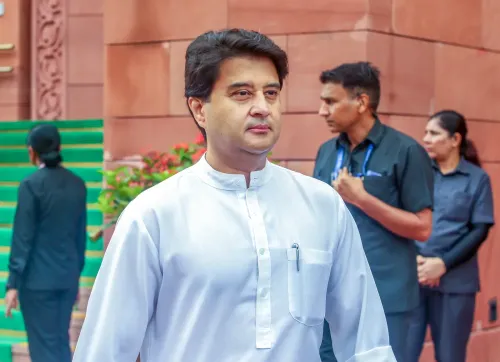
A major central-state agreement is taking shape — and Madhya Pradesh Chief Minister Dr. Mohan Yadav says Gwalior stands to gain the most. On Thursday, 30 July 2026, the Chief Minister announced that the Government of India and the Madhya Pradesh government are set to sign a Memorandum of Understanding in the telecom sector, describing it as a 'big gift' for the historic northern city.
Posting in Hindi on X, Dr. Yadav declared: 'टेलीकॉम सेक्टर को लेकर भारत सरकार और मध्यप्रदेश सरकार के बीच होने वाला एमओयू ग्वालियर के लिए बड़ी सौगात है' — 'The MoU to be signed between the Government of India and the Madhya Pradesh government on the telecom sector is a big gift for Gwalior.' He added that the agreement would draw 'several telecom industries of the country' to invest in the state, generating employment for youth at scale.
Gwalior at the Centre of a Telecom Push
The choice of Gwalior as the focal point is notable. Long known for its fort and classical music heritage, the city has in recent years been positioned by the state government as an industrial destination in central India. A central-state MoU channelling telecom manufacturing investment specifically toward Gwalior would mark a significant step in that reorientation.
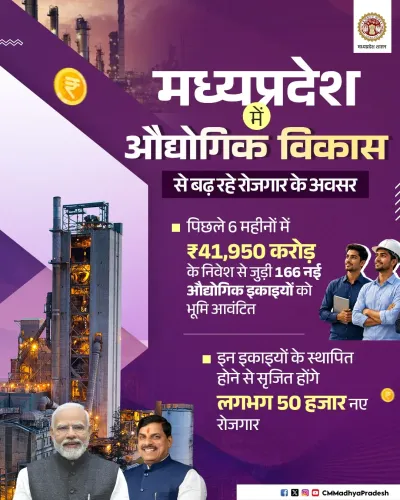
Dr. Yadav framed the development within a broader claim: that Madhya Pradesh has now joined the ranks of India's fastest-growing states. 'Our state has today become part of the fastest-developing states,' he said, calling on citizens to move forward with the state's progress.
Where This Fits: PLI, Atmanirbhar Bharat, and the Race for Telecom Units
The announcement lands squarely within a national industrial strategy that has been building since 2021. The Union Cabinet approved the Production Linked Incentive (PLI) Scheme for Telecom and Networking Products that year, aimed at reducing India's dependence on imported equipment and seeding domestic manufacturing under the Atmanirbhar Bharat framework.
Since then, states have competed actively to host new telecom manufacturing units, signing targeted MoUs to capture the investment and the jobs that follow. Madhya Pradesh's move fits a clear pattern: second-tier states breaking into a sector previously dominated by a handful of coastal industrial clusters. If the MoU delivers, it could position Gwalior as a new node in India's emerging telecom hardware map.
Youth Employment: The Headline Promise
The Chief Minister's language was direct about the intended beneficiary: young people in Madhya Pradesh. Large-scale youth unemployment has been a persistent political pressure point across India, and state governments have increasingly used industrial MoUs as visible, concrete responses to that pressure. The specifics — which companies, how many jobs, on what timeline — remain to be detailed as the MoU text is finalised and made public.
What to watch: the list of participating telecom companies, the exact investment commitments, and the timeline for units to become operational in Gwalior. Those details will determine whether this announcement translates into the employment surge the Chief Minister is promising.
India's telecom manufacturing ambitions are moving fast. Madhya Pradesh just signalled it intends to be in the race — and it has named Gwalior as its entry point.
Point of View
Who took office in December 2023, a high-visibility central-state MoU in a strategic sector like telecom serves a dual purpose: it reinforces the BJP's Atmanirbhar Bharat credentials at the state level and gives his government a concrete, youth-employment narrative ahead of any electoral cycle. Gwalior's selection is also politically significant — the city carries weight in northern MP's political geography. The real test will come when the MoU text and company commitments are disclosed; until then, the announcement is a strong signal, not yet a scorecard.
NationPress
30 Jul 2026
Frequently Asked Questions
What is the telecom MoU announced by Madhya Pradesh CM Mohan Yadav?
It is a Memorandum of Understanding between the Government of India and the Madhya Pradesh government aimed at attracting telecom industry investment to the state, with Gwalior identified as the primary destination. CM Dr. Mohan Yadav announced it on 30 July 2026.
How will the telecom MoU benefit Gwalior?
According to CM Mohan Yadav, the MoU will bring several telecom companies to invest in Madhya Pradesh, with Gwalior as the focal point, creating large-scale employment opportunities for the state's youth.
What is the PLI scheme for telecom and how does it relate to this MoU?
The Production Linked Incentive (PLI) Scheme for Telecom and Networking Products was approved by the Union Cabinet in June 2021 to promote domestic manufacturing and reduce import dependence. The Madhya Pradesh MoU fits within this national framework, with states signing agreements to host new manufacturing units.
Which telecom companies will invest in Madhya Pradesh under this MoU?
The specific companies have not yet been publicly named. CM Mohan Yadav stated that 'several telecom industries of the country' would invest in the state, but a detailed list is expected once the MoU text is formally disclosed.
Is Madhya Pradesh among India's fastest-growing states?
CM Dr. Mohan Yadav claimed on 30 July 2026 that Madhya Pradesh has joined the ranks of India's fastest-developing states. Madhya Pradesh has been pursuing central-state industrial partnerships to accelerate economic growth, though independent rankings vary by metric and source.