CM Naidu Hails Anant Ambani's Plan for Agriculture School in Rayalaseema
Synopsis
Andhra Pradesh CM N. Chandrababu Naidu has thanked Anant Ambani for committing to establish the Indian School of Agriculture in Rayalaseema, calling it a step toward transforming the drought-prone region into a global horticulture hub.
Key Takeaways
Anant Ambani has committed to establishing the Indian School of Agriculture in Rayalaseema, Andhra Pradesh .
Chandrababu Naidu publicly welcomed the pledge on October 2, 2026 , calling it transformative for the region's farmers.
The stated goal is to make Rayalaseema a global horticulture hub , building on its existing agri-climatic strengths.
Rayalaseema — covering Kurnool, Nandyal, Anantapur, and YSR Kadapa — has historically faced water scarcity and limited institutional agri-investment.
Naidu dubbed Ambani 'a beloved son of Andhra Pradesh,' signalling the political and economic weight being attached to the announcement.
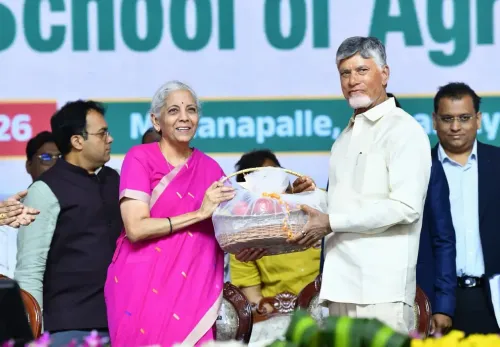
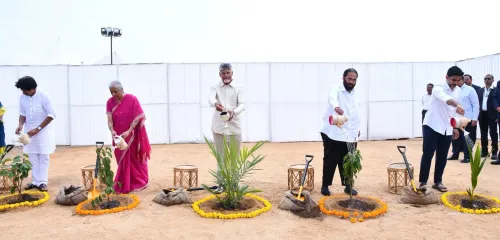
A new agricultural institution is heading to one of Andhra Pradesh's most agrarian and historically drought-prone regions — and Andhra Pradesh Chief Minister N. Chandrababu Naidu is calling it a transformative moment for Rayalaseema. On Friday, October 2, 2026, the Chief Minister publicly thanked Anant Ambani for stepping forward to establish the Indian School of Agriculture in the region, describing the commitment as a milestone for farmers, horticulture, and the broader economy of southern Andhra Pradesh.
What Anant Ambani Has Pledged for Rayalaseema
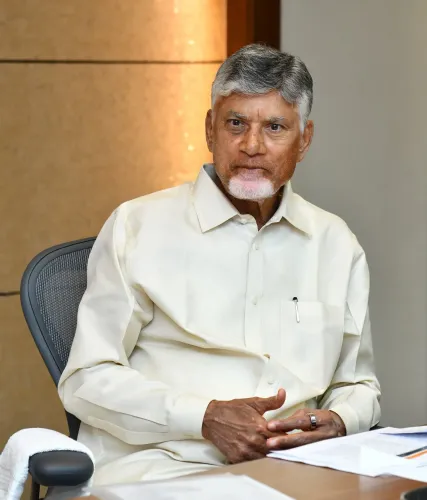
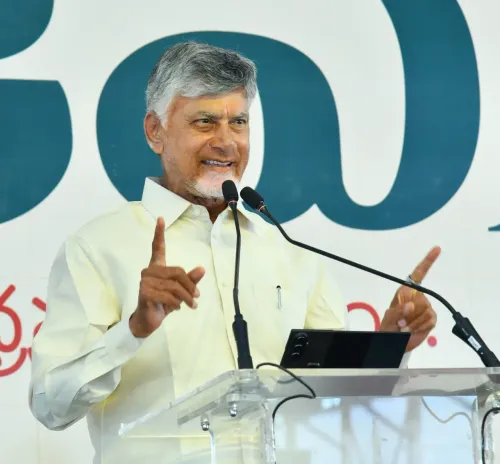
In his post, CM Naidu described the initiative as a direct commitment to 'empowering our farmers, strengthening agriculture and transforming Rayalaseema into a global horticulture hub.' The proposed Indian School of Agriculture is framed not merely as an educational institution but as a catalyst for structural change in a region whose farmers have long grappled with water scarcity, erratic rainfall, and limited access to agri-tech. Naidu went so far as to declare Anant Ambani 'a beloved son of Andhra Pradesh' — a mark of the warmth and political significance the Chief Minister is attaching to this announcement.
Rayalaseema's Long Road Toward Agricultural Revival
Rayalaseema, the four-district belt comprising Kurnool, Nandyal, Anantapur, and YSR Kadapa, has historically been among the most water-stressed sub-regions in peninsular India. Its farmers have pioneered groundnut and red chilli cultivation under harsh conditions, yet the region has rarely attracted the kind of institutional investment that could modernise farm practices at scale. The prospect of a dedicated school of agriculture — backed by Ambani resources — points toward a model that could blend world-class agri-science with the specific soil-and-climate realities of dryland farming. The hashtag #RayalaseemaRising that accompanied the Chief Minister's post signals a deliberate branding push: Naidu wants this moment to mark a before-and-after for the region's identity.
Why the 'Global Horticulture Hub' Vision Matters
The phrase #GlobalHorticultureHub carries weight beyond ceremony. Andhra Pradesh is already among India's leading producers of fruits and vegetables, and Rayalaseema's agro-climatic conditions are well-suited to high-value horticulture crops — from mangoes and tamarind to tomatoes and chillies — if supported by cold-chain infrastructure, research, and skills training. A school of agriculture anchored in the region could theoretically accelerate the pipeline from field to export market, addressing the value-chain gaps that have kept farmer incomes under pressure for decades. The specific mandate — horticulture — also aligns with national and state priorities around doubling farm income and expanding agri-exports.
The final hashtag #RayalaseemaVijayeebhava — roughly, 'may Rayalaseema be victorious' — underscores the emotional charge Naidu is attaching to this announcement. For a Chief Minister who has staked his political identity on economic revival and infrastructure-led growth across Andhra Pradesh, a marquee private-sector commitment to the historically neglected Rayalaseema belt is exactly the kind of headline he wants heading into the state's ongoing development narrative.
Whether the Indian School of Agriculture translates into brick-and-mortar reality on the ground now becomes the number that matters most.
Point of View
' Naidu is also deploying the soft power of regional belonging to lock in elite private capital. For Rayalaseema specifically — a region that has long felt politically and economically sidelined relative to coastal Andhra — the framing of a dedicated agriculture school as a regional renaissance moment is as much political messaging as development policy. The real test will be whether institutional groundwork and timelines follow the headline.
NationPress
2 Oct 2026
Frequently Asked Questions
What is the Indian School of Agriculture in Rayalaseema?
The Indian School of Agriculture is a proposed educational and research institution that Anant Ambani has committed to establishing in the Rayalaseema region of Andhra Pradesh, aimed at empowering farmers and advancing horticulture.
Why is CM Naidu calling Rayalaseema a global horticulture hub?
Rayalaseema's agro-climatic conditions are suited to high-value horticulture crops like mangoes, chillies, and tomatoes. CM Naidu is using the Ambani-backed school as an anchor for a broader vision to modernise the region's agriculture and expand its export potential.
What is Anant Ambani's role in Andhra Pradesh agriculture?
Anant Ambani has pledged to establish the Indian School of Agriculture in Rayalaseema, Andhra Pradesh, marking a significant private-sector commitment to the region's agricultural development, as acknowledged by CM N. Chandrababu Naidu on October 2, 2026.
Where exactly is the Indian School of Agriculture being set up?
The school is planned for the Rayalaseema region of Andhra Pradesh, though a specific district or site has not been publicly confirmed in the available details.
What does #RayalaseemaRising mean?
'#RayalaseemaRising' is a hashtag used by CM Chandrababu Naidu to signal a development push for the historically drought-prone Rayalaseema belt, positioning new investments like the Indian School of Agriculture as markers of the region's economic resurgence.