CM Chandrababu Orders Jaladhara-Jalaharati Works in 100 Days
Synopsis
Chief Minister Chandrababu Naidu chaired a video conference from Kuppam on 4 July 2026, ordering all Andhra Pradesh district collectors to complete Jaladhara-Jalaharati water conservation and groundwater recharge works within a 100-day deadline, and to document best practices for statewide replication.
Key Takeaways
CM Nara Chandrababu Naidu chaired a video conference from Kuppam on 4 July 2026 to review Jaladhara-Jalaharati works.
All sanctioned works under the scheme must be completed within a 100-day deadline .
Water Resources Minister Nimmala Ramanaidu and senior officials from his department participated alongside all district collectors.
Collectors were directed to adopt and replicate best practices from high-performing districts for water security and groundwater augmentation.
Successful methods and models must be formally documented for cross-district learning and statewide scaling.
The review continues Andhra Pradesh's long-standing pattern of time-bound, video-conference-monitored water infrastructure drives post-bifurcation.
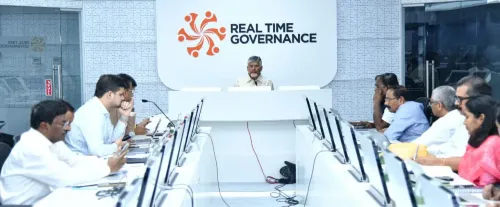
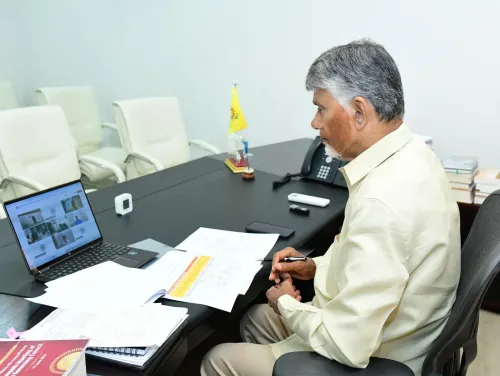
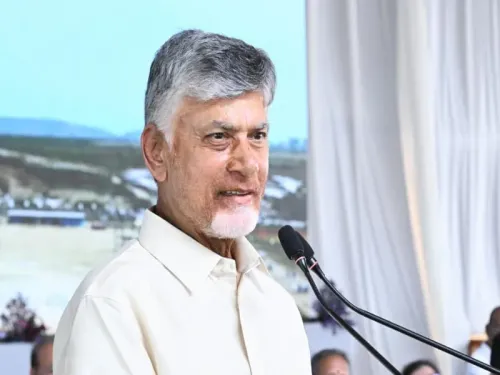
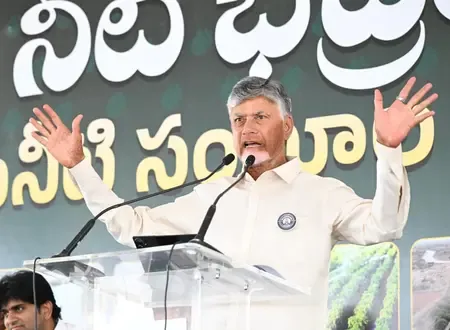
The Chief Minister's Office of Andhra Pradesh announced on Saturday, 4 July 2026 that Chief Minister Nara Chandrababu Naidu has directed all district collectors to complete sanctioned works under the Jaladhara-Jalaharati water conservation scheme within the stipulated 100-day deadline. The directive was issued during a video conference held from Kuppam, where the Chief Minister is on a constituency visit.
Context
Addressing collectors across all districts via video conference, CM Naidu instructed officials to complete all sanctioned Jaladhara-Jalaharati works within the 100-day target period without exception. The review also included Water Resources Minister Nimmala Ramanaidu and senior departmental officials alongside all district collectors. The Chief Minister made clear that best practices and successful models from individual districts must be documented for wider replication.
Naidu specifically directed collectors to adopt district-level best practices that have proven effective for achieving water security and augmenting groundwater levels. He emphasised that successful methods must not remain isolated but be formally documented and shared across the state's administrative machinery.
Policy Backdrop
The Jaladhara-Jalaharati scheme is part of Andhra Pradesh's broader push for surface water conservation and groundwater recharge across its districts. The initiative follows the administrative tradition established by the Naidu government's earlier Neeru-Chettu programme between 2014 and 2019, which focused on tank restoration and micro-irrigation expansion.
Since Andhra Pradesh's bifurcation in 2014, successive state governments have grappled with altered river-water shares, making groundwater recharge and local water conservation schemes critical to agricultural stability. The state's post-2024 budget reiterated time-bound 100-day action plans for pending irrigation and recharge works, reflecting institutional continuity in this approach.
The recurring use of video conferences for district-level reviews has been a hallmark of the Naidu administration's governance style, enabling centralised monitoring of decentralised implementation across Andhra Pradesh's 26 districts.
Stakeholders and Impact
The primary beneficiaries of the Jaladhara-Jalaharati works are rural farming households across Andhra Pradesh, particularly those in drought-prone Rayalaseema and parts of the coastal belt who depend on groundwater for both agriculture and drinking water. Timely completion of recharge structures directly affects kharif and rabi crop cycles.
District collectors have been placed at the centre of accountability, with the Chief Minister's review creating a direct performance obligation. The instruction to document and replicate successful inter-district models signals a shift from ad hoc local solutions toward a standardised state-wide knowledge framework for water management.
What's Next
The immediate watch point is whether district administrations submit compliance reports before the 100-day deadline lapses and how the state government responds to any shortfalls. A formal documentation exercise for best practices, as directed by CM Naidu, could feed into a cabinet note or policy circular for scaling successful groundwater recharge models statewide.
With Kuppam serving as the venue for this high-level review, the visit also underscores the Chief Minister's dual role as the state's executive head and a constituency representative with a personal stake in the region's water security outcomes.
Point of View
Centrally monitored governance — a model he has used across infrastructure sectors since returning to power in 2024. The emphasis on documenting and replicating district-level best practices suggests the government is moving beyond project completion toward building an institutional knowledge base for water management, which could have lasting administrative value. Holding the review from Kuppam, his home constituency, reinforces his image as a hands-on administrator even during constituency tours. The broader signal is that water security, particularly groundwater augmentation in drought-vulnerable Rayalaseema, remains a political as much as a policy priority for the Naidu government.
NationPress
3 Oct 2026
Frequently Asked Questions
What is the Jaladhara-Jalaharati scheme in Andhra Pradesh?
Jaladhara-Jalaharati is an Andhra Pradesh state scheme focused on surface water conservation and groundwater recharge works across districts, aimed at improving water security for farming and drinking water needs.
Why did CM Chandrababu Naidu hold a video conference from Kuppam?
CM Naidu was on a visit to Kuppam, his home constituency in Chittoor district, and conducted the district collectors' review via video conference from there on 4 July 2026.
What is the 100-day deadline for Jaladhara-Jalaharati works?
CM Naidu directed all district collectors to complete all sanctioned Jaladhara-Jalaharati water conservation works within a 100-day target period, with no exceptions.
Who attended the Jaladhara-Jalaharati video conference review?
Water Resources Minister Nimmala Ramanaidu, senior officials of the water resources department, and collectors from all districts of Andhra Pradesh attended the review.
What did CM Naidu say about best practices in the water sector?
CM Naidu instructed collectors to adopt proven best practices from high-performing districts for water security and groundwater augmentation, and to formally document successful models for replication statewide.