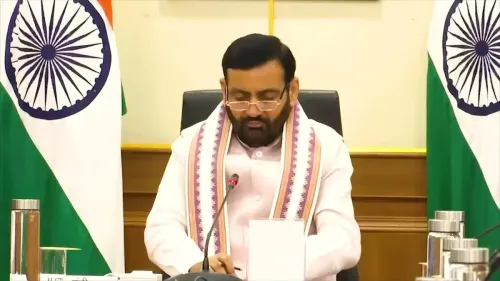
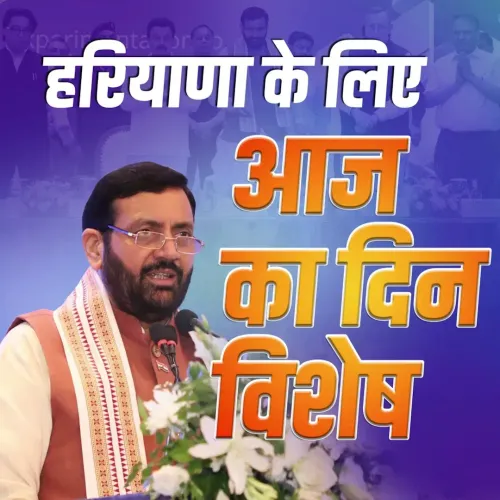
CM Nayab Saini Chairs Haryana Revenue Conference in Chandigarh
Synopsis
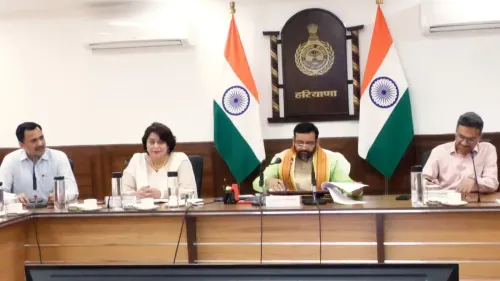
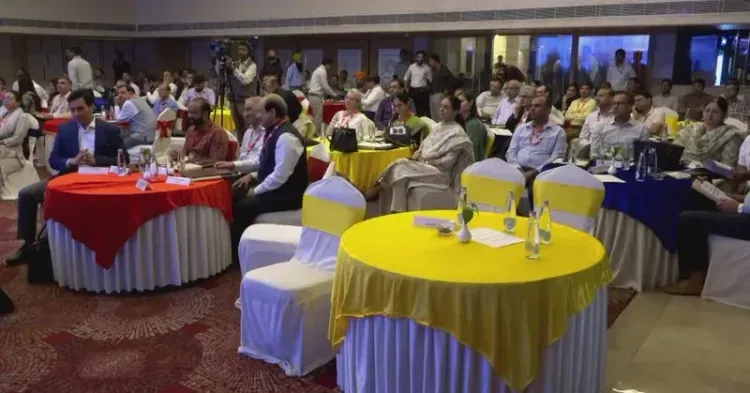
Haryana Chief Minister Nayab Singh Saini chaired a live State Conference on Increasing Tax and Non-Tax Revenue in Chandigarh on 30 September 2026, signalling a focused push to strengthen the state's own-source revenue amid rising expenditure pressures and post-GST fiscal constraints.
Key Takeaways
Haryana CM Nayab Singh Saini presided over a State Conference on Increasing Tax and Non-Tax Revenue in Chandigarh on 30 September 2026 .
The conference was broadcast live, reflecting the administration's intent to signal fiscal transparency and political priority.
Haryana's key own-source revenue streams include excise duty, stamps and registration fees, and transport levies — all targeted for optimisation.
The push follows the 2017 GST rollout , which reduced states' direct control over indirect taxes and increased reliance on own-source and non-tax revenue.
Saini has led Haryana since March 2024 , succeeding Manohar Lal Khattar, and faces rising expenditure on subsidies and infrastructure.
Concrete outcomes such as revised revenue targets or new compliance directives are expected in upcoming Finance Department notifications or the next budget session.
Haryana's fiscal machinery shifted into high gear on Wednesday, 30 September 2026, as Chief Minister Nayab Singh Saini presided over a live State Conference on Increasing Tax and Non-Tax Revenue in Chandigarh — a focused administrative push to strengthen the state's own revenue base at a time when expenditure pressures on subsidies and infrastructure are rising across India.
Why Haryana Is Zeroing In on Its Own Revenue Streams
Haryana is a net contributor state — one that pays more into the central pool than it draws back — yet it faces the same fiscal squeeze that has prompted state governments nationwide to look inward since the GST rollout of 2017 restructured how indirect tax revenue flows. With a large share of collections now pooled and devolved through a central formula, states have less direct control over indirect taxes than they once did, making own-source revenue — excise duty, stamps and registration fees, transport levies, and various non-tax receipts — critical levers for budget headroom.
Periodic conferences of this kind are standard fiscal-management practice across Indian states, but they carry particular weight when convened at the chief minister level, signalling that revenue optimisation is a political as well as administrative priority for the Saini government.
Saini's Fiscal Tenure Since March 2024
Nayab Singh Saini took charge as Chief Minister in March 2024, succeeding Manohar Lal Khattar. His administration has inherited a state with a significant agricultural and industrial base — auto-ancillary clusters around Gurugram and Faridabad, a large real-estate and stamps-registration pipeline, and a robust excise sector — all of which are traditional revenue workhorses for Haryana's treasury.
Bringing state finance officials and revenue department heads together in a structured conference format is a direct way to audit collection gaps, benchmark targets, and align field-level enforcement with budgetary goals ahead of the next budget session.
What Finance Officials Will Be Watching
The broader pattern across BJP-ruled and other states shows these conferences often precede revised revenue targets or administrative circulars tightening compliance in excise, property registration, and vehicle taxation. For Haryana, any uptick in own-source revenue directly expands the fiscal space available for capital expenditure and welfare commitments — two areas where the Saini government has made public commitments.
Concrete outcomes — revised targets, new collection mechanisms, or departmental directives — are expected to surface in forthcoming Haryana Finance Department notifications or during the next budget session of the state assembly.
A chief minister in the room, a live broadcast to the public, and a state treasury that needs every rupee it can find: the Haryana revenue conference is a reminder that governance, at its most unglamorous, is often just this — counting carefully and collecting efficiently.
Point of View
Not just a bureaucratic exercise — a posture consistent with BJP-ruled states that have leaned into administrative efficiency as a governance brand. Post-GST, the battle for state finances has quietly shifted from tax-rate politics to collection-rate discipline, and Haryana's conference reflects that structural reality. If the event produces measurable revenue-target revisions, it could also serve as a pre-budget-session narrative tool for the ruling dispensation ahead of assembly accountability debates.
NationPress
30 Sept 2026
Frequently Asked Questions
What was the Haryana State Conference on Tax Revenue about?
It was a government conference chaired by Chief Minister Nayab Singh Saini in Chandigarh on 30 September 2026, focused on identifying ways to increase Haryana's tax and non-tax revenue collections.
Why is Haryana holding a conference on increasing revenue?
Indian states, including Haryana, face fiscal pressure because the 2017 GST rollout reduced their direct control over indirect taxes, making own-source revenues like excise, stamps and registration, and transport fees more critical for meeting expenditure needs.
Who is Nayab Singh Saini and when did he become Haryana CM?
Nayab Singh Saini is a BJP leader who became Chief Minister of Haryana in March 2024, succeeding Manohar Lal Khattar.
What are Haryana's main sources of own tax revenue?
Haryana's primary own-source revenue streams include excise duty, stamps and registration fees, and transport levies, all of which are key targets for revenue optimisation efforts.
What outcomes are expected from the Haryana revenue conference?
Concrete outcomes such as revised revenue targets or new administrative directives are expected to appear in Haryana Finance Department notifications or during the next state assembly budget session.