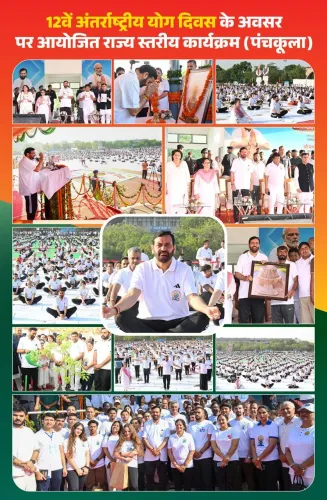
CM Nayab Saini leads Haryana's Yoga Day in Panchkula
Synopsis
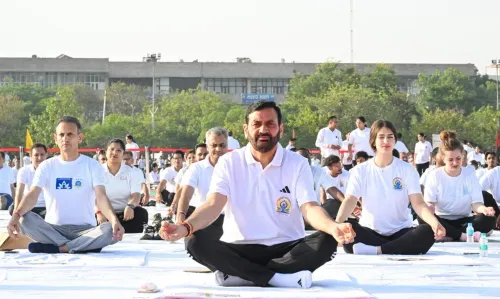
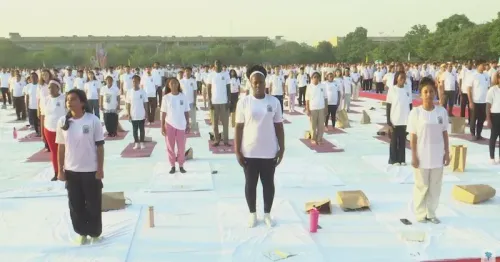
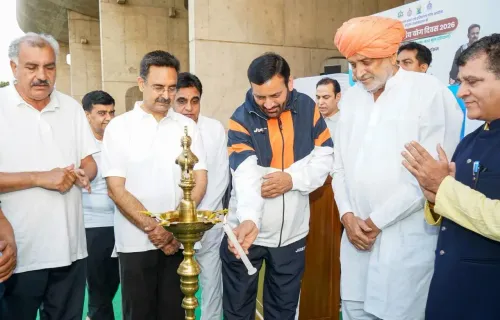
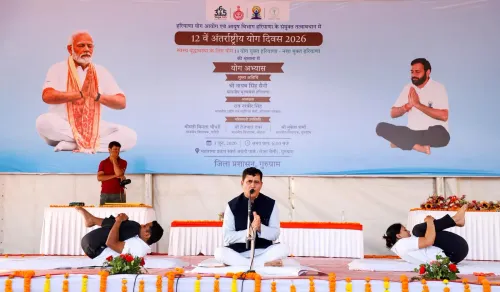
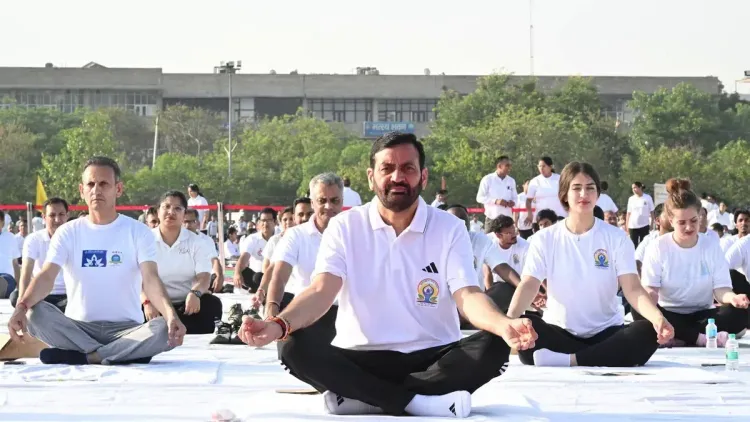
Chief Minister Nayab Saini joined the state-level International Yoga Day event in Panchkula on 21 June 2026, performing yoga alongside youth from 16 nations. He invoked the 'One Earth, One Family, One Future' vision, linking yoga to public health, social balance, and the Viksit Bharat goal.
Key Takeaways
Chief Minister Nayab Saini personally participated in and performed yoga at Haryana's state-level International Yoga Day event on 21 June 2026 .
The programme was held in Panchkula , Haryana's satellite city adjacent to Chandigarh.
Youth from 16 friendly nations participated, giving the event an international dimension.
CM Saini cited the 'One Earth, One Family, One Future' theme — drawn from India's G20 presidency of 2023 — as the event's guiding spirit.
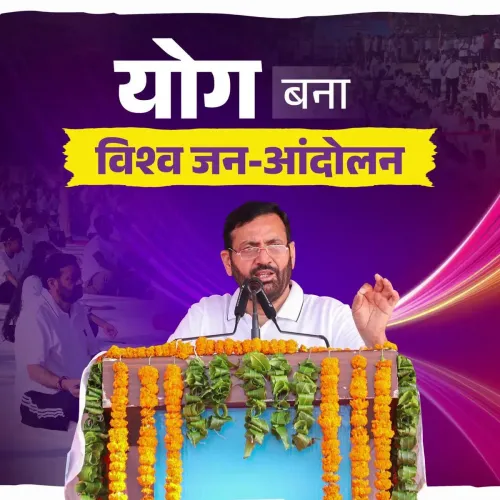
He described yoga as a 'powerful medium' for achieving Viksit Bharat , the government's vision for a developed India by 2047 .
The event reflects India's broader strategy of using Yoga Day as a platform for cultural soft power and wellness diplomacy since 2014 .
The Chief Minister's Office of Haryana announced on Sunday, 21 June 2026 that Chief Minister Nayab Saini participated in and performed yoga at the state-level International Yoga Day programme held in Panchkula. The event drew youth from 16 friendly nations, underscoring yoga's growing global reach and the spirit of Vasudhaiva Kutumbakam — 'the world is one family'.
Context
Every year on 21 June, nations across the world mark the International Day of Yoga, a global observance established by the United Nations General Assembly in 2014 following a proposal by India. Haryana's state-level edition in Panchkula this year was elevated by the presence of foreign youth delegates, giving the domestic event a distinctly multilateral character.
Chief Minister Nayab Saini, who has led Haryana since 2024 as a BJP chief minister, joined participants on the mat, signalling the government's personal commitment to the wellness agenda rather than a purely ceremonial presence.
Policy Backdrop
The theme and language of the event drew directly from India's G20 presidency of 2023, whose guiding motto was 'One Earth, One Family, One Future' — itself rooted in the ancient Sanskrit concept of Vasudhaiva Kutumbakam. CM Saini reiterated this framing, stating that yoga is 'a powerful medium for building a healthy life, a balanced society, and a Viksit Bharat' — the Government of India's vision for a developed nation by 2047.
Since 2014, successive central and state governments have used Yoga Day events as instruments of cultural soft power and wellness diplomacy, linking an ancient practice to contemporary national objectives including public health and economic development.
Stakeholders and Impact
The most visible stakeholders at the Panchkula event were the youth participants — both from Haryana and from the 16 partner countries whose presence transformed a state function into a platform for people-to-people diplomacy. For Haryana residents, the state-level programme reinforces the government's push to mainstream yoga in daily life and public health infrastructure.
The participation of foreign youth also serves India's broader objective of positioning yoga as a universal wellness practice rather than a culturally exclusive tradition, lending credibility to its multilateral appeal.
What's Next
Attention will now shift to whether Haryana follows up the high-visibility event with concrete budget allocations — for yoga integration in schools and AYUSH wellness centres — ahead of the next annual observance. The state's ability to institutionalise yoga beyond a single-day celebration will be the true measure of policy intent. Nationally, the momentum from state-level programmes is expected to feed into India's continued use of yoga as a pillar of cultural and health diplomacy on the world stage.
Point of View
One Family, One Future' and tying yoga to the Viksit Bharat vision, CM Nayab Saini positions the ancient practice as both a domestic health policy instrument and a vehicle for sub-national diplomacy. This pattern — where state governments amplify central foreign-policy themes through cultural events — has become a signature of BJP-governed states seeking to align with New Delhi's global narrative. The real test, however, lies in post-event policy: whether Haryana converts the optics of international participation into sustained investment in AYUSH infrastructure and school-level yoga programmes.
NationPress
21 Jun 2026
Frequently Asked Questions
Where was Haryana's International Yoga Day 2026 event held?
The state-level International Yoga Day 2026 event was held in Panchkula , Haryana, on 21 June 2026 .
Did CM Nayab Saini attend the Yoga Day event in Haryana?
Yes, Chief Minister Nayab Saini personally participated in and performed yoga at the Panchkula event, as announced by the Chief Minister's Office of Haryana.
How many countries participated in Haryana's Yoga Day 2026 event?
Youth from 16 friendly nations participated in the Panchkula event, reflecting yoga's growing international acceptance.
What is the significance of 'Vasudhaiva Kutumbakam' in the Yoga Day context?
Vasudhaiva Kutumbakam is a Sanskrit phrase meaning 'the world is one family.' It formed the philosophical basis of India's G20 presidency theme and was invoked at the Haryana event to highlight yoga's universal, cross-cultural appeal.
What is Viksit Bharat and how does it relate to Yoga Day?
Viksit Bharat is the Government of India's vision for a fully developed nation by 2047 . CM Saini linked yoga to this goal by describing it as a medium for building a healthy population and a balanced society — both prerequisites for national development.