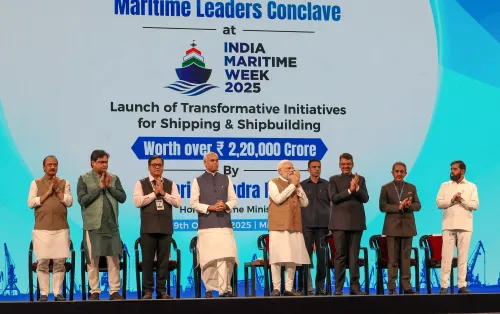
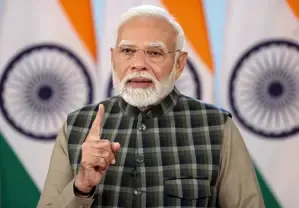
PM Modi Highlights India's Strengthened Maritime Ecosystem
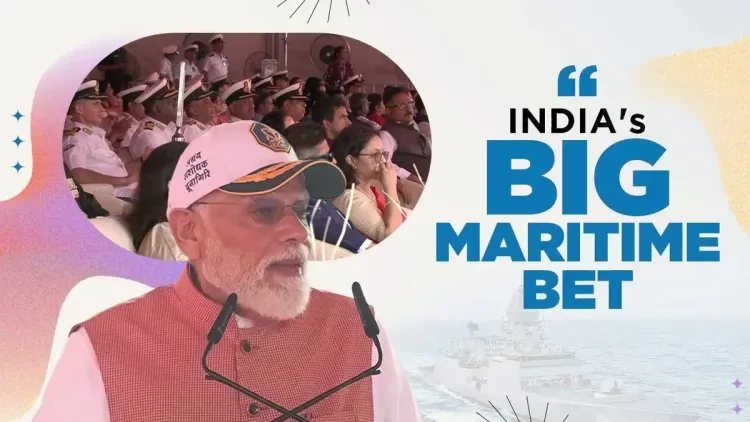
Synopsis
Prime Minister Narendra Modi on June 21, 2026 highlighted India's push to strengthen its maritime ecosystem, saying it has cut trade costs, energised industries, and opened new opportunities in coastal regions — building on a decade of port-led infrastructure policy.
Key Takeaways
PM Modi on June 21, 2026 stated that India is actively empowering its entire maritime ecosystem.
The government says the maritime push has reduced trade costs and created new opportunities in coastal areas.
The Sagarmala Project (launched 2015 ) and Maritime India Vision 2030 (unveiled 2021 ) are the primary policy frameworks driving this effort.
The National Logistics Policy (2022) targets a reduction in India's logistics cost from approximately 14% of GDP to single digits.
Maritime India Vision 2030 sets a target of 10,000 km of coastal shipping routes and a doubling of port capacity.
Key stakeholders include port operators, exporters, shipping lines, and coastal communities.
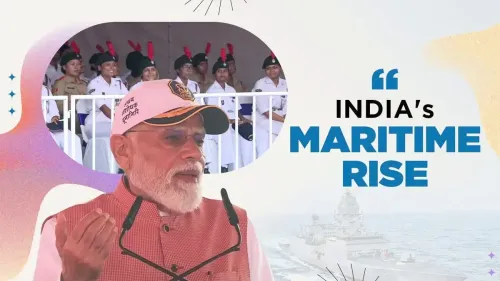
Prime Minister Narendra Modi on Sunday, June 21, 2026, highlighted India's ongoing efforts to strengthen its maritime ecosystem, stating that the push has reduced trade costs, given fresh momentum to industries, and created new opportunities in coastal regions.
Posting in Hindi on X, PM Modi wrote: 'भारत आज अपने पूरे Maritime Ecosystem को सशक्त बना रहा है।' ('India today is empowering its entire maritime ecosystem.') He added that this has led to a reduction in trade costs, new energy for industries, and the emergence of fresh opportunities in coastal areas.
Context
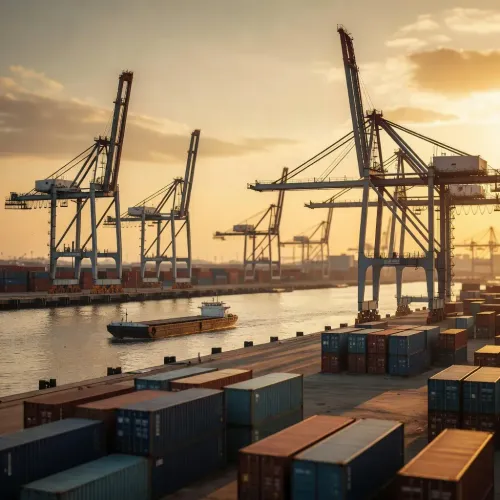
India's maritime sector has been a focal point of infrastructure policy since 2014, with successive initiatives aimed at reducing the country's historically high logistics costs. The government's broad push spans port modernisation, coastal shipping, inland waterways, and multimodal connectivity. PM Modi's post comes amid ongoing budget deliberations for 2026-27, in which allocations for ports and shipping are under parliamentary discussion.
Policy Backdrop
The Sagarmala Project, launched in 2015, set the foundation for port-led development by improving connectivity between ports and their hinterlands and promoting coastal shipping to ease pressure on road and rail networks. Building on this, the Maritime India Vision 2030 — unveiled in 2021 — laid out a ten-year blueprint targeting 10,000 km of coastal shipping routes and a doubling of port capacity.
The National Logistics Policy, approved by the Cabinet in 2022, set an explicit target to reduce India's logistics cost as a share of GDP from approximately 14% to single digits. The PM Gati Shakti national master plan, also launched in 2021, integrates infrastructure planning across transport modes — including ports — to eliminate silos between ministries and accelerate project delivery.
The Ministry of Ports, Shipping and Waterways remains the nodal authority overseeing policy, regulation, and development across this ecosystem, coordinating with state governments on coastal economic zones and with the private sector on port modernisation.
Stakeholders and Impact
The principal beneficiaries of a strengthened maritime ecosystem span several groups: port operators gain from higher throughput capacity and better hinterland connectivity; exporters and importers benefit from lower logistics costs that improve the competitiveness of Indian goods in global markets; and coastal communities stand to gain from employment and economic activity generated by new coastal economic zones and inland waterway projects.
Shipping lines operating on Indian routes also benefit from improved port infrastructure and turnaround times. Domestically, the government has placed increasing emphasis on shipbuilding as a complementary industry, seeking to reduce dependence on foreign-flagged vessels for coastal and inland trade.
What's Next
Parliamentary scrutiny of 2026-27 budget allocations for ports and shipping will be a key near-term indicator of the government's financial commitment to the sector. Progress on the rollout of new coastal economic zones and active inland waterway projects will also serve as measurable benchmarks against the targets set under Maritime India Vision 2030.
With India positioning its maritime sector as a pillar of trade competitiveness and coastal development, the pace of private investment in port infrastructure and the uptake of coastal shipping routes will determine how quickly the stated benefits — lower trade costs and new coastal opportunities — translate into verifiable economic outcomes.
Point of View
Coastal communities and trade-dependent industries. The maritime sector has been one of the more quietly ambitious planks of the BJP-led government's infrastructure agenda since 2014, and the messaging around cost reduction directly addresses a long-standing structural critique of Indian logistics. With budget season underway, the post also functions as a signal of continued political priority for port and shipping investment. Whether the on-ground outcomes match the policy ambition will depend on the pace of private capital deployment and the resolution of state-level coordination challenges in coastal zone development.
NationPress
21 Jun 2026
Frequently Asked Questions
What is India's Maritime Ecosystem that PM Modi referred to?
India's maritime ecosystem encompasses its ports, shipping lines, inland waterways, coastal economic zones, and supporting logistics infrastructure. PM Modi's June 21, 2026 post highlighted government efforts to strengthen this entire system to reduce trade costs and create coastal opportunities.
What is the Sagarmala Project?
The Sagarmala Project was launched in 2015 to promote port-led development in India. It focuses on modernising ports, improving connectivity between ports and their hinterlands, and promoting coastal shipping to reduce pressure on road and rail networks.
What is Maritime India Vision 2030?
Maritime India Vision 2030 is a ten-year blueprint unveiled in 2021 that sets targets including 10,000 km of coastal shipping routes and a doubling of India's port capacity by the end of the decade.
How is India trying to reduce logistics costs?
The National Logistics Policy (2022) aims to bring India's logistics cost down from approximately 14% of GDP to single digits. Complementary schemes like Sagarmala and PM Gati Shakti support this by integrating port and multimodal transport planning.
Who benefits from India's maritime infrastructure push?
The primary beneficiaries include port operators, exporters and importers, shipping lines, domestic shipbuilders, and coastal communities who gain from new employment and economic activity generated by coastal economic zones and inland waterway projects.