CM Nayab Saini Orders One-Month Deadline on Shop Ownership Cases
Synopsis
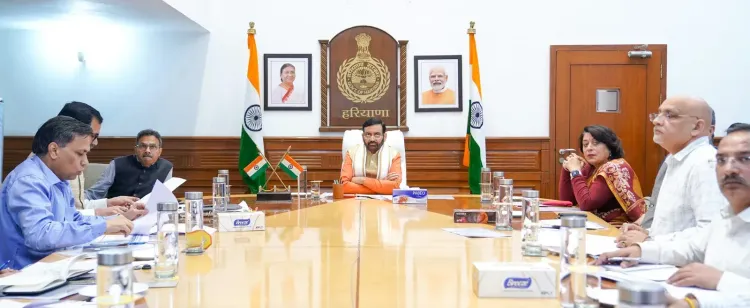
Chief Minister Nayab Saini held a review of Haryana's Shahari Svamitva Yojana in Chandigarh on November 17, ordering all departments to clear pending shop-ownership cases under phases 1.0 and 2.0 within one month, warning against any unnecessary delay for eligible beneficiaries.
Key Takeaways
CM Nayab Saini chaired a review of Shahari Svamitva Yojana 1.0 and 2.0 in Chandigarh on November 17, 2026 .
Officials were given a strict one-month deadline to resolve all pending shop-ownership cases.
The Shahari Svamitva Yojana aims to grant formal property ownership to eligible urban shopkeepers in Haryana.
All concerned departments were directed to coordinate with each other for time-bound resolution.
The CM stated the government's resolve is to ensure eligible beneficiaries receive their legal rights without obstruction.
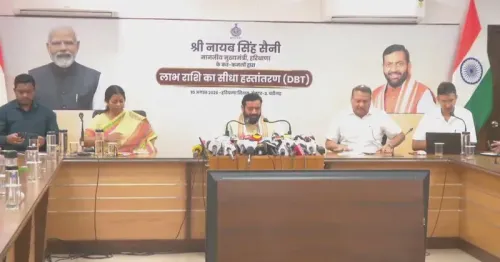
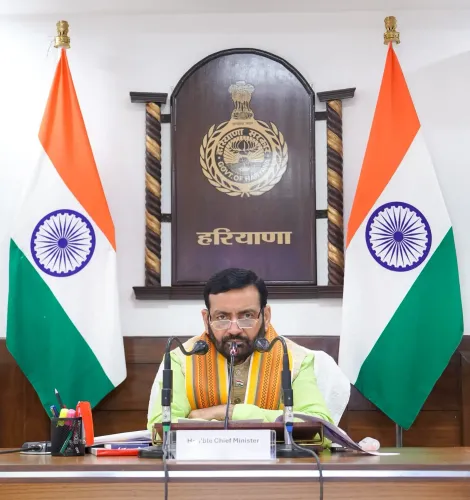
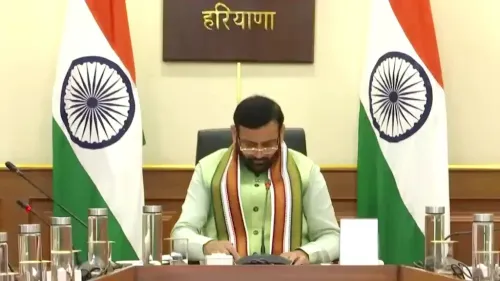
Thousands of urban shopkeepers in Haryana may finally get the ownership papers they have been waiting for — Chief Minister Nayab Saini set a hard one-month deadline on Tuesday, November 17, 2026, ordering officials to clear every pending case under the Shahari Svamitva Yojana 1.0 and 2.0 without further delay. The directive came during a formal review meeting held in Chandigarh, where the CM made it unmistakably clear: eligible shopkeepers will not be made to wait any longer for what is legally theirs.
What Saini told officials in the review room
Speaking at the meeting, CM Saini said — 'पात्र दुकानदारों को उनकी दुकानों का मालिकाना हक दिलाने में कोई अनावश्यक देरी न हो' — ('there should be no unnecessary delay in giving eligible shopkeepers ownership rights over their shops'). He directed all concerned departments to work in mutual coordination and resolve cases in a time-bound manner. The message was unambiguous: inter-departmental friction is not an excuse.
The state government framed the push as a matter of rights, not charity. Officials were told that eligible beneficiaries must receive their legal entitlement, and the delivery of welfare schemes must reach them without obstruction. That framing — rights over patronage — is a deliberate rhetorical choice the Haryana BJP government has leaned on in its urban outreach.
Shahari Svamitva Yojana: what the scheme promises
The Shahari Svamitva Yojana is a Haryana government initiative rolled out in two phases — 1.0 and 2.0 — designed to confer formal ownership rights on eligible urban shopkeepers and property holders who have long occupied premises without registered title deeds. The scheme mirrors, in an urban context, the Centre's rural Svamitva Yojana, which uses drone mapping to issue property cards to village household owners.
Formalising ownership has cascading effects: it unlocks access to institutional credit, enables legal transfer of property, and brings informal urban commercial holdings into the documented economy. For shopkeepers who have run businesses for years without a title document, the difference is not bureaucratic — it is financial and generational.
The pendency problem Saini is trying to fix
Review meetings of this kind are typically triggered by accumulating complaints that scheme benefits are stuck in inter-departmental queues. CM Saini, who took charge of Haryana in March 2024 succeeding Manohar Lal Khattar, has repeatedly used review mechanisms to signal administrative accountability — a governance style that plays well ahead of local body cycles but also reflects genuine pressure from beneficiary communities.
The one-month window now becomes the benchmark. If compliance follows, thousands of shopkeepers across Haryana's towns could receive ownership documents before the year closes. If it does not, the meeting itself becomes the story — and the CM's office will have to answer for it.
Point of View
Saini is attempting to shift the political optics from beneficence to accountability. The one-month deadline is a classic administrative pressure tool: it creates a measurable, public checkpoint that departments cannot quietly ignore. Whether the machinery moves fast enough will determine whether this becomes a governance success story or a reminder of how state welfare schemes often stall between policy and paperwork.
NationPress
17 Nov 2026
Frequently Asked Questions
What is the Shahari Svamitva Yojana in Haryana?
The Shahari Svamitva Yojana is a Haryana government scheme launched in two phases — 1.0 and 2.0 — to grant formal ownership rights to eligible urban shopkeepers and property holders who occupy premises without registered title deeds.
What did CM Nayab Saini order regarding the Shahari Svamitva Yojana?
On November 17, 2026, CM Nayab Saini directed officials to resolve all pending shop-ownership cases under the scheme within one month, with no unnecessary delay for eligible beneficiaries.
Who benefits from the Shahari Svamitva Yojana?
Eligible urban shopkeepers and property holders in Haryana who have been occupying premises without formal ownership documents stand to benefit from the scheme.
Where did CM Saini hold the Shahari Svamitva Yojana review?
The review meeting was held in Chandigarh, the shared capital of Haryana and Punjab, on November 17, 2026.
Why does formal shop ownership matter for small traders?
A registered title deed allows shopkeepers to access institutional loans, legally transfer property, and brings their holdings into the formal economy — with significant financial and generational implications.