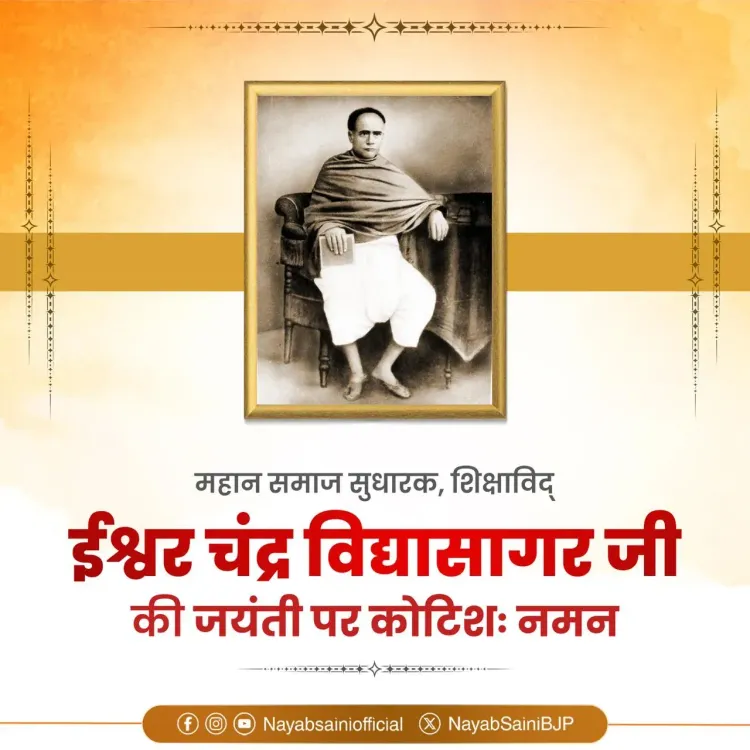
CM Nayab Saini pays tribute to Ishwar Chandra Vidyasagar on jayanti
Synopsis
Haryana Chief Minister Nayab Singh Saini marked Ishwar Chandra Vidyasagar's birth anniversary on 26 September 2026, saluting the 19th-century Bengali philosopher's campaigns for widow remarriage, women's education, and the modernisation of Bengali prose.
Key Takeaways
Haryana CM Nayab Singh Saini posted a tribute to Ishwar Chandra Vidyasagar on his birth anniversary on 26 September 2026 .
Vidyasagar was a 19th-century Bengali philosopher, social reformer and educationist credited with advancing widow remarriage and women's education.
His advocacy helped produce the Hindu Widows' Remarriage Act of 1856 , a landmark legislative milestone.
Vidyasagar also simplified Bengali language and literature , making it accessible to wider audiences.
CM Saini described Vidyasagar's thought and dedication to human service as a 'perpetual inspiration for future generations.'
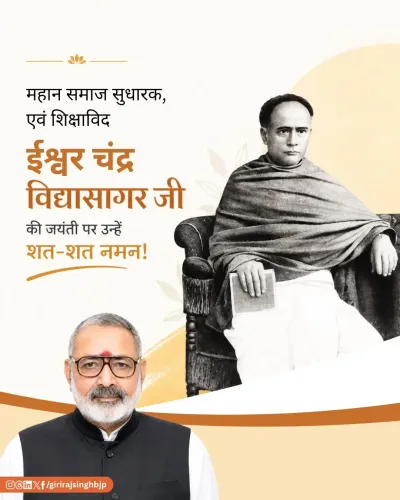
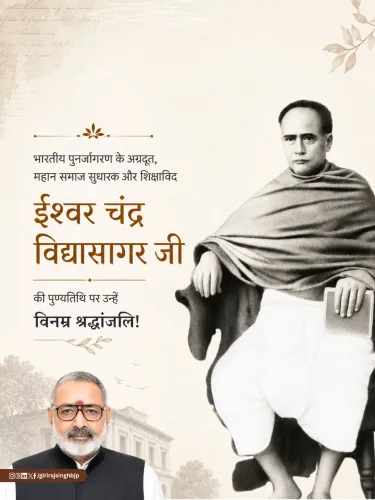
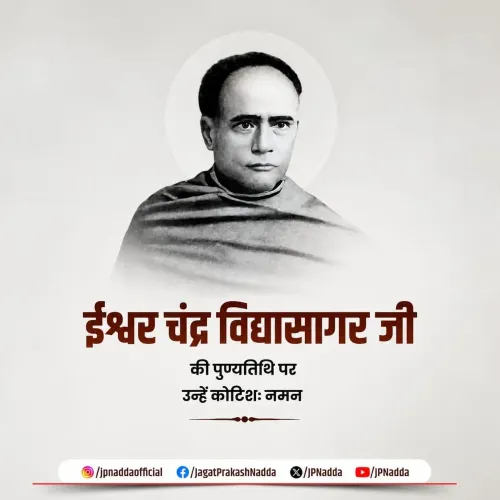
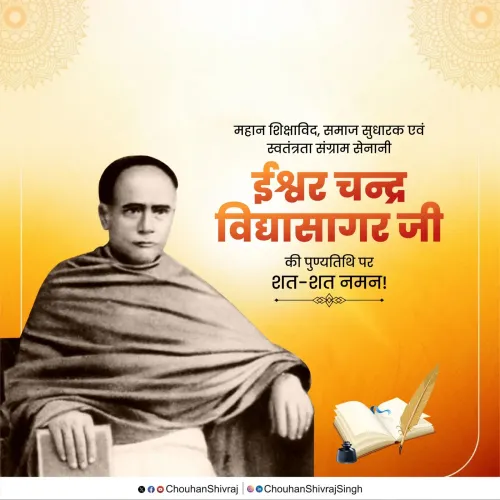
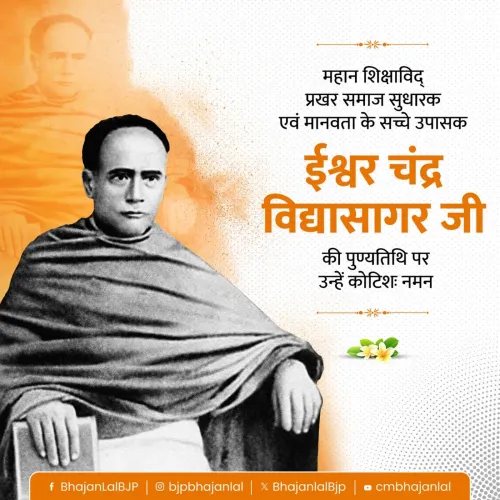
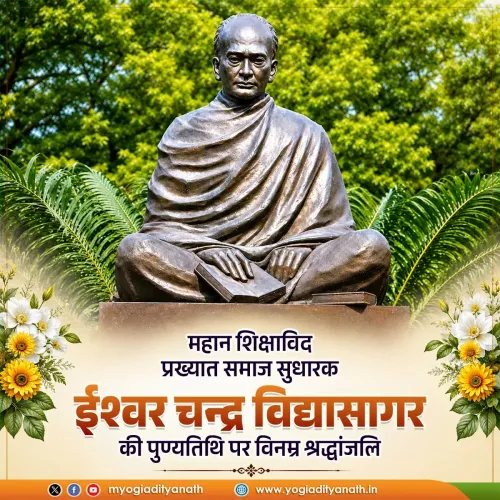
On the birth anniversary of one of modern India's most consequential reformers, Haryana Chief Minister Nayab Singh Saini offered his respects to Ishwar Chandra Vidyasagar, honouring the 19th-century philosopher, educator and social crusader whose campaigns reshaped Bengali society.
Posting on Saturday, 26 September 2026, CM Saini wrote: 'महान दार्शनिक, समाज सुधारक और शिक्षाविद् ईश्वर चंद्र विद्यासागर जी की जयंती पर उन्हें सादर नमन' — 'Respectful salutations to the great philosopher, social reformer and educationist Ishwar Chandra Vidyasagar on his birth anniversary.' He went on to note that Vidyasagar viewed education as the very foundation of social transformation, and that his contributions to Bengali language and literature remain unforgettable.
The reformer who rewired a society
Ishwar Chandra Vidyasagar — born Ishwar Chandra Bandyopadhyay — earned his honorific 'Vidyasagar' (ocean of knowledge) from Sanskrit College, Calcutta, where he later served as principal. His most explosive intervention was championing widow remarriage at a time when upper-caste Hindu society treated widows as outcasts; his relentless lobbying led directly to the landmark Hindu Widows' Remarriage Act of 1856. He established dozens of schools for girls across Bengal when female education was socially taboo, and he dismantled the archaic Sanskrit-heavy curriculum to make Bengali prose cleaner, simpler and accessible to ordinary readers.
Education as the engine of equality
CM Saini's tribute specifically highlighted Vidyasagar's conviction that education drives social change — a framing that aligns the reformer's legacy with contemporary policy discourse on women's literacy and social equity. The Chief Minister noted Vidyasagar's 'tireless efforts for women's education, social equality and mass awareness,' calling his thought, personality and dedication to human service a 'perpetual inspiration for generations to come.'
Indian political leaders across the spectrum regularly mark the anniversaries of 19th-century reformers as moments of cultural affirmation. For a BJP chief minister in Haryana — a state that has aggressively pushed girl-child education schemes — invoking Vidyasagar's name carries a particular resonance: the reformer's core argument, that educating women unlocks the transformation of entire societies, remains as contested and as urgent as ever.
Vidyasagar's life is a reminder that progress rarely arrives without a fight — and that the reformers who force the argument open rarely live to see the full arc of what they started.
Point of View
Allowing leaders to position their parties within a longer arc of progressive nation-building. For a BJP chief minister, invoking Vidyasagar — a figure closely associated with Bengal's renaissance and championed across political lines — is a deliberate act of cross-regional cultural solidarity. It also signals ideological continuity with reformist values at a time when women's education and social equity remain live policy battlegrounds in states like Haryana. Such commemorations rarely carry direct policy weight, but they frame the terms of the conversation about which values the state chooses to publicly honour.
NationPress
26 Sept 2026
Frequently Asked Questions
Who was Ishwar Chandra Vidyasagar?
Ishwar Chandra Vidyasagar was a 19th-century Bengali philosopher, social reformer and educationist known for championing widow remarriage, girls' education, and the modernisation of Bengali prose. His efforts helped bring about the Hindu Widows' Remarriage Act of 1856.
Why did CM Nayab Singh Saini post about Vidyasagar?
CM Saini posted a tribute to mark Ishwar Chandra Vidyasagar's birth anniversary on 26 September 2026, honouring the reformer's contributions to women's education, social equality and Bengali literature.
What did Vidyasagar do for women's rights?
Vidyasagar campaigned vigorously for widow remarriage and girls' education at a time when both were socially taboo in upper-caste Hindu society. His advocacy directly contributed to the passage of the Hindu Widows' Remarriage Act of 1856.
What is Vidyasagar's contribution to Bengali literature?
Vidyasagar simplified and modernised Bengali prose, stripping away archaic Sanskrit-heavy constructions to make the language accessible to ordinary readers — a transformation that shaped modern Bengali writing.
When is Ishwar Chandra Vidyasagar's birth anniversary celebrated?
Ishwar Chandra Vidyasagar's birth anniversary falls on 26 September, and it is observed across India with tributes from political leaders, educators and cultural organisations.