MP Govt Reaffirms Pledge on Women's Safety and Empowerment
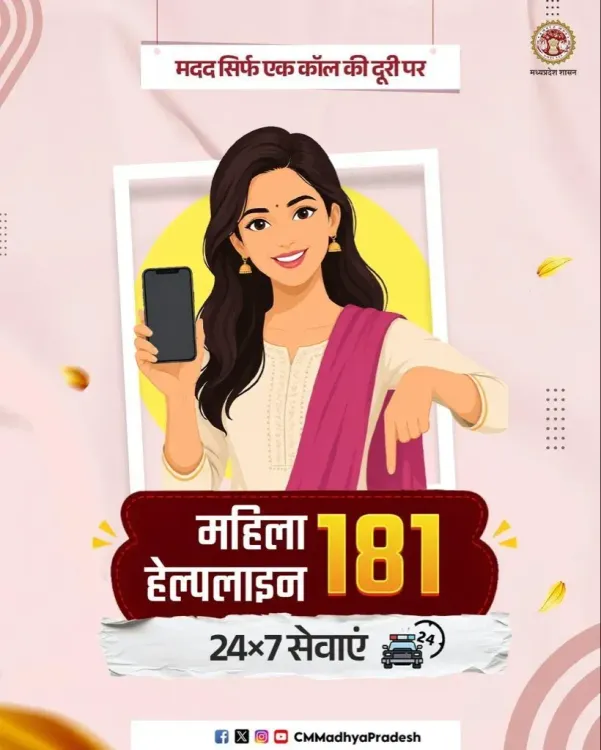
Synopsis
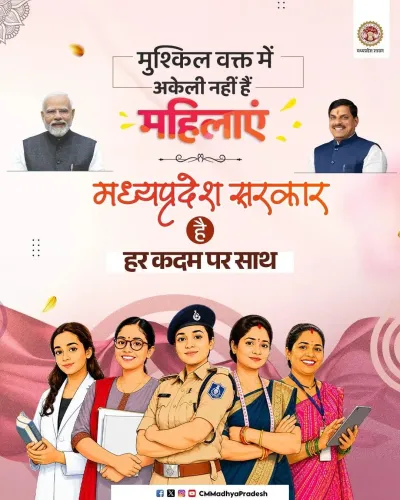
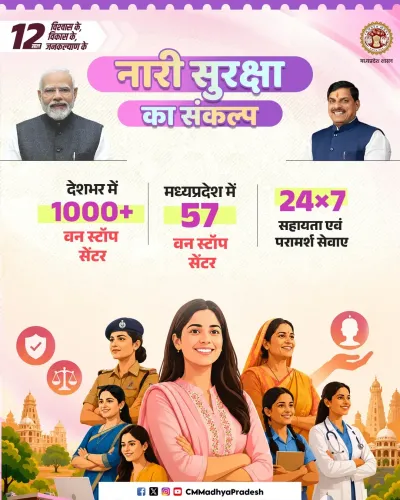
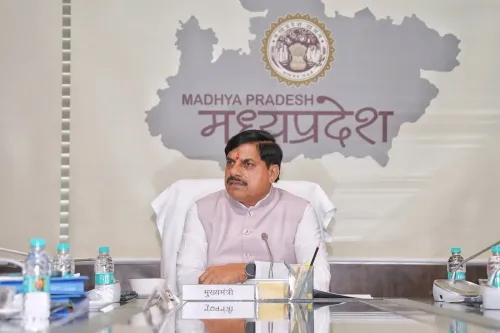
The Chief Minister's Office of Madhya Pradesh declared on 26 September 2026 that ensuring women's safety, building their confidence, and enabling their advancement is the core resolve of the state government — signalling a renewed public commitment to gender-focused welfare.
Key Takeaways
The Chief Minister's Office of Madhya Pradesh posted a formal statement of resolve on women's safety and empowerment on 26 September 2026 .
The message articulates a three-step vision: security assurance → confidence building → women's advancement.
The Hindi term sankalp (resolve) used in the post signals a governance-level commitment, often a precursor to policy or scheme announcements.
No specific scheme, budgetary allocation, or official was named in the post; follow-up announcements are anticipated.
Madhya Pradesh has a history of gender-welfare flagship programmes, including girl-child cash transfers and fast-track legal mechanisms.
A promise — not a programme title, not a budget line, but a stated resolve — is what the Chief Minister's Office of Madhya Pradesh put on record on Saturday, 26 September 2026: that every woman in the state deserves the security to feel confident, and the confidence to move forward.
Posting on X, the Chief Minister's Office of Madhya Pradesh (@CMMadhyaPradesh) shared the message: 'Suraksha ka bharosa mile, aatmvishwas badhe aur har mahila aage badhe…' — 'Let women receive the assurance of safety, let their confidence grow, and let every woman move ahead… this is the resolve of the Madhya Pradesh government.'
A three-part vision — safety, confidence, progress
The formulation is deliberate. The sequence matters: security first, then self-belief, then advancement. It is a reading of cause and effect that frames women's empowerment not as a single-point intervention but as a chain — break the first link, and the rest cannot hold. Indian state governments have increasingly framed gender welfare in exactly these layered terms, moving beyond standalone schemes toward a stated culture of safety as a prerequisite for participation. Madhya Pradesh, a large central Indian state with a population of over 85 million, has historically been a testing ground for gender-focused welfare architecture. Flagship initiatives have ranged from conditional cash transfers for girl children to dedicated helplines and fast-track legal mechanisms. The September 2026 post does not name a specific scheme or budgetary outlay — those details, if forthcoming, are what analysts and women's rights advocates will be watching for next.Why the language of 'resolve' carries political weight
The word used — sankalp, or resolve — is not incidental in Indian political communication. It signals intent at the level of governance philosophy, not just administrative action. When a Chief Minister's Office anchors messaging in sankalp, it is typically a precursor to a policy rollout, a scheme anniversary reaffirmation, or a campaign ahead of a legislative or civic calendar moment. None of those triggers can be confirmed from this post alone — but the framing places women's safety squarely at the centre of the state government's public identity. For the millions of women across Madhya Pradesh's cities, towns, and villages, the proof will arrive in specifics: in police response times, in shelter infrastructure, in economic participation numbers, in legal aid access. The resolve is stated. The scoreboard is open.Point of View
Not merely a line item. Madhya Pradesh has long used gender welfare as a political anchor, and reaffirming it publicly in late September may be calibrated to coincide with either an upcoming civic calendar event or a scheme milestone. The sequencing of 'safety, then confidence, then progress' reflects a maturing policy vocabulary that treats psychological security as an enabling condition for economic participation — a framing increasingly endorsed by development economists. Whether this translates into measurable outcomes will depend on the specifics of implementation that the state has yet to announce.
NationPress
26 Sept 2026
Frequently Asked Questions
What did the Madhya Pradesh government say about women's safety in September 2026?
The Chief Minister's Office of Madhya Pradesh stated on 26 September 2026 that its core resolve is to give women the assurance of safety, build their confidence, and enable every woman to move forward.
What does 'sankalp' mean in the context of MP government's women's policy?
Sankalp means 'resolve' or 'pledge' in Hindi. In Indian political communication, it signals a governance-level commitment, often preceding a formal policy rollout or scheme announcement.
What women's welfare programmes does Madhya Pradesh have?
Madhya Pradesh has historically run several gender-welfare initiatives including conditional cash transfers for girl children, dedicated women's helplines, and fast-track legal mechanisms, though the September 2026 post did not reference a specific named scheme.
Is there a new scheme for women's safety launched in Madhya Pradesh in 2026?
The 26 September 2026 post from the Chief Minister's Office did not announce a specific new scheme; it reaffirmed a broader resolve. Detailed scheme or budgetary announcements, if any, are expected as follow-up communications.
Why does women's empowerment matter as a policy focus in Madhya Pradesh?
Madhya Pradesh, with a population of over 85 million, has significant gender welfare challenges. State governments treat safety and empowerment as interconnected — secure women are more likely to participate economically and socially, making it both a moral and developmental priority.