MP Govt Highlights One Stop Centres, Shakti Sadan for Women
Synopsis
The Madhya Pradesh CMO on 26 September 2026 spotlighted One Stop Centres, Shakti Sadan shelter homes, and Women's Helpline 181 as the state's institutional framework for protecting, supporting, and rehabilitating women in distress.
Key Takeaways
Three pillars of women's safety highlighted: One Stop Centres, Shakti Sadan shelter homes, and Women's Helpline 181 .
The One Stop Centre scheme was launched nationally in 2015 under the Nirbhaya Fund to provide integrated crisis support under one roof.
Shakti Sadan is Madhya Pradesh's state-level shelter and rehabilitation facility for longer-term protection needs.
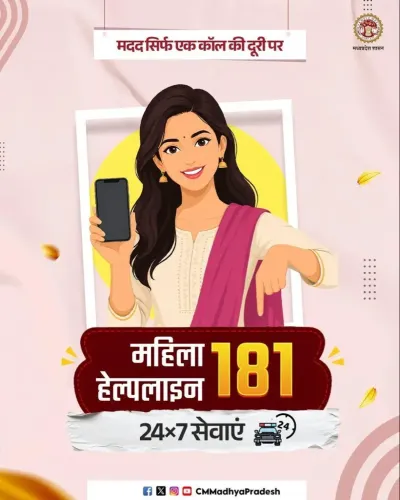
Women's Helpline 181 operates 24x7 and connects callers across the state to the nearest support service.
The initiative was tagged to Chief Minister Dr.
Mohan Yadav and the MP Department of Women and Child Development .
The policy architecture traces back to the national reckoning following the 2012 Nirbhaya case .
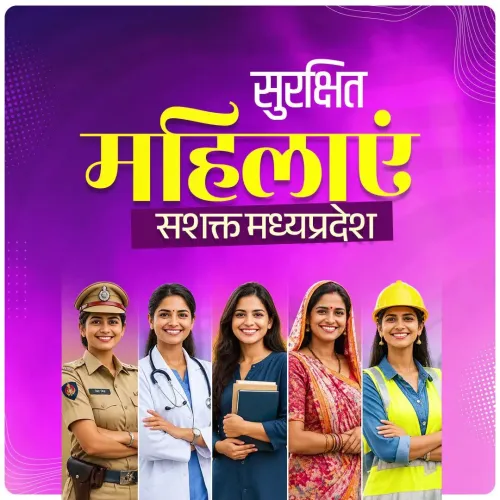
Safety, dignity, and rehabilitation — on Saturday, 26 September 2026, the Chief Minister's Office of Madhya Pradesh reaffirmed the state government's commitment to women's welfare, spotlighting three pillars of institutional support available to women in distress across the state.
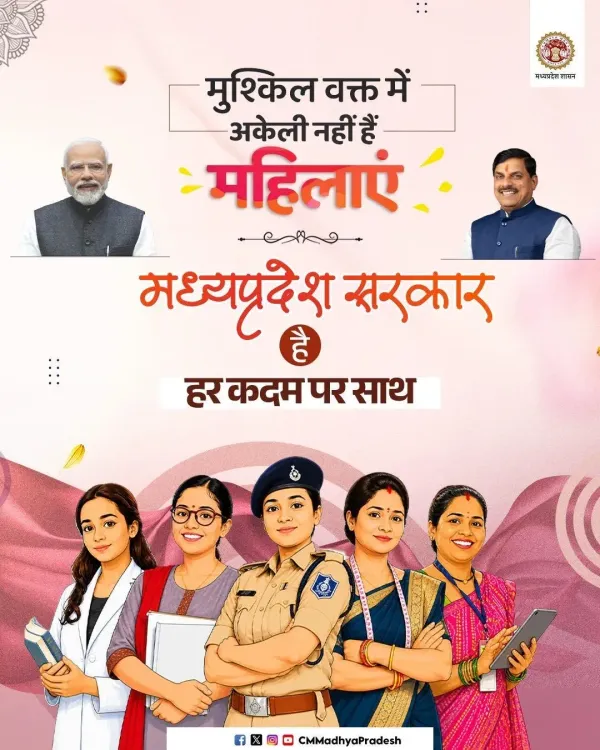
The post, tagged to Chief Minister Dr. Mohan Yadav and the Madhya Pradesh Department of Women and Child Development, declared: 'हर कदम पर महिलाओं को सुरक्षा, सम्मान और संबल का भरोसा' — 'at every step, a guarantee of safety, respect, and support for women.' It named three specific mechanisms: One Stop Centres, Shakti Sadan shelter homes, and the Women's Helpline 181, as the state's delivery architecture for assistance, protection, and rehabilitation when women need it most.
One Stop Centres: a decade-old lifeline still running hard
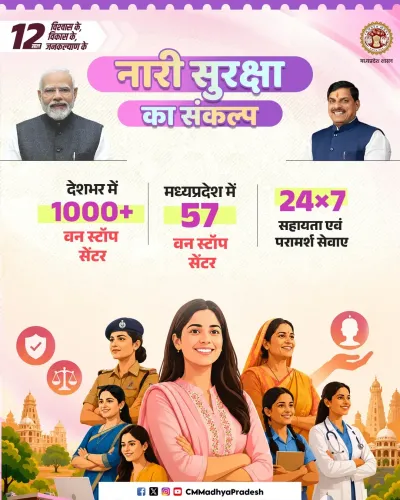
The One Stop Centre scheme was launched nationally in 2015 under the Nirbhaya Fund by the Ministry of Women and Child Development. The model is straightforward and powerful: bring every service a survivor of gender-based violence might need — police assistance, medical aid, legal counsel, psycho-social support, and temporary shelter — under a single roof, so she never has to navigate a maze of government offices alone. Madhya Pradesh has been among the states operationalising these centres, integrating them into the broader state safety net.
Shakti Sadan and the state's own shelter network
Shakti Sadan is Madhya Pradesh's state-level answer to longer-term protection needs — shelter and rehabilitation facilities managed through the Women and Child Development department. Where One Stop Centres handle immediate crisis response, Shakti Sadan is designed for sustained support: a place women can stay, recover, and rebuild. Together, the two facilities are meant to cover the full arc from emergency to re-integration.
Helpline 181: the single number that must work at 3 a.m.
The Women's Helpline 181 is a 24x7 national service operated in coordination with state governments. Its value is precisely its simplicity — one number, any hour, in any district of Madhya Pradesh. The helpline routes callers to the nearest available support, whether that is a One Stop Centre, a Shakti Sadan facility, or emergency police assistance. It is often the first thread a woman in danger can reach for.
Taken together, these three mechanisms reflect a policy architecture that took shape in the years following the 2012 Nirbhaya case, which forced a national reckoning with the systemic gaps in how India protects women facing violence. More than a decade on, the work of making these systems genuinely accessible — in small towns, in tribal districts, at odd hours — continues.
The state government's message is unambiguous: a safe and dignified life for every woman is not an aspiration but a priority. Whether the infrastructure fully matches that promise is the question every utilisation report will have to answer.
Point of View
However, lies in operational reach: whether these facilities are adequately staffed and accessible in Madhya Pradesh's vast rural and tribal interior is a question that utilisation data, not communications posts, will ultimately answer.
NationPress
26 Sept 2026
Frequently Asked Questions
What is the Women's Helpline 181 in Madhya Pradesh?
Women's Helpline 181 is a national 24x7 helpline for women in distress, implemented across states including Madhya Pradesh, which routes callers to the nearest support service such as a One Stop Centre, shelter home, or police assistance.
What is a One Stop Centre and how does it help women?
A One Stop Centre provides integrated support — medical aid, legal help, police assistance, psycho-social counselling, and temporary shelter — under a single roof for women affected by violence. The scheme was launched in 2015 under the Nirbhaya Fund by the Ministry of Women and Child Development.
What is Shakti Sadan in Madhya Pradesh?
Shakti Sadan is a state-level shelter and rehabilitation facility in Madhya Pradesh that provides longer-term protection, accommodation, and support services to women in need, managed by the state's Women and Child Development department.
Who is the Chief Minister of Madhya Pradesh in 2026?
Dr. Mohan Yadav is the Chief Minister of Madhya Pradesh, in office since December 2023 , and is tagged in the state government's women welfare communications.
What welfare schemes does the Madhya Pradesh government run for women's safety?
Madhya Pradesh runs One Stop Centres (a central scheme under the Nirbhaya Fund), Shakti Sadan state shelter homes, and the Women's Helpline 181 as the core institutional framework for women's safety, protection, and rehabilitation.