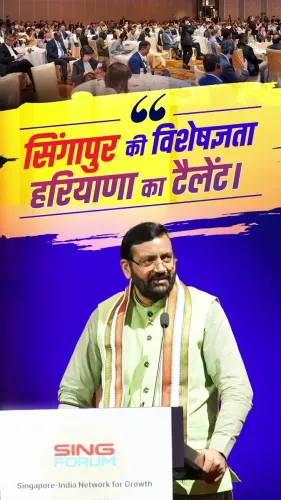
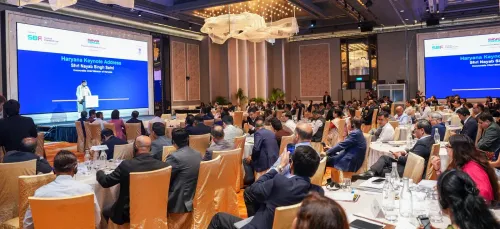
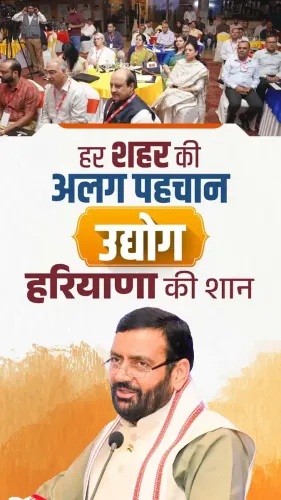
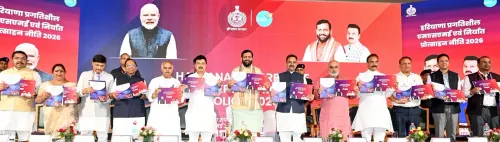
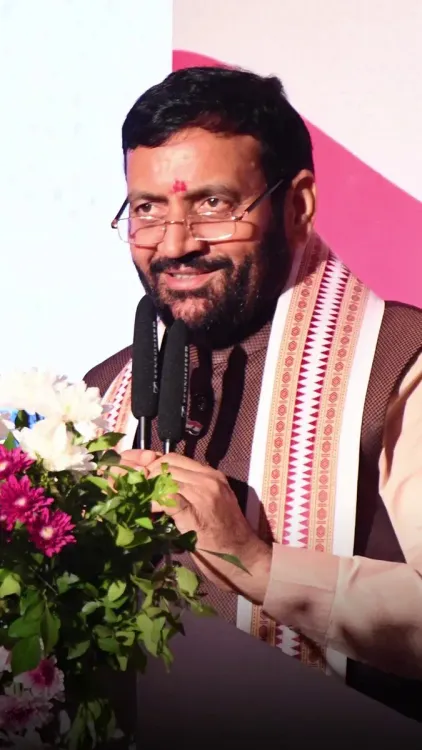
CM Nayab Saini pitches Haryana as investment and jobs partner
Synopsis
Haryana Chief Minister Nayab Singh Saini on 28 October 2026 publicly positioned Haryana as a premier investment destination, pledging to connect capital with employment, industry with skill, and entrepreneurship with public welfare — signalling a possible upcoming investor summit or policy refresh.
Key Takeaways
CM Nayab Singh Saini posted an investment pitch for Haryana on 28 October 2026 , calling the state ready for a 'new partnership of development.' The post links three pillars: investment to employment , industry to skill , and entrepreneurship to public welfare .
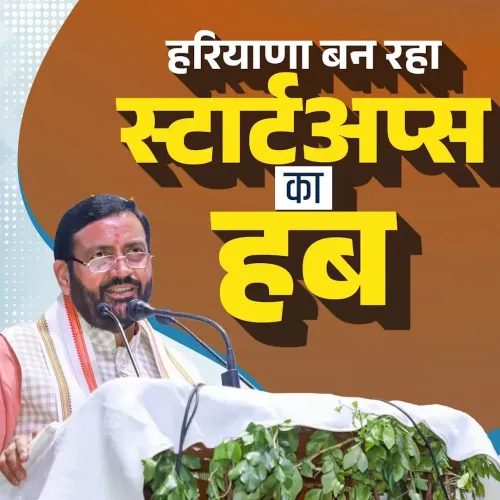
Haryana's key industrial clusters — Gurugram, Faridabad, and Manesar — anchor the state's pitch to auto, IT, and manufacturing investors.
The state has refined its Haryana Industrial Policy periodically since 2015 , emphasising single-window clearance and investor incentives.
MSMEs, skilled youth, and large investors are the three explicit stakeholder groups the government is courting.
A forthcoming investor summit or revised industrial policy document is anticipated where sector-specific MoUs may be announced.
Haryana is open for business — and its Chief Minister wants the world to know it. Haryana Chief Minister Nayab Singh Saini on Wednesday, 28 October 2026, posted a direct pitch to investors, framing the state as a destination where capital, skill, and welfare converge.
Posting in Hindi, Saini declared: 'hum nivesh ko rozgaar se, udyog ko kaushal se aur udyamshilta ko jankalyan se jodein' — 'Let us link investment to employment, industry to skill, and entrepreneurship to public welfare.' The sign-off was pointed: 'Haryana is ready for your welcome and a new partnership of development.'
The triangle: investment, skill, welfare
The three-point formula is not accidental. Haryana has long competed with neighbouring states — particularly Rajasthan, Uttar Pradesh, and Punjab — on land availability, power tariffs, and labour policy. What successive Haryana governments have added to the pitch is a welfare dividend: the argument that industrial growth must translate into measurable jobs and skill upgrades for local youth, not just factory output numbers.
Saini, who assumed office in March 2024, has inherited a state whose industrial spine runs through Gurugram, Faridabad, and Manesar — clusters anchored in automobiles, IT services, and light manufacturing. The Haryana Industrial Policy has been updated periodically since 2015, each iteration sharpening incentives and single-window clearance mechanisms to reduce the friction between an investor's decision and a factory's first shift.
Why Gurugram-Faridabad-Manesar still matter
These three corridors together form one of India's densest manufacturing-and-services belts. Proximity to Delhi, direct highway access, and a deep pool of engineering and management talent have kept Haryana punching above its geographic weight in foreign direct investment rankings. For MSMEs — the backbone of Haryana's supplier ecosystem — the promise of skill linkages is especially significant: it determines whether local vendors can move up the value chain or stay locked as low-margin assemblers.
Saini's framing ties entrepreneurship explicitly to jankalyan — public welfare — a rhetorical move that signals the government's intent to measure industrial policy not just by investment signed but by livelihoods created.
What investors and skilled youth will be watching
The post arrives ahead of what observers expect could be a fresh investor summit or a revised industrial policy document, where sector-specific incentives and memoranda of understanding are likely to be announced. Skilled youth, MSMEs, and large-format investors are the three stakeholder groups the government is explicitly addressing. The question on every manufacturer's desk: will the next policy cycle deliver on the single-window promise and close the gap between MoU signings and actual ground-breaking?
Haryana has made this pitch before. The difference now is a Chief Minister putting his personal political capital behind the handshake — literally ending his post with a 🤝. The state's next investor event will be the real stress test.
Point of View
And the welfare-linkage framing is a deliberate political inoculation against the 'jobless growth' critique. For BJP in Haryana, tying industrial policy to visible employment outcomes is both an economic strategy and an electoral insurance policy ahead of any future assembly cycle. The pitch also signals that Haryana sees the post-COVID manufacturing relocation wave — companies diversifying supply chains away from single geographies — as an opportunity it cannot afford to miss. Whether the state can translate this messaging into bankable MoUs will determine whether Saini's promise moves from rhetoric to record.
NationPress
28 Oct 2026
Frequently Asked Questions
What did Haryana CM Nayab Singh Saini say about investment in October 2026?
Saini called on investors to link investment to employment, industry to skill, and entrepreneurship to public welfare, declaring Haryana ready for a new partnership of development.
What are Haryana's main industrial clusters?
Haryana's primary industrial clusters are Gurugram, Faridabad, and Manesar , focused on automobiles, IT services, and manufacturing.
What is the Haryana Industrial Policy?
The Haryana Industrial Policy, first framed in 2015 and updated periodically, provides investor incentives, single-window clearance, and sector-specific support to attract domestic and foreign investment.
Is Haryana hosting an investor summit soon?
No specific summit date has been confirmed publicly, but observers anticipate a fresh investor summit or revised industrial policy announcement in the near term, given Saini's public outreach.
How does Haryana compete with other states for investment?
Haryana competes primarily on land availability, power tariffs, labour policy, and proximity to Delhi, while differentiating itself by linking industrial growth to skill development and employment metrics.