CM Nayab Saini Transfers ₹1,595 Crore to 50 Lakh Haryana Beneficiaries
Synopsis
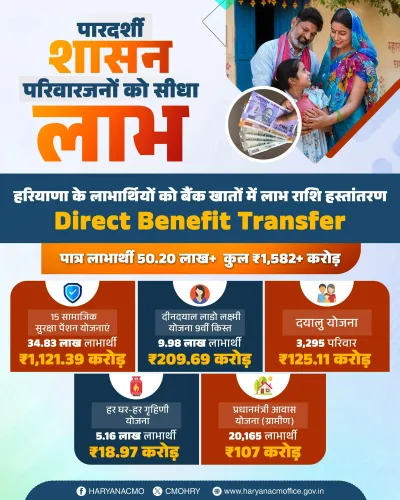
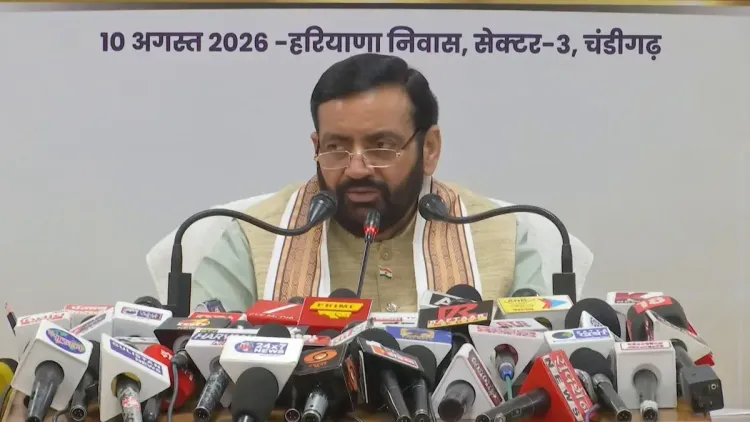
Chief Minister Nayab Saini transferred ₹1,595 crore 50 lakh to over 50 lakh Haryana beneficiaries under 19 welfare schemes via direct bank transfer in Chandigarh on 10 August 2026, in one of the state's largest single-day DBT disbursements.
Key Takeaways
₹1,595 crore 50 lakh transferred in a single consolidated Direct Benefit Transfer event on 10 August 2026 .
50,04,873 verified beneficiaries across Haryana received funds directly into their bank accounts.
Disbursement covered 19 public-welfare schemes simultaneously, spanning pensions, disability and social security heads.
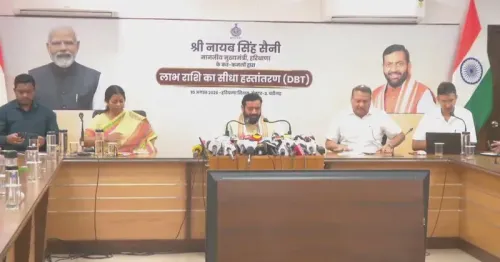
The event was held in Chandigarh and presided over by Chief Minister Nayab Saini .
Haryana's Aadhaar-linked DBT architecture, active since at least 2015 , underpins the transfer to minimise leakages.
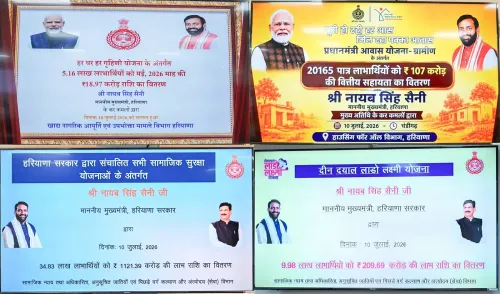
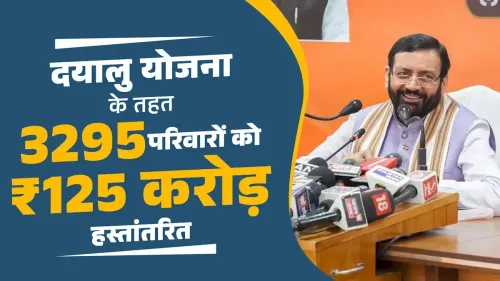
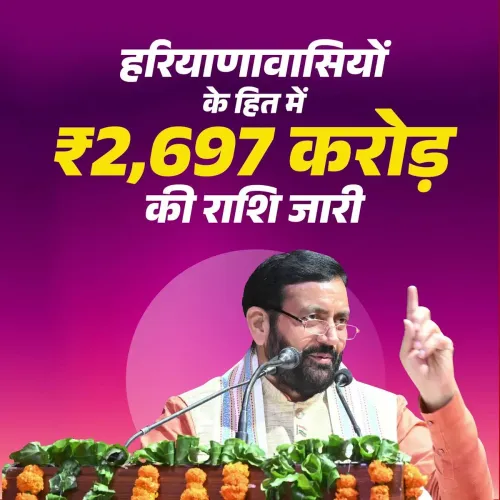
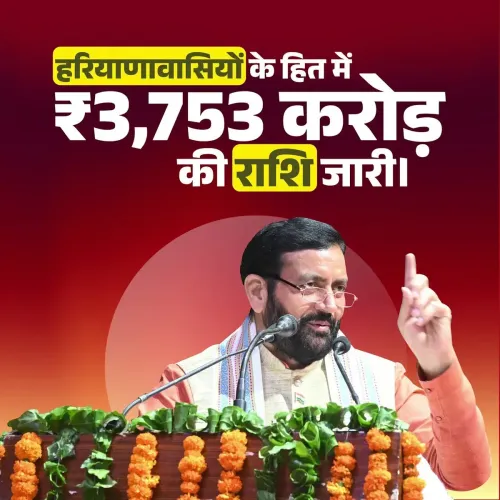
More than 50 lakh families in Haryana woke up to a direct government credit on Monday, 10 August 2026 — no middleman, no queue, no delay. Chief Minister Nayab Saini presided over a consolidated Direct Benefit Transfer event in Chandigarh, pushing ₹1,595 crore 50 lakh into the bank accounts of 50,04,873 verified beneficiaries across 19 public-welfare schemes in a single stroke.
₹1,595 Crore, 19 Schemes, One Click
The transfer was announced by the Chief Minister's Office of Haryana on X, confirming the scale of the disbursement: '19 jankalyankari yojanaon ke tahat' — under 19 public-welfare schemes. Haryana's social security architecture spans old-age pensions, widow support, disability assistance, and scholarship programmes, all routed through Aadhaar-linked accounts to eliminate leakages — a model the state has refined since at least 2015.
The consolidated DBT event format itself is deliberate. Rather than staggered, scheme-by-scheme releases, the state bundles multiple welfare heads into a single high-visibility transfer — maximising administrative efficiency and ensuring the political signal is unmistakable: the money moved, publicly, on a named date.
Saini's Welfare Pitch in a Post-Election Haryana
Nayab Saini, who took charge as Chief Minister in March 2024, has leaned heavily on direct-benefit delivery as a governing signature. Haryana's periodic consolidated transfers follow the national DBT architecture initiated in 2013, which tied welfare disbursements to Aadhaar verification to cut ghost beneficiaries and routing fraud. With 50 lakh-plus recipients in a state of roughly 30 million people, today's transfer touches nearly one in six Haryanvis — a number that carries both administrative and electoral weight.
The sheer breadth — 19 schemes in one event — also reflects a broader pattern across Indian states: consolidation as accountability. When the transfer happens in public, on a fixed date, with a named official presiding, it becomes a measurable commitment rather than a bureaucratic process.
The next test will come in Haryana's budget session, where scheme coverage and quarterly transfer timelines will face scrutiny. For now, the figure that matters is ₹1,595 crore — already in accounts.
Point of View
595 crore to over 50 lakh people in one event — reflects how consolidated DBT has evolved from a leakage-control mechanism into a governing performance in its own right. For Nayab Saini, who inherited the Chief Ministership mid-term in 2024, high-visibility welfare delivery is a key tool for establishing independent political identity within the BJP's Haryana unit. The 19-scheme bundle also signals administrative ambition: the ability to coordinate across departments is itself a demonstration of state capacity. Scrutiny will sharpen around whether coverage expands or stagnates in the next budget cycle.
NationPress
10 Aug 2026
Frequently Asked Questions
How much money did CM Nayab Saini transfer to Haryana beneficiaries on 10 August 2026?
₹1,595 crore 50 lakh was transferred to 50,04,873 beneficiaries across Haryana under 19 welfare schemes on 10 August 2026 .
How many schemes were covered in Haryana's August 2026 DBT event?
The transfer covered 19 public-welfare schemes simultaneously, including social security, pension, and disability-support programmes.
Who is Nayab Saini and when did he become Chief Minister of Haryana?
Nayab Saini is a BJP leader who became Chief Minister of Haryana in March 2024 .
Where was the Haryana DBT event held in August 2026?
The consolidated Direct Benefit Transfer event was held in Chandigarh , the joint capital of Haryana and Punjab.
What is Direct Benefit Transfer (DBT) and how does Haryana use it?
Direct Benefit Transfer routes welfare funds straight into beneficiaries' Aadhaar-linked bank accounts, cutting middlemen. Haryana has used this system since at least 2015 for pensions, scholarships, and social security payments.