CM Office: Over 2 Crore Kanwar Pilgrims Cross Haridwar

Synopsis
Over 2 crore Kanwar pilgrims have collected Ganga water at Haridwar this Shravan season, the Uttarakhand Chief Minister's Office announced on August 7, 2026, as chants of 'Bam-Bam Bhole' and 'Har-Har Gange' fill the pilgrimage city.
Key Takeaways
The Chief Minister's Office of Uttarakhand announced on August 7, 2026 that over 2 crore Kanwar pilgrims have departed Haridwar with Ganga water this season.
Haridwar is the primary Ganga water collection point for Kanwariyas travelling from across northern India.
The Kanwar Yatra is held annually during the Hindu month of Shravan , dedicated to the worship of Lord Shiva.
The milestone figure signals both massive religious participation and significant state administrative effort in crowd and logistics management.
The yatra was still ongoing at the time of the announcement, with final footfall numbers yet to be tallied.
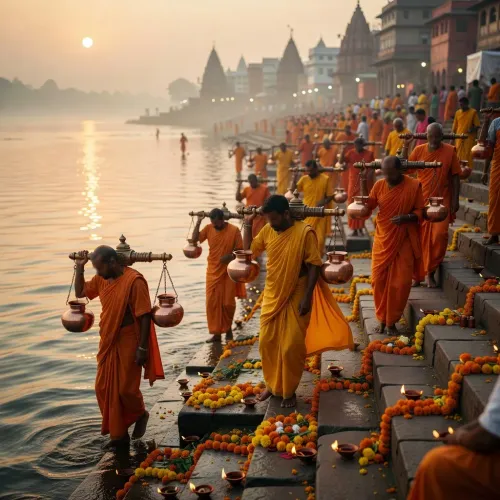
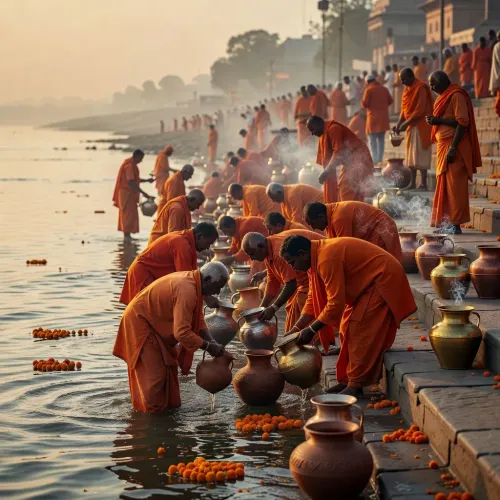
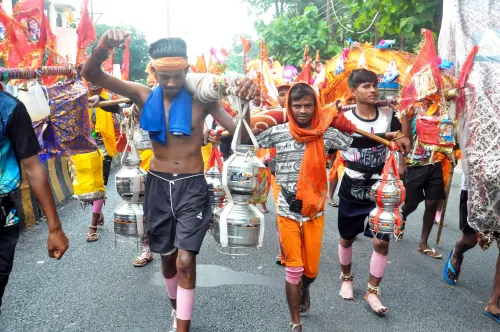
The ancient ghats of Haridwar are reverberating with chants of 'Bam-Bam Bhole' and 'Har-Har Gange' — and the numbers tell the full story. The Chief Minister's Office of Uttarakhand announced on Friday, August 7, 2026, that more than 2 crore Kanwar pilgrims have already collected Ganga water and departed from the pilgrimage city since the yatra began this Shravan season.
Haridwar at the heart of Shravan's sacred surge
Haridwar, perched on the banks of the Ganga in Uttarakhand, is the principal collection point for Kanwar pilgrims — known as Kanwariyas — who travel on foot from across northern India to fill their decorated pitchers with holy river water. That water is then carried back to be offered at Shiva shrines in their home districts, completing the devotional circuit that defines the Kanwar Yatra.
The yatra is held annually during the Shravan month of the Hindu calendar, a period regarded as especially auspicious for the worship of Lord Shiva. Haridwar's ghats and surrounding roads transform into a vast saffron river of devotees during this window, requiring extensive logistics from the state administration.
2 crore and counting — the scale of this year's yatra
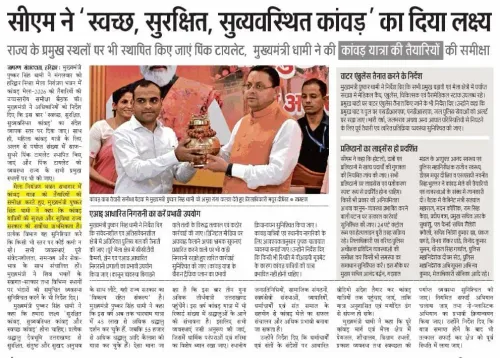
The Chief Minister's Office confirmed that the milestone of over 2 crore pilgrims has been crossed mid-season, with the yatra still ongoing. The announcement signals both the scale of religious participation and the administrative machinery required to manage it — from crowd-control corridors along the Ganga ghats to water-distribution points and medical facilities.
Uttarakhand governments have consistently tracked and publicised pilgrim footfall during Shravan as a measure of both religious significance and state preparedness. The figure of 2 crore-plus underscores Haridwar's status as one of the busiest pilgrimage corridors in the country during this season.
As the Shravan month moves toward its close, the state administration will be watching total footfall figures closely — and whether crowd-management infrastructure holds through the final, often most intense, days of the yatra.
Point of View
The figure reinforces Haridwar's centrality to Uttarakhand's identity as 'Devbhoomi' — the land of gods. For the ruling dispensation, high pilgrim counts serve a dual purpose: validating infrastructure investment and projecting administrative competence ahead of any electoral cycle. The broader arc here is the steady institutionalisation of yatra management as a core function of the Uttarakhand state apparatus.
NationPress
7 Aug 2026
Frequently Asked Questions
What is the Kanwar Yatra and when does it take place?
The Kanwar Yatra is an annual Hindu pilgrimage held during the Shravan month, in which devotees — called Kanwariyas — travel to Haridwar and other Ganga sites to collect holy water and offer it at Shiva temples in their home regions.
How many pilgrims have visited Haridwar for Kanwar Yatra in 2026?
The Uttarakhand Chief Minister's Office announced on August 7, 2026, that over 2 crore Kanwar pilgrims had already collected Ganga water at Haridwar since the yatra began this Shravan season.
Why is Haridwar important for the Kanwar Yatra?
Haridwar sits on the banks of the Ganga and is one of the holiest sites in Hinduism. It serves as the primary point where Kanwariyas fill their decorated pitchers with Ganga water before carrying them back to Shiva shrines across northern India.
What does 'Bam-Bam Bhole' and 'Har-Har Gange' mean?
'Bam-Bam Bhole' is a devotional chant in praise of Lord Shiva, while 'Har-Har Gange' is an invocation celebrating the sacred river Ganga. Both are commonly chanted by Kanwar pilgrims during the yatra.
How does the Uttarakhand government manage the Kanwar Yatra crowds?
The state administration typically deploys crowd-control corridors, water-distribution points, medical facilities, and security personnel along Haridwar's ghats and approach roads to manage the large pilgrim influx during Shravan.