CM Office Uttarakhand Marks 26th Foundation Day

Synopsis
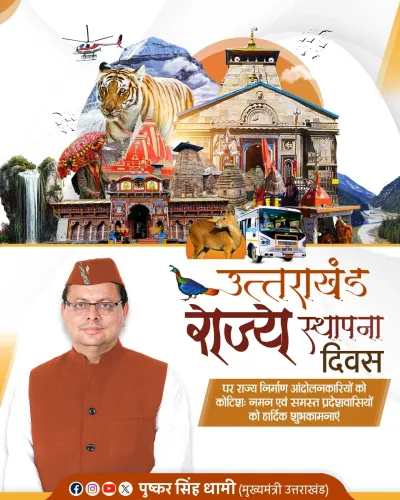
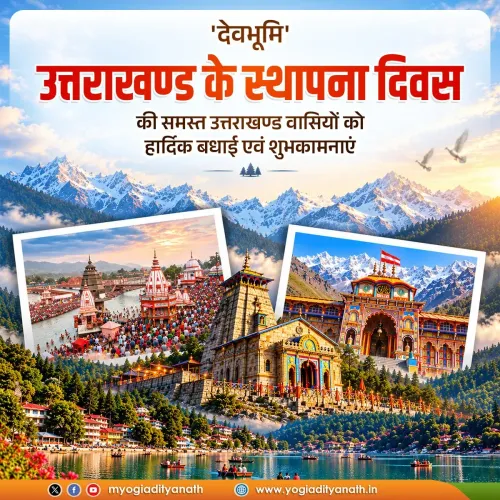
The Chief Minister's Office of Uttarakhand marked the state's 26th Foundation Day on 9 November 2026, greeting all residents of the state carved from Uttar Pradesh on this date in 2000 under the Uttar Pradesh Reorganisation Act.
Key Takeaways
Uttarakhand Foundation Day falls on 9 November each year, marking the date in 2000 when the state received formal existence.
The state was created via the Uttar Pradesh Reorganisation Act, 2000 , which received presidential assent on 9 November 2000 .
Uttarakhand was India's 27th state and was initially named Uttaranchal until it was renamed in 2007 .
The Chief Minister's Office of Uttarakhand posted official greetings in Hindi to all state residents on 9 November 2026 .
Uttarakhand shares its birth year with Chhattisgarh and Jharkhand , all three states created in November 2000 .
Twenty-six years ago today, a mountain state was born. On 9 November 2000, Uttarakhand was carved out of Uttar Pradesh and joined India's map as its 27th state — the culmination of a decades-long statehood movement by hill communities who wanted governance closer to home. This morning, the Chief Minister's Office of Uttarakhand marked the occasion with a formal greeting to every resident of the state.
The post, shared in Hindi, reads: 'Uttarakhand Rajya Sthapna Diwas ki samast pradeshvasiyon ko hardik shubhkamnaen' — 'Heartfelt greetings to all residents of the state on Uttarakhand Foundation Day.' Short, dignified, and addressed to every corner of a state that stretches from the Gangetic plains to the glaciers of the high Himalaya.
A state born from a people's movement
Uttarakhand's creation was not a bureaucratic redrawing of lines — it was the answer to a sustained popular demand. Hill communities in what was then northern Uttar Pradesh had long argued that their geographic, cultural, and economic concerns were neglected in a plains-dominated state legislature. The movement gathered force through the 1990s, culminating in the Uttar Pradesh Reorganisation Act, 2000, which received presidential assent on 9 November 2000.
The state was initially named Uttaranchal, a name it carried until 2007, when it was officially renamed Uttarakhand — meaning 'northern land' in Sanskrit, a name the statehood movement had always preferred. Dehradun serves as the interim capital, with the permanent capital question still formally unresolved.
November 9 and the class of 2000
Uttarakhand shares its birth year with two other states created in the same reorganisation wave of 2000: Chhattisgarh, carved from Madhya Pradesh on 1 November, and Jharkhand, separated from Bihar on 15 November. All three emerged from similar arguments — that large, diverse states left interior and tribal or hill populations underserved. Each November, all three mark their foundation days within a fortnight of each other, a reminder of how much India's federal map shifted in a single month a quarter-century ago.
Annual observances in Uttarakhand typically include state-level ceremonies, cultural programmes celebrating the region's distinct Garhwali and Kumaoni heritage, and public messages from elected and constitutional leadership.
Point of View
Now 26 years old, the day also invites reflection on how well the promise of the statehood movement — better governance, faster development, and preservation of hill culture — has been fulfilled. The anniversary falls as the state's governance model, particularly its handling of migration, disaster resilience, and tourism-led growth in the Himalayas, draws wider national scrutiny. Foundation Day rhetoric, year after year, is ultimately measured against the lived experience of the people it addresses.
NationPress
9 Nov 2026
Frequently Asked Questions
When is Uttarakhand Foundation Day?
Uttarakhand Foundation Day is observed every year on 9 November , the date in 2000 when the state was formally created.
How was Uttarakhand formed?
Uttarakhand was formed through the Uttar Pradesh Reorganisation Act, 2000 , which carved it out of northern Uttar Pradesh after a prolonged popular statehood movement by hill communities.
What number state is Uttarakhand in India?
Uttarakhand was India's 27th state at the time of its creation on 9 November 2000 .
Why was Uttarakhand called Uttaranchal before?
The state was officially named Uttaranchal from its founding in 2000 until 2007 , when the government renamed it Uttarakhand — the name the original statehood movement had preferred all along.
Which other states were created the same year as Uttarakhand?
Chhattisgarh (from Madhya Pradesh, 1 November 2000 ) and Jharkhand (from Bihar, 15 November 2000 ) were both created in the same month as Uttarakhand, forming a trio of new states born in November 2000 .