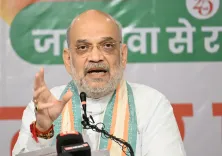
CM Bhupendra Patel Drives Ease of Living for Gujarat's Middle Class

Synopsis
The Chief Minister's Office of Gujarat on 15 June 2026 spotlighted CM Bhupendra Patel's drive to deliver 'Ease of Living' to the state's middle class through targeted initiatives and schemes, under the banner of 'Agrésar Gujarat' — always moving forward.
Key Takeaways
The Chief Minister's Office of Gujarat shared a video compilation on 15 June 2026 highlighting welfare and quality-of-life schemes for middle-class residents.
Chief Minister Bhupendra Patel has led Gujarat since September 2021 , with 'Ease of Living' as a central governance theme.
Gujarat adopted the central government's Ease of Living Index framework, first released in 2018 , to benchmark city services for middle-income households.
The state's middle-class welfare push spans urban housing, education subsidies, and civic amenities , continuing a policy lineage from 2017 onwards.
The post was shared under the hashtag #અગ્રેસર_ગુજરાત , meaning 'Gujarat Always Ahead,' reflecting the administration's public branding.
Upcoming Gujarat Legislative Assembly budget allocations and district-level scheme rollouts will be key indicators of programme scale and impact.
The Chief Minister's Office of Gujarat on Monday, 15 June 2026 shared a compilation of initiatives and schemes under Chief Minister Bhupendra Patel aimed at improving the quality of life for the state's middle class, framing Gujarat as a state that is sadā agrésar — always moving forward.
The post, shared under the hashtag #અગ્રેસર_ગુજરાત ('Agrésar Gujarat' — 'Gujarat Always Ahead'), invites citizens to learn about news from Gujarat where 'various initiatives and schemes under the leadership of Chief Minister Bhupendra Patel are giving the middle class the experience of Ease of Living.'
Context
Bhupendra Patel has served as Gujarat's Chief Minister since September 2021, continuing the state's long-standing emphasis on economic growth paired with targeted citizen welfare. The 'Ease of Living' framing is central to his administration's public communications, positioning governance improvements as directly felt by ordinary, middle-income households. The video accompanying the post highlights specific programmes, though their individual details are being communicated through state government channels.
Policy Backdrop
The concept of 'Ease of Living' as a governance metric gained national currency when the central government's Ease of Living Index was first released in 2018, offering cities a framework to benchmark and improve public services. Gujarat adopted this framework early, integrating it into urban planning, housing delivery, and civic amenities for middle-income residents. Successive administrations in the state have channelled investments into urban infrastructure, education subsidies, and housing schemes — all marketed under the broader promise of making daily life measurably better for working families.
Between 2017 and 2021, the state expanded urban housing and infrastructure programmes specifically targeting middle-income groups, laying the groundwork for the current administration's continued push. Gujarat's approach has drawn comparisons to similar state-level drives in Maharashtra and Karnataka, while remaining aligned with national urban policy priorities.
Stakeholders and Impact
The primary beneficiaries highlighted in the CMO's communication are middle-class families across Gujarat — a demographic that has historically been underserved by welfare schemes designed either for the very poor or for large industry. By directing schemes toward this group, the Bhupendra Patel government is addressing concerns around housing affordability, access to quality education, and urban civic services. The state's western industrial corridor and its rapidly urbanising cities make this demographic particularly significant both economically and electorally.
Broader stakeholders include municipal bodies responsible for on-ground delivery, state-run financial institutions facilitating housing and education credit, and private sector partners engaged in urban infrastructure projects across Gujarat.
What's Next
Observers will watch the Gujarat Legislative Assembly's upcoming budget session for fresh allocations toward middle-class housing and education schemes, as well as district-level rollout announcements that give granular shape to the initiatives highlighted in Monday's post. The state's continued use of social media video compilations signals an active effort to keep welfare communication direct and accessible to citizens. How effectively these schemes translate into measurable improvements on the national Ease of Living Index will be a key test of the administration's claims.
Point of View
Not merely an industrialisation champion — a distinction that matters as the state's urban middle class grows more politically assertive. By anchoring the message in 'Ease of Living,' the administration borrows a credible, index-backed framework to make governance feel tangible and measurable for ordinary families. This mirrors a broader BJP-governed-state pattern of pairing economic growth narratives with targeted middle-class outreach, particularly through digital media. The sustained cadence of such posts suggests the government is building a pre-election communication archive around citizen welfare, with the middle class as the central audience.
NationPress
14 Sept 2026
Frequently Asked Questions
What is the 'Ease of Living' initiative in Gujarat?
'Ease of Living' in Gujarat refers to a set of state government schemes and urban development programmes under Chief Minister Bhupendra Patel aimed at improving daily life for middle-class families, covering areas such as housing, education, and civic services. The state aligned its efforts with the central government's Ease of Living Index, first released in 2018.
Who is the Chief Minister of Gujarat in 2026?
Bhupendra Patel is the Chief Minister of Gujarat. He assumed office in September 2021 and has continued in the role, focusing on economic development and targeted welfare schemes for the state's middle class.
What is Agrésar Gujarat?
'Agrésar Gujarat' — written in Gujarati as #અગ્રેસર_ગુજરાત — is a campaign hashtag used by the Chief Minister's Office of Gujarat to highlight the state's progress across governance, welfare, and development. It translates broadly as 'Gujarat Always Moving Forward.'
What welfare schemes does Gujarat have for the middle class?
Gujarat has run several middle-class-focused programmes spanning urban housing, education subsidies, and civic infrastructure improvements. These build on initiatives expanded between 2017 and 2021 and continue under Chief Minister Bhupendra Patel's administration, though specific scheme details from the June 2026 announcement are being communicated through official state channels.
What is the Ease of Living Index and how does it apply to Gujarat?
The Ease of Living Index is a central government framework first released in 2018 that allows cities to benchmark and improve public services for residents. Gujarat adopted this framework to guide urban planning and welfare delivery, particularly for middle-income households in its rapidly growing cities.