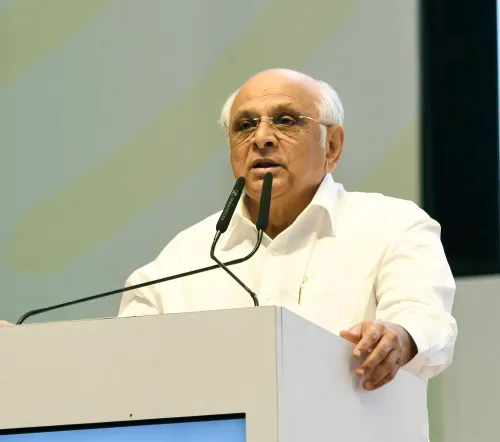
CM Bhupendra Patel Highlights Surat's Circular Water Economy on World Environment Day
Synopsis
On World Environment Day, Gujarat CM Bhupendra Patel highlighted Surat's circular water economy — where treated municipal wastewater is supplied to industries — and noted the city's broader green growth expansion, tagging PM Modi in a post under #SuratNavsarjanParv.
Key Takeaways
Gujarat CM Bhupendra Patel highlighted Surat 's circular water economy on World Environment Day, June 5, 2026 .
Surat 's model involves treating municipal wastewater and supplying it directly to industries, reducing dependence on fresh water sources.
The post was tagged to Prime Minister Narendra Modi under #SuratNavsarjanParv , signalling state-central alignment on the initiative.
The AMRUT scheme launched in 2015 has been a key national framework enabling such urban wastewater infrastructure in Gujarat.
Textile and manufacturing industries in Surat are the primary beneficiaries, gaining a reliable, treated water supply for industrial use.
AMRUT 2.0 is expected to drive similar circular water projects across other Gujarat cities.
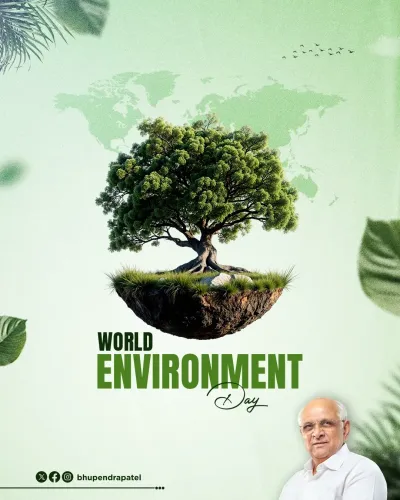
Gujarat Chief Minister Bhupendra Patel on Friday, June 5, 2026 — World Environment Day — spotlighted Surat's circular water economy model, highlighting how the city's treated wastewater is being supplied to industries, and noted the rapid expansion of green growth initiatives across the city.
Context
Posting on the occasion of World Environment Day and under the hashtag #SuratNavsarjanParv, CM Patel wrote in Gujarati: 'આજકાલ સુરતની સર્ક્યુલર વોટર ઈકોનોમીની ઘણી ચર્ચા થાય છે' ('These days, Surat's circular water economy is being widely discussed'). He noted that the city's waste water is being treated and supplied to industries, and that other means of green growth in Surat are also expanding at an unprecedented pace. The post tagged Prime Minister Narendra Modi, acknowledging the central government's role in enabling such initiatives.
Policy Backdrop
Surat, a major hub for Gujarat's textile and diamond industries, has been developing municipal wastewater treatment and reuse infrastructure since the 2010s. Under this model, treated effluent from urban sewage plants is channelled back to industrial users, reducing fresh-water demand and cutting pollution loads on rivers and coastal ecosystems. The AMRUT (Atal Mission for Rejuvenation and Urban Transformation) scheme, launched in 2015, has provided a key policy and funding framework for urban wastewater infrastructure and reuse projects across Indian cities, including in Gujarat. Surat Municipal Corporation has been a recognised implementer of such circular water projects under state-central coordination.
Stakeholders and Impact
The primary beneficiaries of Surat's circular water economy are its textile processing and manufacturing units, which are among the most water-intensive industries in India. By securing a reliable supply of treated water, these industries reduce dependence on groundwater and river sources, easing pressure on the region's water table. Urban local bodies and the state government benefit from reduced sewage disposal costs and improved environmental compliance, while residents gain from cleaner water bodies and a more resilient urban water system. Gujarat's positioning of Surat as a model for green industrial growth also carries significance for attracting investment aligned with sustainability criteria.
What's Next
The emphasis on Surat's model on World Environment Day signals the state government's intent to project the city's approach as a template for replication. The rollout of AMRUT 2.0 — the second phase of the urban transformation mission — is expected to accelerate similar wastewater recycling projects in other Gujarat cities. As India intensifies its focus on resource efficiency and industrial sustainability, Gujarat's green growth push under CM Patel is likely to be cited as a reference point in national policy discussions on circular economy and urban water management.
Point of View
And Surat in particular, as a national leader in sustainable industrial growth ahead of what are likely to be competitive urban governance narratives. Tagging PM Modi reinforces the BJP's state-centre coordination story on environment and infrastructure. The circular water economy framing aligns Gujarat's industrial identity with green credentials at a time when ESG and resource efficiency are gaining salience among investors. The #SuratNavsarjanParv hashtag suggests this is part of a broader, sustained communication campaign around Surat's urban transformation, not a one-off post.
NationPress
20 Oct 2026
Frequently Asked Questions
What is Surat's circular water economy?
Surat's circular water economy refers to a system where the city's municipal wastewater is treated at sewage treatment plants and then supplied to local industries — particularly textile units — instead of being discharged, reducing fresh water consumption and pollution.
Why did CM Bhupendra Patel post about Surat's water economy on World Environment Day?
CM Patel used World Environment Day on June 5, 2026 to highlight Gujarat's environmental achievements, with Surat's wastewater recycling model serving as a flagship example of the state's green growth push.
What is the AMRUT scheme and how does it relate to Surat?
AMRUT, or the Atal Mission for Rejuvenation and Urban Transformation, is a central government scheme launched in 2015 that funds urban water and wastewater infrastructure. Surat has implemented wastewater reuse projects supported under this framework.
Which industries benefit from Surat's treated wastewater supply?
Textile processing and manufacturing industries in Surat are the primary beneficiaries, as they are among the most water-intensive sectors and gain a reliable, cost-effective supply of treated water for industrial use.
Will other Gujarat cities adopt Surat's circular water model?
The rollout of AMRUT 2.0 is expected to support similar wastewater recycling projects in other Gujarat cities, with Surat's model likely to serve as a reference for state and national policy on urban circular water economy.