Modi govt's 12 years: CM Patel credits Narmada network for Gujarat's water, power turnaround
Synopsis
At a BJP conference marking 12 years of the Modi government, Gujarat CM Bhupendra Patel made a pointed claim: the state's chronic water and power crises are history, resolved through the Narmada canal network and round-the-clock electricity. The event in Ahmedabad doubled as a policy showcase — from semiconductor investments to the Dedicated Freight Corridor — framing the BJP's decade-plus record ahead of future electoral cycles.
Key Takeaways
Gujarat CM Bhupendra Patel said the state's water and electricity crises have been 'completely overcome' through the Narmada canal network and uninterrupted power supply.
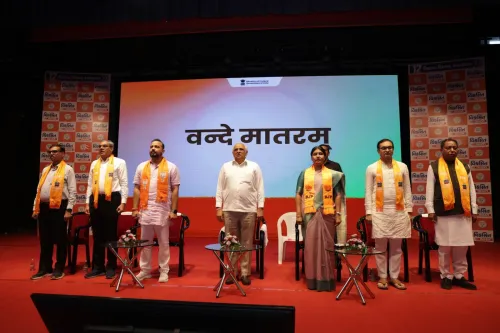
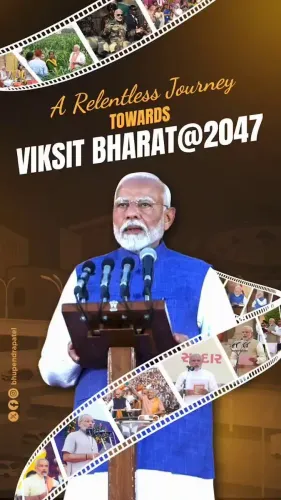
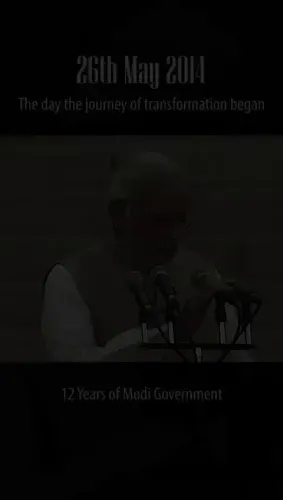
The remarks were made at the Viksit Bharat Sankalp Sammelan in Ahmedabad on 15 June , marking 12 years of the Modi-led Union government .
Kutch was cited as a region transformed from arid land into a productive agricultural belt through canal expansion.
Gujarat's growing profile in semiconductor and chip manufacturing investments was highlighted as a sign of India's global credibility.
BJP MP Hasmukh Patel cited the Mumbai–Delhi Dedicated Freight Corridor , airport expansion, UPI , and GIFT City as markers of economic self-reliance.
Speakers called on citizens to support the Viksit Bharat 2047 goal through environmental initiatives including Mission LiFE and Catch the Rain .
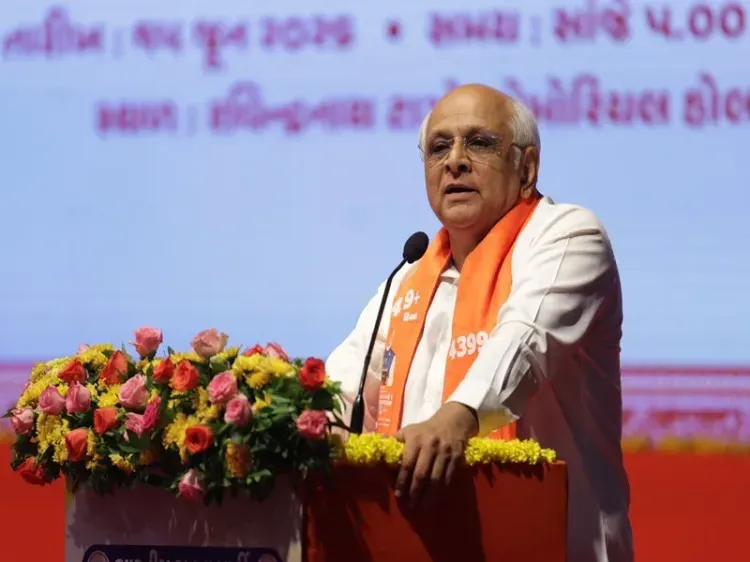
Gujarat Chief Minister Bhupendra Patel on Monday, 15 June said the state had decisively resolved its decades-old twin crises of water scarcity and erratic electricity supply, crediting the expansion of the Narmada canal network and uninterrupted power infrastructure — remarks made at a high-profile conference in Ahmedabad marking 12 years of the Prime Minister Narendra Modi-led Union government.
The event, titled 'Viksit Bharat Sankalp Sammelan' and organised under the theme '12 Years of Trust, Development and Public Welfare', brought together senior Bharatiya Janata Party (BJP) leaders, legislators, and citizens to assess the Centre's policy record since 2014.
Gujarat's Water and Power Transformation
'The major struggle that Gujarat once faced for water and electricity has now been completely overcome through uninterrupted power supply and the extensive Narmada network,' Chief Minister Patel said at the gathering. He pointed to the transformation of Kutch — historically one of the state's most arid regions — into a productive agricultural belt as a direct outcome of expanded canal reach.
Patel attributed the turnaround to the governance model established under Prime Minister Modi, arguing that the direct delivery of scheme benefits had reinforced public trust in institutions. 'PM Modi's approach of delivering what he promises had enabled the implementation of major decisions, including the abrogation of Article 370, Goods and Services Tax reforms and the Nari Shakti Vandan Act,' he said.
Semiconductor Investments and Healthcare Outreach
The Chief Minister also flagged Gujarat's growing profile as a destination for semiconductor and chip manufacturing investments, describing the inflows as evidence of India's rising global credibility. On the welfare front, he highlighted the Ayushman Bharat health insurance scheme as having meaningfully reduced the healthcare burden on economically weaker families.
Patel called on citizens to actively participate in realising the Viksit Bharat 2047 vision, urging engagement with environmental initiatives such as Mission LiFE and Catch the Rain.
BJP Leaders on Infrastructure and Welfare
BJP State General Secretary and Zone In-Charge Ajay Brahmbhatt said development, trust and public welfare had remained closely linked across the past 12 years. He highlighted the Pradhan Mantri Awas Yojana, under which lakhs of families had received permanent housing, and noted that free foodgrain distribution, Jan Dhan bank accounts and Ayushman Bharat cards had provided direct economic and healthcare benefits to low-income households.
BJP Member of Parliament Hasmukh Patel said India's ambition of becoming a developed nation by 2047 depended on strengthening infrastructure and cutting logistics costs. He cited faster highway construction, extensive railway electrification, and the commissioning of the Dedicated Freight Corridor between Mumbai and Delhi as milestones that had reduced transport time and costs.
Connectivity, Trade and Self-Reliance
Hasmukh Patel also pointed to the expansion of airports and said the development of a modern cargo terminal at Ahmedabad airport would help agricultural produce reach overseas markets more quickly, potentially improving farmer returns. He further cited metro rail expansion, port modernisation, the international adoption of UPI, the development of GIFT City, and growth in defence exports as markers of increasing economic self-reliance.
The conference was attended by Minister of State for Urban Development Darshana Vaghela, Ahmedabad Mayor Hitesh Barot, MP Dinesh Makwana, legislators, Ahmedabad Municipal Corporation office-bearers, and a large number of citizens. With the 2047 target now a recurring refrain across BJP platforms, the Ahmedabad event signals the party's intent to anchor its electoral narrative firmly in the infrastructure-and-welfare story it has built over the past decade.
Point of View
But water equity across Gujarat's districts remains uneven, a nuance absent from the conference floor. Similarly, citing semiconductor investment announcements as evidence of 'global credibility' conflates intent with outcome; groundbreaking and production are very different milestones. The BJP's 2047 narrative is coherent and well-rehearsed, but the gap between headline infrastructure numbers and last-mile citizen impact is where the real accountability story lies.
NationPress
20 Sept 2026
Frequently Asked Questions
What was the Viksit Bharat Sankalp Sammelan in Ahmedabad about?
The Viksit Bharat Sankalp Sammelan was a BJP-organised conference held in Ahmedabad on 15 June to mark 12 years of the Prime Minister Narendra Modi-led Union government. It brought together Gujarat's senior political leaders, legislators, and citizens under the theme '12 Years of Trust, Development and Public Welfare' to highlight the Centre's policy achievements.
What did Gujarat CM Bhupendra Patel say about the state's water and power situation?
CM Patel said Gujarat's long-standing struggles with water scarcity and unreliable electricity had been completely overcome through uninterrupted power supply and the expansion of the Narmada canal network. He specifically cited the transformation of the Kutch region into a productive agricultural area as evidence of the turnaround.
Which central government schemes were highlighted at the conference?
Speakers highlighted the Ayushman Bharat health insurance scheme, Pradhan Mantri Awas Yojana for permanent housing, free foodgrain distribution, Jan Dhan bank accounts, and the Nari Shakti Vandan Act. BJP MP Hasmukh Patel also cited the Dedicated Freight Corridor between Mumbai and Delhi, airport expansion, UPI, and GIFT City as infrastructure milestones.
Why did CM Patel mention semiconductor investments in Gujarat?
CM Patel cited Gujarat's emergence as a destination for semiconductor and chip manufacturing investments as a reflection of India's growing global credibility under the Modi government. He presented the investments as a sign of investor confidence built over the past 12 years.
Who attended the Viksit Bharat Sankalp Sammelan in Ahmedabad?
The conference was attended by Minister of State for Urban Development Darshana Vaghela, Ahmedabad Mayor Hitesh Barot, MP Dinesh Makwana, BJP State General Secretary Ajay Brahmbhatt, BJP MP Hasmukh Patel, legislators, Ahmedabad Municipal Corporation office-bearers, and a large number of citizens.