CM Bhupendra Patel Hails Northeast as Viksit Bharat Pillar
Synopsis
Gujarat Chief Minister Bhupendra Patel lauded 12 years of Northeast India's transformation under PM Modi, calling the region India's 'Ashtalakshmi' and a gateway to Southeast Asia, connecting its rise to the Viksit Bharat vision for a developed India by 2047.
Key Takeaways
Gujarat CM Bhupendra Patel posted on 20 June 2026 praising Northeast India's development over 12 years under PM Narendra Modi .
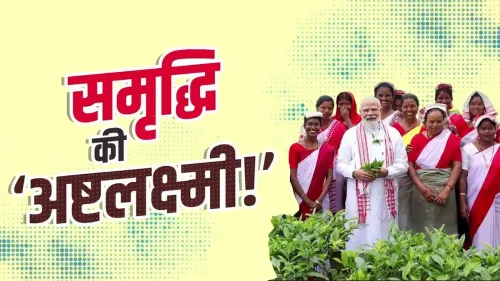
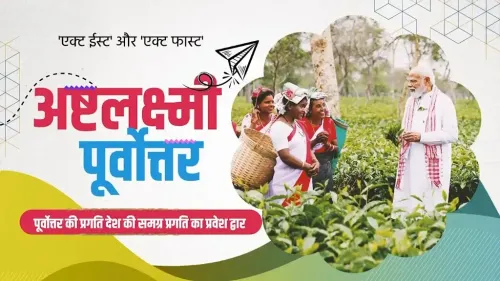
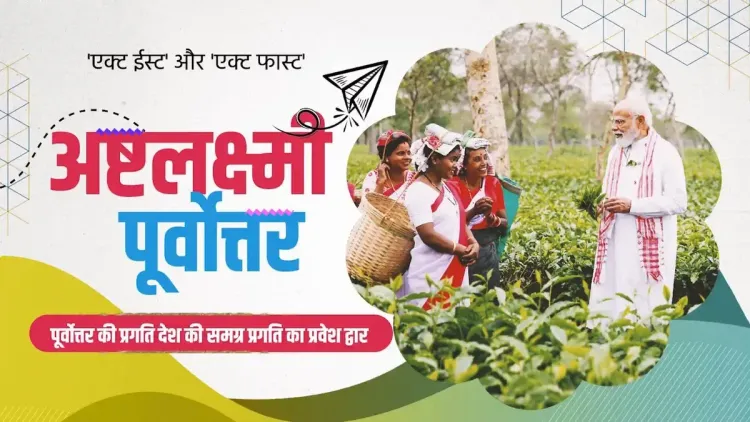
He referred to the Northeast as 'Ashtalakshmi' , framing the eight-state region as a strong pillar of India's national progress.
Key drivers cited include world-class infrastructure, improved connectivity, and the establishment of peace and stability across the region.
The post links Northeast growth to the Viksit Bharat national vision of a developed India by 2047 .
The Act East Policy (2014) repositioned the Northeast as India's strategic and economic gateway to Southeast Asia and ASEAN markets.
The hashtag #12YearsOfRisingNorthEast signals a coordinated BJP campaign to highlight governance achievements in the region.
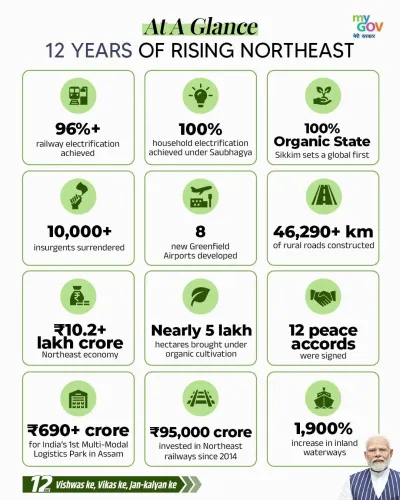
Gujarat Chief Minister Bhupendra Patel on Saturday, 20 June 2026, praised the transformation of India's Northeast region over the past 12 years, crediting Prime Minister Narendra Modi's leadership for turning a historically neglected zone into what he called the 'Ashtalakshmi' — a strong pillar of India's progress.
Context
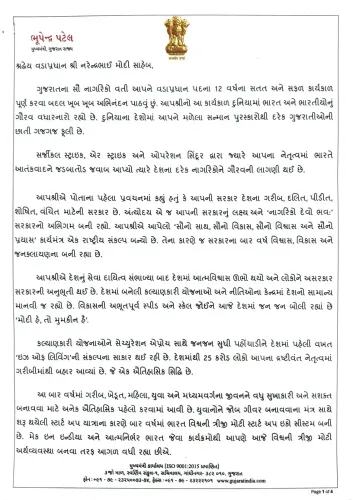
Posting in Hindi on X, CM Patel wrote that the Northeast, long sidelined from mainstream national development, has been brought to the centre of policy decisions over the last decade-plus. He described a new era marked by world-class infrastructure, improved connectivity, and the establishment of peace and stability across the eight northeastern states. His post carried the hashtags #12YearsOfRisingNorthEast and #ViksitBharat.
Translated, the post reads: 'Under the visionary leadership of respected Prime Minister Shri Narendra Modi Ji, in the last 12 years, our Northeast region has emerged as a very strong pillar of India's progress in the form of 'Ashtalakshmi'.' Patel added that this transformed Northeast is now giving new energy to the resolve of a Viksit Bharat — a developed India by 2047.
Policy Backdrop
The Act East Policy, announced in 2014, repositioned the Northeast as India's strategic gateway to Southeast Asia, replacing the older Look East approach with a more action-oriented framework. The policy brought the Ministry of Development of North Eastern Region into greater focus, with increased central budgetary outlays directed at road, rail, and air connectivity projects across the eight states.
The region — comprising Arunachal Pradesh, Assam, Manipur, Meghalaya, Mizoram, Nagaland, Sikkim, and Tripura — had historically seen lower public investment relative to other parts of the country. Peace accords and reduced insurgency activity have been cited by the central government as enabling conditions for the economic opening that followed.
Stakeholders and Impact
The most direct beneficiaries highlighted in CM Patel's post are Northeast youth, for whom he says the new environment has opened 'limitless opportunities' in trade, tourism, and employment. Improved connectivity — road, rail, and digital — is seen as the foundational enabler for these economic possibilities.
Regional traders and entrepreneurs stand to gain from the Northeast's positioning as a corridor to ASEAN markets. Cultural tourism, given the region's distinct heritage across multiple ethnic communities, has also been identified as a high-potential sector within the broader Viksit Bharat framework that links peripheral regional growth to the national development vision.
What's Next
Attention will now turn to the progress of trilateral highway and rail linkages connecting India to Myanmar and Thailand, which are central to realising the Act East Policy's trade ambitions. Outcomes of upcoming North Eastern Council meetings on tourism and trade facilitation are also being closely watched by regional stakeholders.
For the BJP, the #12YearsOfRisingNorthEast campaign framing signals a coordinated effort to consolidate the party's governance narrative in the region ahead of future electoral cycles, with senior leaders across states amplifying the message simultaneously.
Point of View
Which is a significant rhetorical shift from pre-2014 discourse. Anchoring this to the Viksit Bharat 2047 vision extends the political dividend beyond the present electoral cycle, making Northeast development a long-arc governance story. The post also implicitly underscores the Act East Policy's strategic logic, positioning India's periphery as its bridge to ASEAN rather than its burden.
NationPress
19 Sept 2026
Frequently Asked Questions
What is 'Ashtalakshmi' in the context of Northeast India?
'Ashtalakshmi' refers to the eight northeastern states of India — Arunachal Pradesh, Assam, Manipur, Meghalaya, Mizoram, Nagaland, Sikkim, and Tripura — collectively described as eight forms of the goddess Lakshmi, symbolising prosperity and potential. The term has been used by the BJP-led central government to reframe the Northeast as a region of immense cultural and economic value rather than a peripheral zone.
What is the Act East Policy and how does it relate to Northeast India?
The Act East Policy was announced in 2014 by the Modi government to deepen India's economic and strategic ties with Southeast Asia, with the Northeast serving as the primary land corridor to ASEAN nations. It replaced the earlier Look East Policy and brought significantly higher infrastructure investment and diplomatic engagement focused on the northeastern states.
What is Viksit Bharat and why is the Northeast important to it?
Viksit Bharat is the central government's national vision to make India a fully developed nation by 2047, the centenary of independence. The Northeast is positioned as a key contributor to this goal through its potential in trade, tourism, and connectivity to Southeast Asia, with regional growth seen as integral to the overall national development target.
Why did Gujarat CM Bhupendra Patel comment on Northeast India?
CM Patel's post appears to be part of a coordinated BJP campaign under the hashtag #12YearsOfRisingNorthEast, in which party leaders across the country amplified the central government's governance record in the Northeast region on the occasion of marking 12 years of Modi-led national governance.
What are the next big infrastructure projects for Northeast India?
Key projects being tracked include trilateral highway and rail links connecting India to Myanmar and Thailand, which are central to the Act East Policy's trade ambitions. Outcomes of North Eastern Council meetings focused on tourism promotion and cross-border trade facilitation are also closely watched by regional stakeholders and investors.