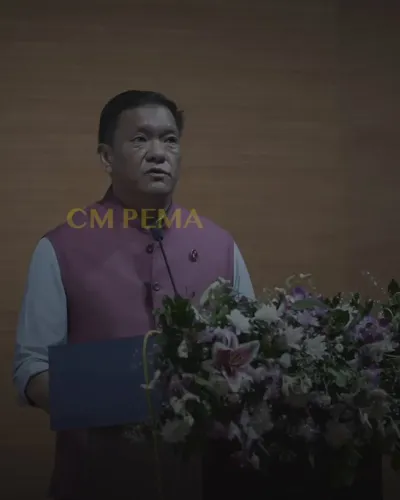
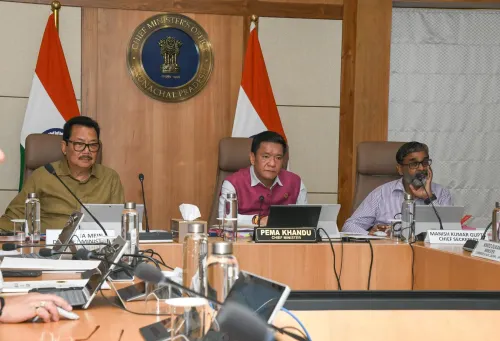
CM Pema Khandu announces Shangri-La Calling Festival
Synopsis
Arunachal Pradesh Chief Minister Pema Khandu has announced that the Shangri-La Calling Festival will take place on 17–18 October 2026, highlighting the state's tribal heritage and advancing its tourism-led development strategy.
Key Takeaways
Pema Khandu announced the Shangri-La Calling Festival on 16 October 2026 via X.
The festival is scheduled for 17–18 October 2026 .
The event is organised by the Arunachal Pradesh government to promote local culture and tourism.
Arunachal Pradesh borders Bhutan, China, and Myanmar and is home to numerous indigenous tribal communities.
The festival aligns with broader Northeast India tourism development priorities supported by the central government.
Key outcomes to watch include attendance figures and any follow-up tourism policy announcements from the state.
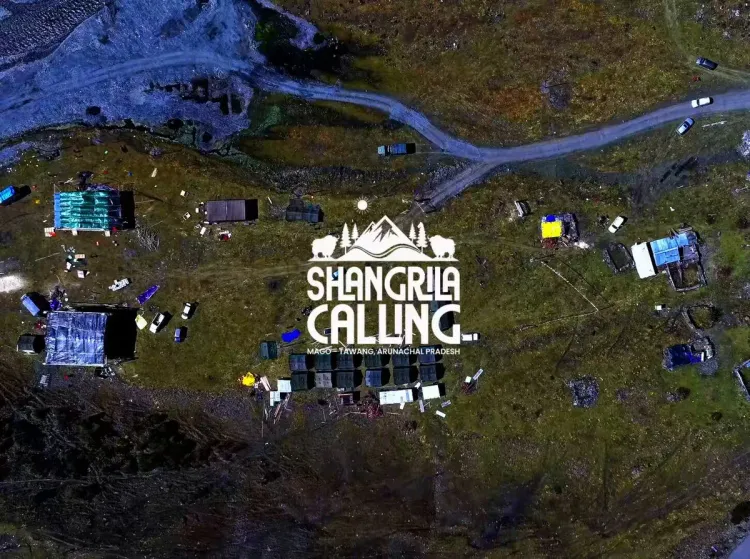
Arunachal Pradesh's mountains are about to echo with celebration. Chief Minister Pema Khandu announced on Friday, 16 October 2026, that the Shangri-La Calling Festival opens its gates on 17–18 October, calling it a moment the state has been eagerly awaiting.
Arunachal's cultural showcase on the national stage
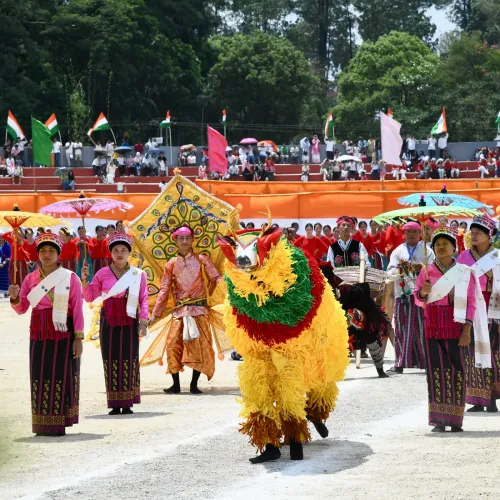
The Shangri-La Calling Festival is an initiative of the Arunachal Pradesh government designed to spotlight the state's rich tribal heritage and extraordinary biodiversity before a wider audience. Arunachal Pradesh — a northeastern state sharing borders with Bhutan, China, and Myanmar — is home to dozens of distinct indigenous communities, each with living traditions of music, craft, and ceremony that few outside the region ever witness firsthand.
Tourism as strategy, not spectacle
This festival sits within a deliberate policy arc. The state government has consistently used annual cultural events to pull visitors into one of India's most geographically remote and visually spectacular regions. Northeastern states have increasingly turned to exactly this playbook — using curated cultural moments as entry points for sustained tourism growth — and Arunachal has paired its festival calendar with investment in border-area infrastructure and connectivity.
The broader push aligns with New Delhi's priority of integrating the Northeast into India's mainstream tourism economy, channelling central funds toward roads, airports, and hospitality capacity that make a festival visit possible for the casual traveller, not just the hardy expedition-goer.
What two days in October could set in motion
For local communities — artisans, performers, homestay operators, guides — a well-attended festival translates directly into seasonal income and longer-term visibility. The real measure of success, however, will come in the weeks after the event: whether attendance figures hold, whether social media amplification drives forward bookings, and whether the government follows the festival with fresh tourism policy or investment announcements.
One thing is already clear: when a chief minister personally counts down the hours to a cultural event, he is signalling that it is more than a calendar fixture. It is a statement of identity — and an economic bet.
Point of View
Arunachal Pradesh is differentiating itself in an increasingly competitive domestic tourism landscape. The move also carries political resonance: demonstrating active governance in a strategically sensitive border state reinforces both state identity and central government narratives around Northeast integration. How the festival is received — and what policy follows — will signal whether this is a maturing tourism model or a recurring symbolic gesture.
NationPress
17 Oct 2026
Frequently Asked Questions
What is the Shangri-La Calling Festival?
The Shangri-La Calling Festival is a cultural tourism event organised by the Arunachal Pradesh government to promote the state's tribal heritage, biodiversity, and tourism potential.
When is the Shangri-La Calling Festival 2026?
The festival is scheduled for 17–18 October 2026 , as announced by Chief Minister Pema Khandu on 16 October 2026.
Who announced the Shangri-La Calling Festival 2026?
Arunachal Pradesh Chief Minister Pema Khandu announced the festival on his official X account on 16 October 2026.
Where is Arunachal Pradesh and why does it host cultural festivals?
Arunachal Pradesh is a northeastern Indian state bordering Bhutan, China, and Myanmar. The state government organises cultural festivals to attract visitors, showcase tribal traditions, and drive tourism-led economic growth.
How does the Shangri-La Calling Festival fit into Northeast India tourism policy?
It is part of a wider pattern in which northeastern states use curated cultural events to draw tourists, aligned with central government priorities of developing Northeast India's tourism infrastructure and connectivity.