CM Pema Khandu hails Jairampur's third Swachh City win
Synopsis
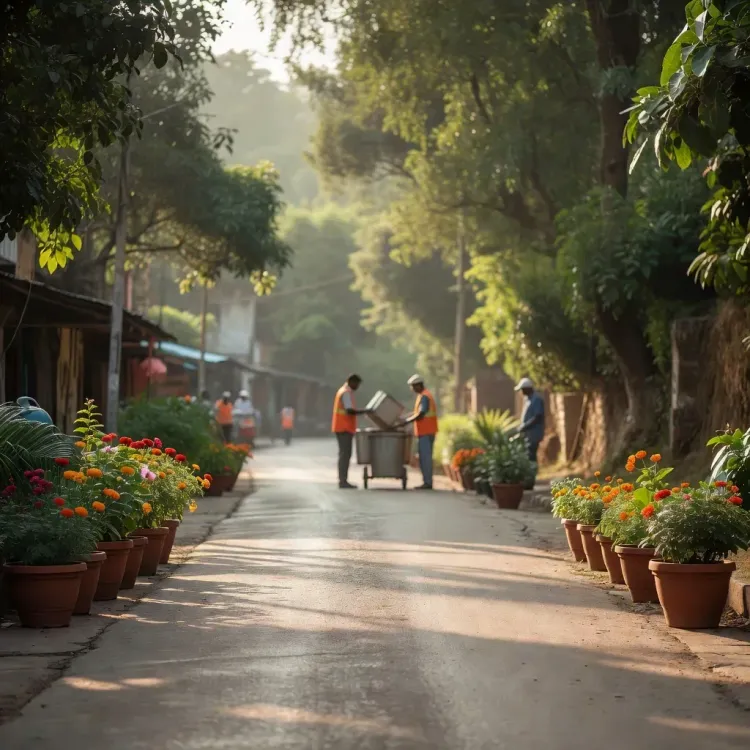
Jairampur in Arunachal Pradesh's Changlang district has earned its third consecutive Swachh City recognition under Swachh Survekshan Awards 2025–26. CM Pema Khandu praised the town's collective civic effort and urged other Arunachal towns to replicate its model of sustained cleanliness and environmental stewardship.
Key Takeaways
Jairampur in Changlang district , Arunachal Pradesh, has been named the state's Swachh City under Swachh Survekshan Awards 2025–26 .
This is Jairampur's third consecutive year receiving the recognition — a hat-trick in state-level cleanliness rankings.
CM Pema Khandu credited the achievement to local administration, elected representatives, sanitation workers and residents collectively.
Swachh Survekshan has been conducted annually since 2016 under the broader Swachh Bharat Mission launched in October 2014 .
Changlang is Arunachal Pradesh's easternmost district, bordering Myanmar — making sustained urban cleanliness outcomes there especially notable.
Khandu called on other towns across Arunachal Pradesh to draw inspiration from Jairampur's model for a 'cleaner, healthier and greener future.'
Three years in a row — and counting. Jairampur, a town in Arunachal Pradesh's easternmost Changlang district, has been named the state's Swachh City under the Swachh Survekshan Awards 2025–26, making it the third consecutive year the town has claimed this distinction. Arunachal Pradesh Chief Minister Pema Khandu took to X on Sunday, November 15, 2026, to congratulate the community and call on other towns across the state to follow suit.
A hat-trick built on collective will
Khandu was explicit about where the credit belongs: 'This achievement is a collective effort of the local administration, elected representatives, sanitation workers and, above all, the people of Jairampur towards cleanliness.' That framing matters. The Swachh Survekshan framework, running since 2016, is designed precisely to reward this kind of sustained, broad-based civic commitment — not a one-off infrastructure push, but a year-on-year culture of waste management, sanitation upkeep and environmental protection.
Changlang is a district of mixed urban and rural settlements bordering Myanmar — geographically remote, administratively challenging. That Jairampur has repeatedly out-performed on cleanliness indicators in this context makes the hat-trick more than a certificate on a wall.
Swachh Bharat's competitive engine — and what Jairampur proves
The Swachh Bharat Mission, launched in October 2014, set the national goal of eliminating open defecation and overhauling solid waste management. Its annual survey arm, Swachh Survekshan, turned that ambition into a league table — cities and towns compete on parameters covering waste segregation, sanitation infrastructure and public participation. The rankings have pushed urban local bodies across the country, including smaller northeastern towns, to institutionalise practices that might otherwise slip after an initial push.
Jairampur's three-peat is exactly the outcome that framework was designed to produce: a smaller town, away from the national spotlight, building a durable local habit rather than a one-year sprint for a trophy.
Khandu's challenge to the rest of Arunachal
The Chief Minister's message was not just celebratory — it was directional. 'May this achievement inspire other towns across Arunachal Pradesh to strive for a cleaner, healthier and greener future,' Khandu wrote. With the next Swachh Survekshan cycle already in view, the implicit signal to district administrations and urban local bodies across the state is clear: Jairampur has set the benchmark, now match it.
For a state with limited urban infrastructure but significant ecological and biodiversity stakes along the eastern Himalayan frontier, sustained civic cleanliness is not just a sanitation metric — it is an environmental imperative.
Point of View
Where urban local bodies operate with leaner resources and tougher geography than their counterparts in larger states, sustained recognition signals that the administrative machinery is embedding the mission rather than just performing for it. CM Khandu's public call-out to other towns doubles as political pressure on district administrations ahead of the next survey cycle, turning a congratulatory post into a governance nudge. The question for the next edition is whether Jairampur's model — whatever its specific mechanics — gets documented and shared state-wide, or remains a local achievement that inspires without being replicated.
NationPress
15 Nov 2026
Frequently Asked Questions
What is the Swachh Survekshan Award and who organises it?
The Swachh Survekshan Award is an annual national survey and ranking of cities and towns on cleanliness, sanitation and waste management, conducted under the central government's Swachh Bharat Mission. It has been held every year since 2016.
Why has Jairampur won the Swachh City award three consecutive times?
CM Pema Khandu attributed Jairampur's third consecutive Swachh City recognition to sustained collective effort by the local administration, elected representatives, sanitation workers and residents in maintaining cleanliness, sanitation and environmental protection standards.
Where is Jairampur located?
Jairampur is a town in Changlang district, the easternmost district of Arunachal Pradesh, bordering Myanmar.
What is the Swachh Bharat Mission?
Swachh Bharat Mission is a central government programme launched in October 2014 aimed at eliminating open defecation and improving solid waste management across urban and rural India. The annual Swachh Survekshan rankings are part of its urban component.
What did CM Pema Khandu say about other Arunachal Pradesh towns?
CM Khandu urged other towns across Arunachal Pradesh to draw inspiration from Jairampur's achievement and strive for a cleaner, healthier and greener future in the coming Swachh Survekshan cycles.