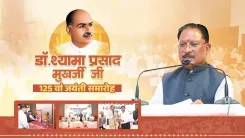
CM Pema Khandu Invokes Mookerjee's Vision of United India
Synopsis
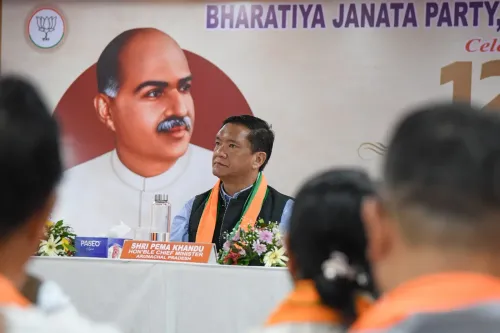
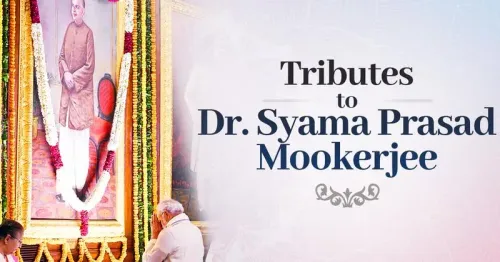
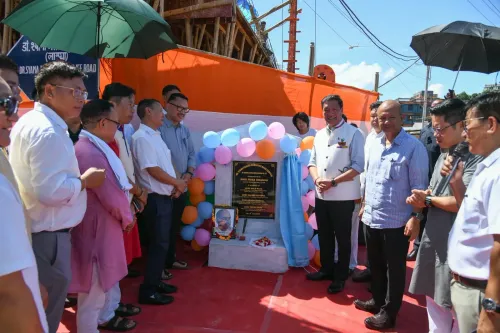
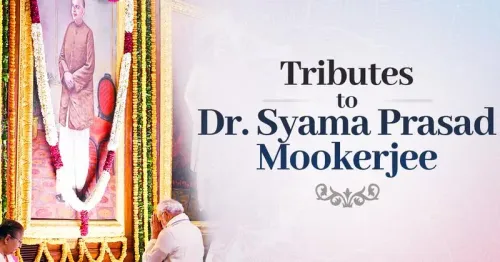
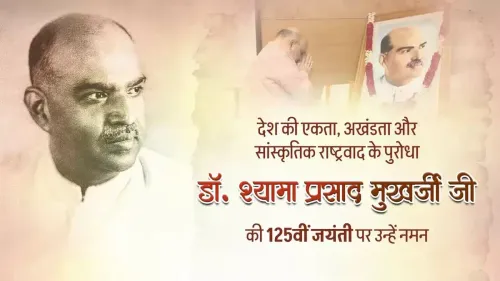
Arunachal Pradesh Chief Minister Pema Khandu on 6 July 2026 paid tribute to BJP founding ideologue Dr. Syama Prasad Mookerjee, declaring his dream of a strong, united India is 'winning.' The post reinforces the BJP's long-standing narrative linking current governance to Mookerjee's legacy of national integration.
Key Takeaways
CM Pema Khandu posted a tribute to Dr.
Syama Prasad Mookerjee on 6 July 2026 , calling his vision of a united India alive and unstoppable.
Mookerjee founded the Bharatiya Jana Sangh in 1951 and opposed special status for Jammu and Kashmir until his death in 1953 .
The abrogation of Article 370 in 2019 is widely cited by the BJP as the fulfilment of Mookerjee's central political demand.
The Ek Bharat Shreshtha Bharat programme, launched in 2015 , reflects the policy lineage of Mookerjee's integral nationalism in the Northeast.
Arunachal Pradesh , a border state with strategic sensitivity, has been a focus of infrastructure and integration efforts under Khandu 's tenure since 2016 .
BJP leaders routinely invoke Mookerjee to frame national integration policies as part of a continuous ideological legacy.
Arunachal Pradesh Chief Minister Pema Khandu on Monday, 6 July 2026, paid tribute to Dr. Syama Prasad Mookerjee, invoking the nationalist leader's dream of a strong, united India and declaring that the vision is not only alive but 'winning.' The post, shared on X, reflects the BJP's sustained effort to frame its governance agenda as a fulfilment of Mookerjee's founding ideals.
Context
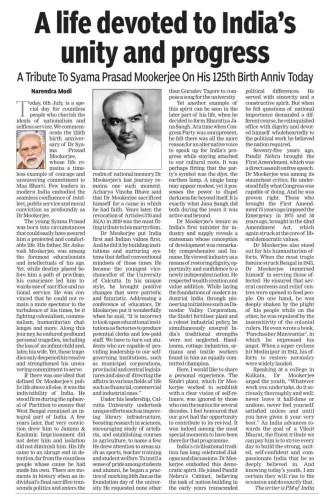
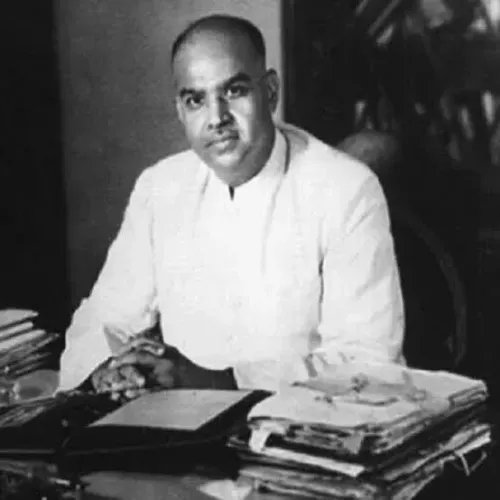
Dr. Syama Prasad Mookerjee was the founder of the Bharatiya Jana Sangh in 1951, the ideological precursor to today's Bharatiya Janata Party. He championed integral nationalism and was among the most vocal opponents of the special constitutional status granted to Jammu and Kashmir, a cause for which he was detained and died in custody in 1953. His legacy has since become a central pillar of BJP's political identity.
CM Khandu wrote: 'Dr. Syama Prasad Mookerjee dreamed of one strong, united India. Today, that vision is not just alive, it is winning, and no force can stop it.' The statement positions the Northeast — and Arunachal Pradesh in particular — as an integral part of this national unity narrative.
Policy Backdrop
The BJP has consistently linked its policy milestones to Mookerjee's vision. The most prominent example is the abrogation of Article 370 in August 2019, which removed Jammu and Kashmir's special status — a direct fulfilment of the demand Mookerjee had championed decades earlier. The party presented this as a historic act of national integration.
The Ek Bharat Shreshtha Bharat programme, launched in 2015, has further sought to strengthen cultural and administrative ties across states, with the Northeast being a key focus region. Under Khandu's tenure since 2016, Arunachal Pradesh has seen a significant infrastructure push, framed as part of the broader project of integrating border states into the national mainstream.
Stakeholders and Impact
The tribute resonates most directly with BJP supporters and residents of Northeastern India, where questions of national integration, connectivity, and cultural identity carry particular weight given the region's geographic and demographic distinctiveness. For communities in Arunachal Pradesh, which shares a sensitive border with China, the rhetoric of an 'unbreakable' India carries strategic undertones beyond the symbolic.
BJP leaders across the country routinely invoke Mookerjee's memory to lend historical legitimacy to policies ranging from anti-separatism measures to infrastructure connectivity. A tribute from the Chief Minister of a border state amplifies this narrative with geographic significance.
What's Next
The post may signal forthcoming state-level commemorations of Dr. Mookerjee or announcements tied to cultural exchange and connectivity schemes in Arunachal Pradesh. As the BJP continues to position its governance record as the living legacy of Mookerjee's ideals, such tributes from Chief Ministers in strategically sensitive states are likely to grow in frequency and political weight. The framing of unity as 'winning' suggests the party intends to keep this ideological thread prominent ahead of future electoral cycles.
Point of View
Lending historical depth to policy decisions like the abrogation of Article 370. Coming from the Chief Minister of a border state that faces active territorial pressures, the declaration that unity is 'winning' carries a strategic subtext beyond mere commemoration. The framing of Mookerjee's vision as irreversible and unstoppable also serves a forward-looking electoral purpose, reinforcing the BJP's identity as the singular custodian of national integration. As the party deepens its footprint in the Northeast, such tributes function simultaneously as ideological consolidation and political messaging.
NationPress
7 Jul 2026
Frequently Asked Questions
Who was Dr. Syama Prasad Mookerjee?
Dr. Syama Prasad Mookerjee was an Indian politician who founded the Bharatiya Jana Sangh in 1951 , the precursor to the BJP. He championed integral nationalism and opposed the special constitutional status of Jammu and Kashmir , dying in detention in 1953 .
Why did Pema Khandu pay tribute to Mookerjee?
CM Pema Khandu paid tribute to invoke Mookerjee's vision of a strong, united India, aligning the BJP's governance record — including the abrogation of Article 370 — with the founding ideals of the party's ideological predecessor.
What is the connection between Mookerjee and Article 370?
Dr. Mookerjee was among the most prominent opponents of the special status granted to Jammu and Kashmir . The BJP's abrogation of Article 370 in 2019 is widely presented by the party as the fulfilment of his decades-old demand.
What is Pema Khandu's role?
Pema Khandu has served as Chief Minister of Arunachal Pradesh since 2016 and is a senior leader of the Bharatiya Janata Party , known for his focus on state development and national integration in the Northeast.
What is the Ek Bharat Shreshtha Bharat programme?
Ek Bharat Shreshtha Bharat is a programme launched in 2015 to foster cultural and administrative unity across Indian states, with the Northeast as a key focus area, reflecting the policy lineage of Mookerjee's integral nationalism.