CM Pema Khandu joins Viksit Bharat Kalash Yatra in Itanagar

Synopsis
Arunachal Pradesh Chief Minister Pema Khandu joined the Viksit Bharat Sankalp Seva Jyoti Kalash Yatra in Itanagar on October 7, 2026, carrying the ceremonial lamp and reaffirming the state's commitment to India's Viksit Bharat @ 2047 vision.
Key Takeaways
CM Pema Khandu participated in the Viksit Bharat Sankalp Seva Jyoti Kalash Yatra in Itanagar on October 7, 2026 .
The yatra is part of the Viksit Bharat @ 2047 programme, aimed at mobilising public resolve around India's development centenary goal.
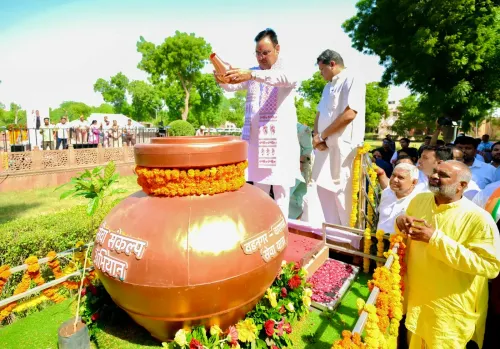
Khandu carried the Seva Jyoti Kalash , the ceremonial lamp symbolising collective commitment.
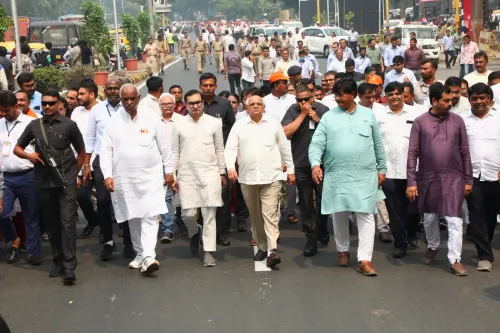
Crowds chanted 'Bharat Mata Ki Jai' as the procession moved through the streets of Itanagar .
Arunachal Pradesh borders China, Bhutan, and Myanmar, making northeast outreach a strategic priority for the Centre's development agenda.
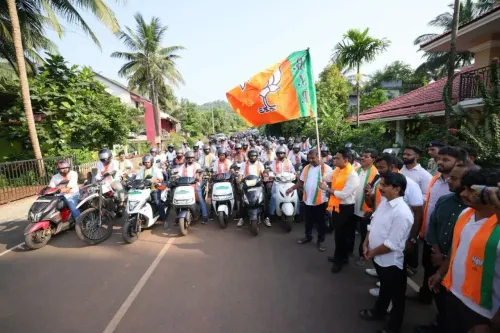
The chants of 'Bharat Mata Ki Jai' rang through the streets of Itanagar on Wednesday, October 7, 2026, as Arunachal Pradesh Chief Minister Pema Khandu joined the Viksit Bharat Sankalp Seva Jyoti Kalash Yatra — a mass outreach procession tied to the Centre's long-horizon vision of a developed India by 2047.
Khandu participated in the yatra carrying the Seva Jyoti Kalash, the ceremonial lamp that serves as the symbolic centrepiece of the programme. Posting about the event, he wrote: 'Carrying the Seva Jyoti Kalash, we renewed our collective resolve to contribute to the journey towards Viksit Bharat @ 2047.'
What the Kalash Yatra represents on the ground
The Viksit Bharat Sankalp Seva Jyoti Kalash Yatra is a citizen-facing mobilisation drive linked to the BJP-led government's Viksit Bharat @ 2047 framework — the blueprint for transforming India into a fully developed nation by the centenary of its independence. The programme typically moves through towns, villages, and urban localities, combining awareness of government welfare schemes with symbolic acts of collective resolve.
The Kalash — a vessel carrying a sacred flame — has historically functioned in Indian public life as a marker of sanctioned purpose and community commitment. Its use here bridges the ceremonial with the political, giving the outreach drive an idiom that resonates across Arunachal Pradesh's diverse communities.
Itanagar as a frontline for the 2047 vision
Arunachal Pradesh, India's largest state by area in the northeast, sits at a strategic frontier — bordering China, Bhutan, and Myanmar — and has been a focus of accelerated infrastructure investment in recent years. For CM Khandu, a senior BJP leader who has held the chief minister's office across multiple terms, events like this yatra double as both a governance signal and a political reaffirmation of the state's alignment with New Delhi's development agenda.
The streets of the capital filling with the Kalash procession and the national chant underlines how the Viksit Bharat messaging is being actively carried into India's far northeast — a region where connectivity, welfare delivery, and national integration have historically been the defining policy challenges.
The flame that travelled through Itanagar today carries a simple but deliberate message: that the 2047 ambition is not a Delhi directive handed down, but a resolve renewed street by street.
Point of View
Participation reinforces his administration's alignment with New Delhi's flagship vision while anchoring grassroots momentum ahead of any electoral cycle. The ceremonial use of the Kalash is not incidental — it translates an abstract policy horizon into a tangible, culturally resonant act of public participation. Whether the yatra translates into measurable welfare delivery on the ground will be the metric that outlasts the symbolism.
NationPress
7 Oct 2026
Frequently Asked Questions
What is the Viksit Bharat Sankalp Seva Jyoti Kalash Yatra?
The Viksit Bharat Sankalp Seva Jyoti Kalash Yatra is a public outreach procession tied to the central government's Viksit Bharat @ 2047 programme, which aims to make India a fully developed nation by the centenary of its independence. The yatra uses a ceremonial lamp — the Seva Jyoti Kalash — as a symbol of collective resolve and moves through towns and localities to build awareness of government schemes.
What is Viksit Bharat @ 2047?
Viksit Bharat @ 2047 is the BJP-led central government's long-term development framework that sets a goal of transforming India into a developed nation by 2047 — the 100th anniversary of Indian independence. It encompasses infrastructure, welfare, economic growth, and governance reform targets.
Why did CM Pema Khandu join the Kalash Yatra in Itanagar?
As Arunachal Pradesh Chief Minister and a senior BJP leader, Pema Khandu joined the Itanagar leg of the yatra to reaffirm the state's commitment to the Viksit Bharat @ 2047 vision and to signal active participation in the Centre's grassroots outreach in the northeast.
What is the significance of the Seva Jyoti Kalash?
The Seva Jyoti Kalash is a ceremonial vessel carrying a sacred flame that serves as the symbolic centrepiece of the Viksit Bharat Kalash Yatra. It draws on the Indian tradition of the Kalash as a marker of purpose and sanctioned resolve, giving the government's outreach drive a culturally recognisable form.
Where is Itanagar located and why is it significant?
Itanagar is the capital of Arunachal Pradesh, India's largest state by area in the northeast, sharing international borders with China, Bhutan, and Myanmar. Its strategic location makes government outreach and development activity there particularly significant from both a governance and national security standpoint.