CM Punjab Launches ₹9,300 Cr Women's Monthly Aid Scheme

Synopsis
Punjab's Chief Minister's Office has announced the Mukhya Mantri Mawan Dhiyan Satkar Yojana, providing ₹1,000 per month to eligible women and ₹1,500 to Scheduled Caste women via direct bank transfer, backed by a ₹9,300 crore budget allocation under the Bhagwant Mann government.
Key Takeaways
The Mukhya Mantri Mawan Dhiyan Satkar Yojana provides ₹1,000 per month to every eligible woman in Punjab .
Scheduled Caste women receive an enhanced benefit of ₹1,500 per month under the scheme.
Funds are transferred directly to beneficiaries' bank accounts via the Direct Benefit Transfer mechanism.
Women already receiving social security pensions remain eligible for the scheme — benefits can be stacked.
The Punjab government has allocated ₹9,300 crore in the state budget for the scheme's implementation.
The initiative is part of the Aam Aadmi Party government's broader direct-cash welfare agenda since March 2022 .
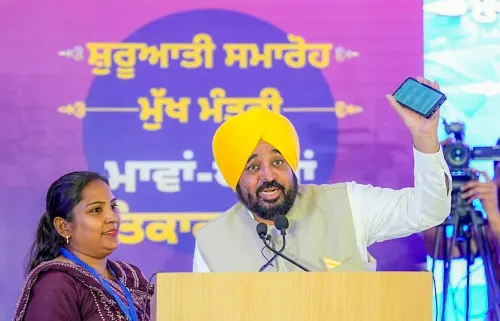
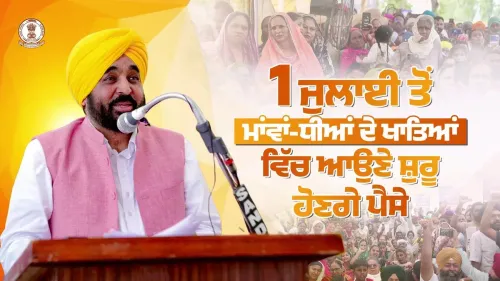
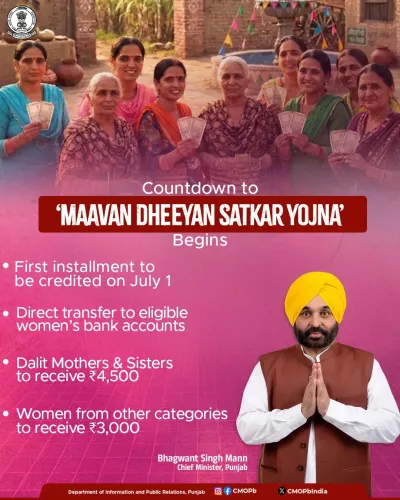
The Chief Minister's Office of Punjab announced on Wednesday, 1 July 2026 that every eligible woman in the state will receive ₹1,000 per month under the Mukhya Mantri Mawan Dhiyan Satkar Yojana, with women from the Scheduled Caste category entitled to a higher amount of ₹1,500 per month, as part of a landmark direct benefit transfer initiative backed by a ₹9,300 crore budget allocation.
Context
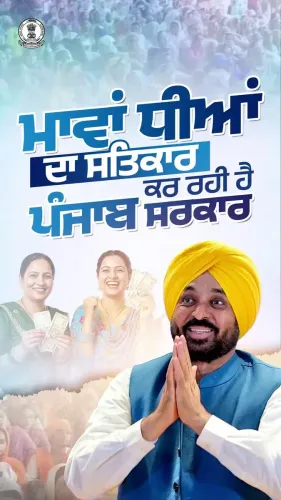
The official post from the Chief Minister's Office described the scheme as 'a remarkable step towards making Punjab First,' underscoring the Aam Aadmi Party government's emphasis on direct cash transfers as a cornerstone of its welfare agenda since coming to power in March 2022. The assistance is transferred directly to beneficiaries' bank accounts, and crucially, women already drawing social security pensions remain eligible — meaning the scheme is designed to supplement, not replace, existing entitlements.
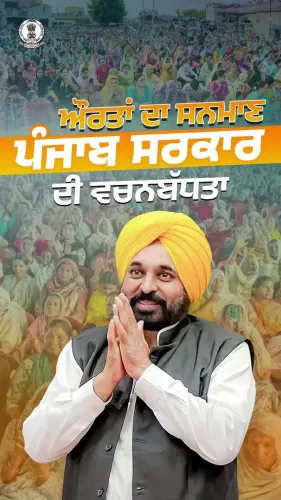
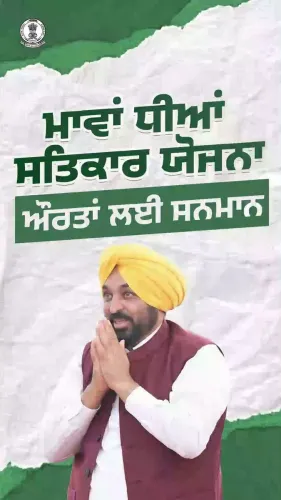
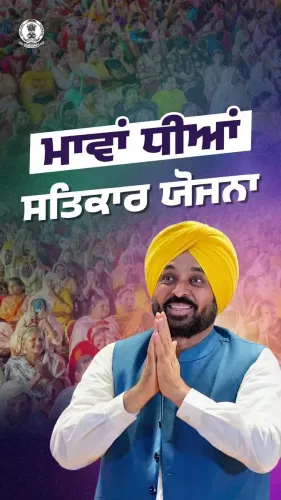
The scheme's Punjabi name, ਮਾਵਾਂ ਧੀਆਂ ਸਤਿਕਾਰ ਯੋਜਨਾ (Mawan Dhiyan Satkar Yojana), translates broadly as the 'Respect for Mothers and Daughters Scheme,' signalling the programme's intent to recognise and support women across generations.
Policy Backdrop
Punjab has historically operated social security pension schemes covering widows, elderly citizens, and persons with disabilities, with the state periodically revising benefit amounts. The Mawan Dhiyan Satkar Yojana represents an expansion of this tradition into a universal monthly cash transfer for adult women, a model that several Indian states have adopted since 2022–23.
The enhanced rate of ₹1,500 per month for Scheduled Caste women reflects Punjab's demographic reality: Scheduled Castes constitute roughly 32 percent of the state's population, the highest proportion of any Indian state. Chief Minister Bhagwant Mann's government has consistently framed its budget priorities around direct-benefit welfare, and the ₹9,300 crore allocation for this scheme represents one of the largest single welfare commitments in recent Punjab budget history.
Stakeholders and Impact
The primary beneficiaries are women across Punjab, with Scheduled Caste women receiving a meaningfully higher monthly entitlement. The direct bank transfer mechanism is intended to eliminate intermediaries and reduce leakage, a design principle that aligns with the Union government's broader DBT (Direct Benefit Transfer) infrastructure.
Women already receiving pensions for widowhood, disability, or old age are not excluded, making the scheme's effective reach potentially wider than standalone programmes in other states. This stacking provision is politically significant, as it avoids the trade-off that has drawn criticism in analogous schemes elsewhere.
What's Next
Analysts and opposition legislators are likely to scrutinise budget utilisation reports and coverage statistics in forthcoming Punjab Assembly sessions to assess how many women have been enrolled and whether disbursements are on schedule. Any mid-year supplementary demand related to the scheme will serve as a key indicator of actual rollout pace.
With multiple states now running competing women's cash-transfer programmes, the Mawan Dhiyan Satkar Yojana places Punjab firmly in a national policy trend — and its implementation record will likely influence welfare programme design in the state's next budget cycle.
Point of View
Where ruling parties use direct cash transfers to consolidate support among large demographic blocs — in this case, women and Scheduled Caste communities who together represent a decisive share of Punjab's electorate. The decision to allow stacking with existing pensions is a deliberate design choice that insulates the scheme from the criticism that has dogged similar programmes elsewhere. With a ₹9,300 crore commitment, the AAP government is signalling fiscal confidence, but the real test will be in disbursement data and enrolment figures that the Punjab Assembly will eventually scrutinise. Nationally, this positions Punjab alongside states like Madhya Pradesh and Rajasthan in a race to define what a state-funded women's welfare floor looks like in India.
NationPress
1 Jul 2026
Frequently Asked Questions
What is the Mukhya Mantri Mawan Dhiyan Satkar Yojana?
It is a Punjab government scheme that provides a monthly cash transfer of ₹1,000 to eligible women and ₹1,500 to Scheduled Caste women, delivered directly to their bank accounts.
How much money do women get under the Punjab women's scheme?
Eligible women in Punjab receive ₹1,000 per month, while women belonging to the Scheduled Caste category receive ₹1,500 per month under the Mukhya Mantri Mawan Dhiyan Satkar Yojana.
Can women already getting a pension apply for the Mawan Dhiyan Satkar Yojana?
Yes. Women who are already receiving social security pensions are also eligible to receive the monthly benefit under this scheme.
How much has Punjab budgeted for the Mawan Dhiyan Satkar Yojana?
The Punjab government has allocated ₹9,300 crore in the state budget for the implementation of the Mukhya Mantri Mawan Dhiyan Satkar Yojana.
Who announced the Mawan Dhiyan Satkar Yojana and when?
The Chief Minister's Office of Punjab announced the scheme on 1 July 2026, with Chief Minister Bhagwant Mann's AAP government positioning it as a flagship welfare initiative.