CM Rekha Gupta Welcomes Coforge Library to Delhi

Synopsis
Delhi Chief Minister Rekha Gupta on 6 June 2026 welcomed the Coforge Library as a new addition to the capital's learning ecosystem, highlighting reading culture as a foundation for innovation and leadership. The endorsement reflects the BJP-led Delhi government's support for corporate-partnered education infrastructure.
Key Takeaways
Delhi CM Rekha Gupta publicly welcomed the Coforge Library on 6 June 2026 , calling it a valuable addition to the capital's learning ecosystem.
The library is named after Coforge , an Indian multinational IT services company, reflecting a corporate-partnership model for public education infrastructure.
The Delhi Public Library , established in 1951 , was independent India's first public library system, giving Delhi a historic stake in library-led literacy promotion.
The National Education Policy 2020 identifies libraries as key infrastructure for reading habits, critical thinking, and lifelong learning.
Primary beneficiaries are Delhi 's students and young readers who gain an additional self-directed learning space.
The endorsement may signal the BJP-led Delhi government's openness to further public-private partnerships in education infrastructure.
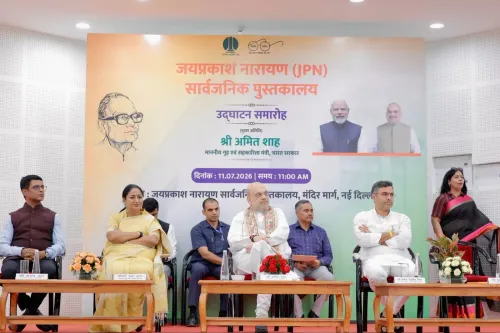
Delhi Chief Minister Rekha Gupta on Saturday, 6 June 2026, welcomed the inauguration of the Coforge Library as a meaningful addition to the capital's learning infrastructure, saying it would help nurture informed minds and build future leaders.
Context
In her post on X, CM Rekha Gupta described the Coforge Library as 'a welcome addition to Delhi's learning ecosystem,' adding that 'a strong reading culture nurtures informed minds, encourages innovation and helps build the leaders of tomorrow.' The statement signals the BJP-led Delhi government's endorsement of corporate-partnered public infrastructure in the education space.
The library bears the name of Coforge, an Indian multinational IT services company, reflecting a growing trend of corporate-named facilities supplementing state-funded educational infrastructure across India.
Policy Backdrop
Delhi has a long-standing library tradition: the Delhi Public Library, established in 1951, was the first public library system in independent India and was created explicitly to promote mass literacy in the newly independent nation.
The National Education Policy 2020 identified libraries as key infrastructure for fostering reading habits, critical thinking, and lifelong learning — giving renewed policy weight to investments of this kind. State governments across India have periodically announced library modernisation drives as part of broader human-capital strategies aligned with the NEP framework.
In Delhi specifically, education infrastructure has been a contested political priority since the 2015 assembly elections, with successive administrations — first AAP-led and now BJP-led — staking claims to improvements in schooling and literacy environments.
Stakeholders and Impact
The primary beneficiaries of the new facility are Delhi's students and young readers, who gain access to an additional space for self-directed learning. Corporate-named libraries have emerged in several states as a supplementary funding mechanism that reduces the burden on government budgets while expanding physical access to books and knowledge resources.
For Coforge, the association with a public learning facility in the national capital carries reputational value and aligns with corporate social responsibility objectives in the education sector. The Chief Minister's public endorsement amplifies that visibility at the highest level of the Delhi government.
What's Next
The Delhi education department's annual plan may see follow-on budget allocations for additional library branches or digital catalogue upgrades, particularly if the Coforge Library model is positioned as a template for future public-private partnerships in the sector.
CM Gupta's statement is likely to be read as an early signal of the current administration's appetite for such collaborations — a direction that could shape how Delhi approaches learning infrastructure investment in the coming fiscal cycle.
Point of View
A contrast to the previous administration's emphasis on state-built school upgrades. The reference to 'leaders of tomorrow' situates the library within a human-capital narrative that resonates with the NEP 2020 framework, lending policy legitimacy to what might otherwise read as a routine ribbon-cutting. Corporate-named public facilities are increasingly common across Indian states, and Delhi's adoption of the model under BJP stewardship sets a precedent for how the current dispensation may fund education expansion without stretching its own budget. Whether this translates into a replicable policy programme or remains a one-off gesture will depend on the follow-through in the Delhi education department's next annual plan.
NationPress
21 Oct 2026
Frequently Asked Questions
What is the Coforge Library in Delhi?
The Coforge Library is a new reading facility in Delhi named after Coforge, an Indian multinational IT services company, welcomed by Chief Minister Rekha Gupta as an addition to the city's learning ecosystem.
What did Delhi CM Rekha Gupta say about the Coforge Library?
CM Rekha Gupta called it 'a welcome addition to Delhi's learning ecosystem' and said a strong reading culture 'nurtures informed minds, encourages innovation and helps build the leaders of tomorrow.'
How does the Coforge Library relate to India's education policy?
The National Education Policy 2020 identifies libraries as key infrastructure for fostering reading habits and critical thinking, making the Coforge Library consistent with the broader NEP framework.
What is the history of public libraries in Delhi?
The Delhi Public Library, established in 1951, was the first public library system in independent India, created to promote mass literacy after independence.
Is corporate funding of libraries common in India?
Yes, corporate-named library facilities have appeared in several Indian states as supplementary funding mechanisms alongside government budgets, reducing fiscal pressure on state education departments.