CM Rekha Gupta Pushes Digital Governance for Delhi
Synopsis
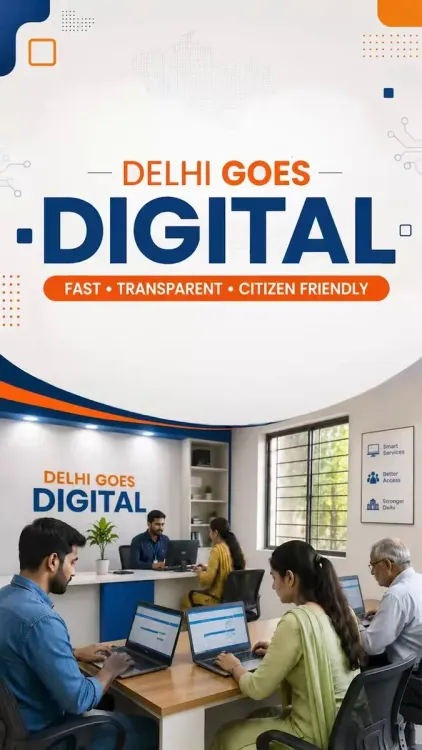
Delhi Chief Minister Rekha Gupta on 27 May 2026 declared the Delhi government is rapidly advancing digital governance aligned with PM Modi's Digital India vision, aiming to make public services more transparent, efficient, and citizen-friendly under the #ViksitDelhi banner.
Key Takeaways
Delhi Chief Minister Rekha Gupta announced on 27 May 2026 that the Delhi government is accelerating its shift toward digital governance.
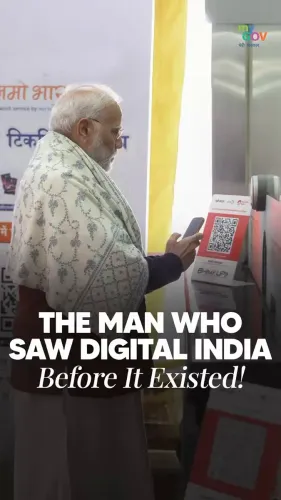
The initiative is framed as an extension of Prime Minister Narendra Modi 's Digital India programme, launched in July 2015 .
Government services are being redesigned to be more transparent, capable, convenient, and people-friendly.
The push is branded under #ViksitDelhi , mirroring the national Viksit Bharat 2047 vision.
Key outcomes to watch include rollout timelines, portal adoption metrics, and integration with central platforms such as UMANG and DigiLocker .
Delhi's 2 crore-plus residents are the primary intended beneficiaries of digitised public services.
Delhi Chief Minister Rekha Gupta on Wednesday, 27 May 2026 declared that the Delhi government is moving swiftly toward digital governance to make life simpler, more convenient, and better for residents of the capital. The announcement, made via a post on X, frames technology-driven administration as the defining identity of a developed Delhi.
In the post, Chief Minister Gupta wrote: 'दिल्लीवासियों का जीवन अधिक सरल, सुविधाजनक और बेहतर बनाने के लिए दिल्ली सरकार digital governance की ओर तेज़ी से बढ़ रही है' ('To make the lives of Delhi residents simpler, more convenient and better, the Delhi government is moving rapidly toward digital governance'). She added that government services are being made more transparent, capable, convenient, and people-friendly in line with Prime Minister Narendra Modi's Digital India vision.
Context
The statement positions Delhi's governance push as a direct extension of the national Digital India programme, which Prime Minister Modi launched in July 2015 to transform India into a digitally empowered society and knowledge economy. The programme aimed to deliver government services electronically, improve transparency, and reduce corruption in public administration. Gupta's invocation of the Prime Minister's vision signals an explicit alignment between the state government's agenda and the central government's long-standing digital policy framework.
Policy Backdrop
Since 2015, Indian states have progressively integrated central digital platforms — including UMANG, DigiLocker, and various state-level portals — to streamline public service delivery and reduce paperwork. The broader national goal, articulated through the Viksit Bharat vision in 2023, targets a fully developed India by 2047 through technology-enabled governance reforms. Chief Minister Gupta's use of the hashtag #ViksitDelhi directly mirrors this 'Viksit Bharat' framework, translating the national aspiration to the state level and branding digital transformation as the new identity of a developed Delhi.
The emphasis on 'faceless, paperless, cashless' governance has been a consistent policy direction across multiple BJP-ruled states, reflecting a coordinated effort to align state administration with national e-governance standards. Transparency and citizen convenience have been the twin pillars of this approach since its inception.
Stakeholders and Impact
The primary beneficiaries of this push are Delhi's estimated 2 crore-plus residents who interact with government services for documentation, utilities, welfare schemes, and civic needs. Digitisation of services reduces the need for physical visits to government offices, cutting wait times and opportunities for rent-seeking. For marginalised and elderly citizens, however, the transition to digital-first services can also raise concerns about access and digital literacy, aspects that implementation will need to address.
Government employees and service-delivery departments will also face significant process changes as workflows shift to digital platforms. The success of the initiative will depend heavily on backend infrastructure upgrades, staff training, and integration with central portals.
What's Next
Attention will now turn to the concrete rollout timelines and adoption metrics of new Delhi digital portals, their integration with established central platforms, and any related budget allocations in the forthcoming Delhi budget session. The Chief Minister's statement sets a directional tone, but the scale and pace of actual implementation — measured through service uptake, portal uptime, and citizen feedback — will determine whether technology-driven governance becomes a tangible reality for Delhi's residents or remains an aspirational marker.
Point of View
A move that serves both administrative and political purposes for a BJP-led state government. By invoking PM Modi's vision explicitly, the Delhi government signals continuity with national policy while staking a claim to the 'developed Delhi' identity ahead of future electoral cycles. The #ViksitDelhi hashtag is a deliberate echo of the Viksit Bharat 2047 framework, embedding Delhi's trajectory within the larger national development story. Whether this translates into measurable service improvements will be the real test of the initiative's substance beyond its messaging value.
NationPress
10 Oct 2026
Frequently Asked Questions
What is Delhi CM Rekha Gupta's digital governance plan?
Chief Minister Rekha Gupta announced on 27 May 2026 that the Delhi government is moving rapidly toward digital governance to make public services more transparent, convenient, and citizen-friendly, aligned with PM Modi's Digital India vision.
What is the Digital India programme?
Digital India is a national initiative launched by Prime Minister Narendra Modi in July 2015 to deliver government services electronically, improve transparency, and build a digitally empowered society and knowledge economy.
What does #ViksitDelhi mean?
#ViksitDelhi, meaning 'Developed Delhi,' is a campaign hashtag used by the Delhi government to brand its development and digital governance agenda, mirroring the national Viksit Bharat 2047 vision of a fully developed India.
How will Delhi's digital governance affect residents?
Delhi's 2 crore-plus residents stand to benefit through reduced need for physical office visits, faster service delivery, and greater transparency in government processes, though access for elderly and digitally marginalised citizens will be a key implementation challenge.
Which digital platforms are Indian states using for e-governance?
Indian states have been integrating central platforms such as UMANG, DigiLocker, and state-specific portals since 2015 to streamline public service delivery and reduce paperwork across departments.