CM Rekha Gupta Backs Delhi Mega Plantation Drive
Synopsis
On World Environment Day 2026, Delhi Chief Minister Rekha Gupta endorsed Union Minister Bhupender Yadav's vision for a greener, dust-free Delhi, spotlighting a Mega Plantation Drive and large-scale ecological restoration as part of the Modi government's urban air-quality agenda.
Key Takeaways
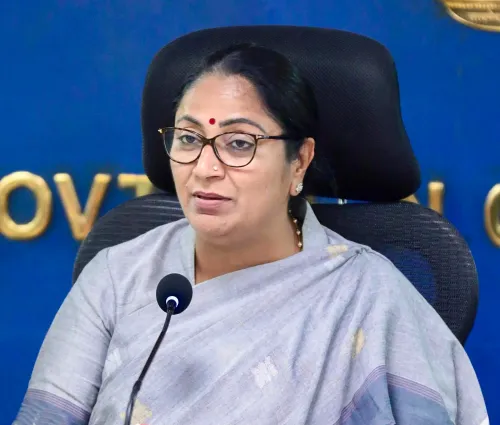
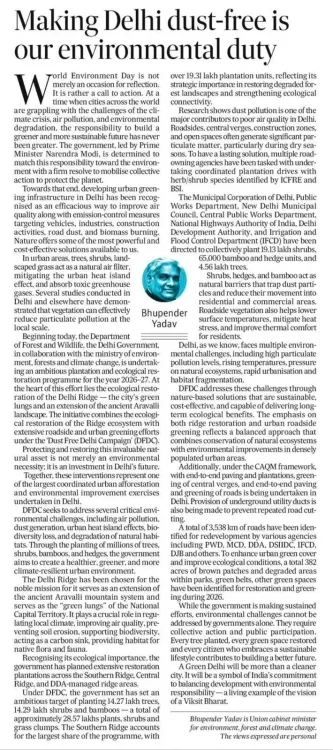
Delhi CM Rekha Gupta shared Union Minister Bhupender Yadav 's article on World Environment Day, 5 June 2026 .
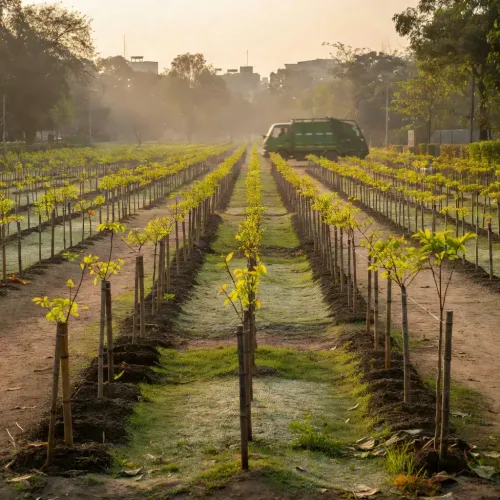
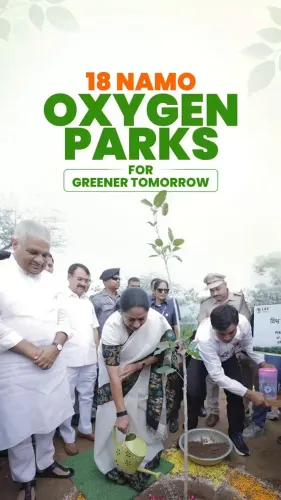
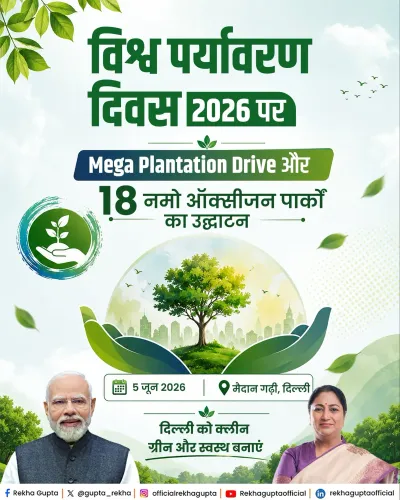
The post highlights a Mega Plantation Drive being launched in Delhi to expand green cover.
The initiative is framed as part of PM Narendra Modi 's broader vision for a greener, cleaner and dust-free national capital.
The National Clean Air Programme (NCAP) , launched in 2019 , covers 131 non-attainment cities including Delhi .
India has committed to restoring 21 million hectares of degraded land under the Bonn Challenge .
Survival rates of saplings through the 2026 monsoon season will be a key metric for the drive's credibility.
Delhi Chief Minister Rekha Gupta on Friday, 5 June 2026 — World Environment Day — endorsed a vision for a greener, cleaner and dust-free Delhi, sharing an opinion piece authored by Union Minister for Environment, Forest and Climate Change Bhupender Yadav that outlines the ecological restoration agenda being pursued under Prime Minister Narendra Modi.
In her post, CM Gupta described the article as 'a thoughtful piece' that 'underscores the importance of collective action in building a sustainable future.' She highlighted two specific initiatives: a Mega Plantation Drive being launched in Delhi and a broader programme of large-scale ecological restoration aimed at expanding the capital's green cover.
Context
Delhi has long grappled with some of the worst air-quality readings among major global cities, driven in large part by dust, vehicular emissions, and the seasonal burning of crop stubble in neighbouring states. The national capital's particulate pollution consistently breaches safe limits set by the World Health Organisation, making urban greening a politically salient as well as environmentally urgent priority.
The timing of the post — World Environment Day — amplifies its symbolic weight. CM Gupta, who leads the Bharatiya Janata Party government in Delhi, has aligned her administration's environmental messaging closely with the central government's climate and air-quality agenda since taking office.
Policy Backdrop
The Ministry of Environment, Forest and Climate Change launched the National Clean Air Programme (NCAP) in 2019, targeting a measurable reduction in particulate matter across 131 non-attainment cities, with Delhi among the priority locations. The programme mandates city-level action plans covering plantation, dust suppression, and industrial emission controls.
At the international level, India committed under the Bonn Challenge in 2015 to restore 21 million hectares of degraded land through afforestation and ecological restoration. Large-scale urban plantation drives in cities like Delhi are positioned as visible contributions toward that commitment. Union Minister Bhupender Yadav, as the nodal minister for both domestic and international climate obligations, has been the face of this policy push.
Stakeholders and Impact
The primary beneficiaries of any sustained greening effort in Delhi are its estimated 3.3 crore residents, who bear a disproportionate health burden from poor air quality — including elevated rates of respiratory and cardiovascular disease. Urban local bodies and the Delhi Development Authority are the key implementing agencies responsible for identifying land parcels, procuring saplings, and maintaining survival rates post-planting.
Environmental experts and civil society groups have in the past noted that headline plantation numbers can mask low sapling survival rates if post-planting maintenance is inadequate. The credibility of the Mega Plantation Drive will therefore hinge on independent monitoring of survival rates through the 2026 monsoon season and beyond.
What's Next
The 2026 monsoon window — typically July to September — is the operationally critical period for any plantation drive, as soil moisture dramatically improves sapling survival. Observers will watch for roll-out metrics, inter-agency coordination orders from the Environment Ministry, and any follow-up budgetary allocations to sustain the programme into the dry winter months when Delhi's pollution peaks.
If the Delhi government and the Centre can demonstrate measurable increases in green cover alongside credible dust-suppression data, the drive could serve as a replicable model for other Indian cities battling similar air-quality crises.
Point of View
She signals a unified command-and-control approach to Delhi's air-quality problem, a strategy that contrasts with the previous administration's often adversarial posture toward the Centre on pollution issues. The emphasis on 'collective action' is also a soft rebuttal to critics who argue that responsibility for Delhi's air has been passed between governments without accountability. Whether the Mega Plantation Drive produces verifiable outcomes will determine whether this messaging translates into durable political capital.
NationPress
21 Oct 2026
Frequently Asked Questions
What is the Delhi Mega Plantation Drive announced in 2026?
The Delhi Mega Plantation Drive is a large-scale tree-planting and ecological restoration initiative announced by the Delhi government, aimed at expanding the capital's green cover and reducing dust pollution. Specific targets and timelines are expected to be detailed as the 2026 monsoon season approaches.
What did Delhi CM Rekha Gupta say about the environment on World Environment Day 2026?
CM Rekha Gupta shared an article by Union Minister Bhupender Yadav on 5 June 2026, calling it 'thoughtful' and highlighting Delhi's Mega Plantation Drive and ecological restoration efforts as steps toward a greener and dust-free capital under PM Modi's leadership.
Who is Bhupender Yadav and what is his role in Delhi's environment policy?
Bhupender Yadav is the Union Minister for Environment, Forest and Climate Change. He is responsible for central policy on pollution control, forest cover, and India's international climate commitments, and has been closely involved in Delhi's air-quality agenda through the National Clean Air Programme.
What is the National Clean Air Programme and does it cover Delhi?
The National Clean Air Programme (NCAP) was launched in 2019 by the Ministry of Environment, Forest and Climate Change. It targets particulate matter reduction in 131 cities, with Delhi among the highest-priority locations given its chronic air-pollution levels.
How does India's Bonn Challenge commitment relate to Delhi's plantation drives?
Under the Bonn Challenge, India committed in 2015 to restore 21 million hectares of degraded land through afforestation and ecological restoration. Urban plantation drives in cities like Delhi are counted as contributions toward this national target.