CM Rekha Gupta Greets BMS on Its Foundation Day
Synopsis
Delhi Chief Minister Rekha Gupta marked Bharatiya Mazdoor Sangh's foundation day on 23 July 2026, honouring founder Dattopant Thengadi's legacy and calling workers the greatest strength behind India's Viksit Bharat vision.
Key Takeaways
Delhi CM Rekha Gupta posted foundation-day greetings for Bharatiya Mazdoor Sangh on 23 July 2026 .
BMS was founded on 23 July 1955 by RSS leader Dattopant Thengadi to pursue national, industrial, and worker interests simultaneously.
CM Gupta described workers' hard work and dedication as the 'greatest strength' in realising the Viksit Bharat goal of a developed India by 2047 .
BMS is one of India's largest trade union federations and is affiliated with the RSS, historically advocating labour-capital harmony over class conflict.
Policy focus areas to watch include the rollout of consolidated labour codes and tripartite talks on minimum wages and social security.
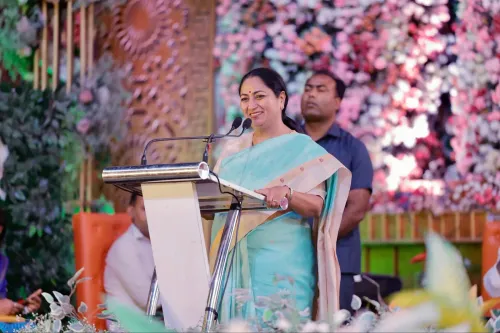
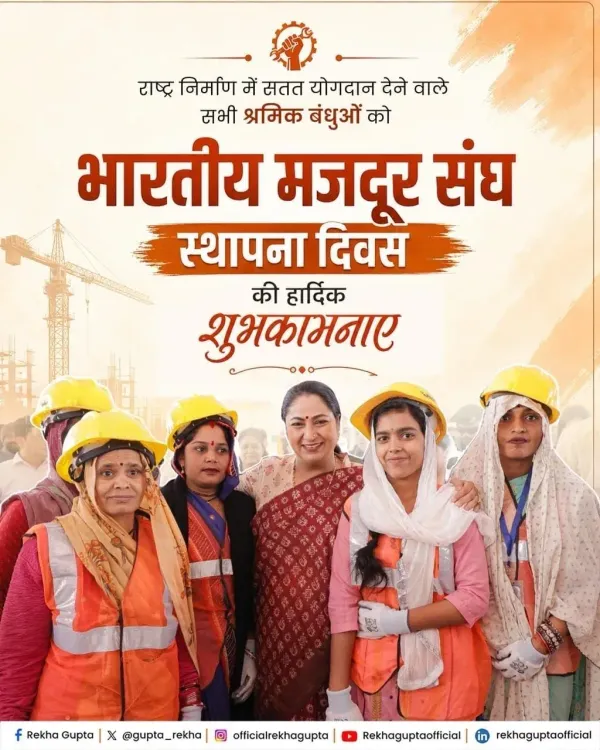
Delhi Chief Minister Rekha Gupta on Thursday, 23 July 2026, extended greetings to workers and activists of the Bharatiya Mazdoor Sangh (BMS) on its foundation day, linking the union's legacy to the national goal of a developed India by 2047.
Context
Posting in Hindi on X, CM Gupta offered 'हार्दिक बधाई एवं शुभकामनाएं' (heartfelt congratulations and good wishes) to all 'worker brothers and sisters and dedicated activists' on the occasion. She credited the union's founding vision to Dattopant Thengadi, describing his guidance as the bedrock on which BMS continues to work for the dignity, rights, and welfare of workers.
The post underscores the ideological continuity between the BJP's governance agenda and the RSS-affiliated labour movement, with the Chief Minister framing workers' 'hard work, dedication, and commitment to duty' as the 'greatest strength' in realising the Viksit Bharat vision.
Policy Backdrop
Bharatiya Mazdoor Sangh was established on 23 July 1955 by Dattopant Thengadi, an RSS leader who sought to build a labour movement grounded in the simultaneous pursuit of national interest, industrial interest, and worker welfare — rejecting the class-conflict model championed by left-leaning unions of the era. Over seven decades, BMS has grown into one of India's largest trade union federations.
Unlike unions affiliated with opposition parties, BMS has historically advocated labour-capital harmony aligned with nationalist principles. This positioning has made it a natural ally of BJP governments at the Centre and in the states, with foundation-day messages from ruling-party leaders becoming a routine feature of the political calendar.
Stakeholders and Impact
Industrial workers across organised and unorganised sectors form the primary constituency of BMS, which claims membership spanning manufacturing, construction, and services. Foundation-day messaging from senior BJP leaders reinforces the union's standing in tripartite consultations on wages and social security.
The Viksit Bharat framework, announced by the Central government as a roadmap to transform India into a developed economy by 2047, explicitly identifies labour productivity and worker welfare as core pillars. By invoking this goal, CM Gupta aligns Delhi's political leadership with the broader national development narrative.
What's Next
Policy watchers will track the rollout of the remaining consolidated labour codes — covering wages, social security, industrial relations, and occupational safety — and any tripartite meetings in which BMS participates on issues such as minimum wages and gig-worker protections. Foundation-day occasions have historically served as platforms for BMS to escalate pending demands with sympathetic governments.
As Delhi positions itself as a hub for skilled labour and manufacturing investment, the Chief Minister's public alignment with BMS signals continued engagement between the state government and organised labour ahead of any major policy announcements on worker welfare.
Point of View
The RSS-linked labour federation. By anchoring the tribute in the Viksit Bharat framework, she ties worker welfare to the ruling party's flagship development narrative ahead of potential labour-code implementation. The messaging also signals Delhi's intent to remain engaged with organised labour at a time when gig-economy regulation and minimum-wage revisions are live policy debates. Overall, the post reflects the BJP's strategy of using ceremonial occasions to consolidate its ideological footprint in the labour movement.
NationPress
23 Jul 2026
Frequently Asked Questions
What is Bharatiya Mazdoor Sangh and when was it founded?
Bharatiya Mazdoor Sangh (BMS) is an RSS-affiliated trade union federation founded on 23 July 1955 by Dattopant Thengadi to promote worker welfare alongside national and industrial interests, rejecting the class-conflict approach of left-leaning unions.
Who is Dattopant Thengadi?
Dattopant Thengadi was an RSS leader who established BMS in 1955 with the philosophy of balancing national interest, industry needs, and labour welfare without adversarial class conflict.
What did Delhi CM Rekha Gupta say about BMS on its foundation day?
CM Rekha Gupta extended greetings to all worker brothers and sisters and BMS activists, praised the union's work for worker dignity and rights under Thengadi's founding vision, and called workers the greatest strength in achieving the Viksit Bharat goal.
What is Viksit Bharat and how does it relate to workers?
Viksit Bharat is the Central government's vision to make India a developed economy by 2047, with worker productivity and welfare identified as core pillars of that transformation.
What labour policy developments should be watched after BMS foundation day?
Key developments to track include the implementation of India's four consolidated labour codes covering wages, social security, industrial relations, and occupational safety, as well as any tripartite meetings involving BMS on minimum wages or gig-worker protections.