CM Bhajan Lal Marks National Broadcasting Day
Synopsis
On National Broadcasting Day, 23 July 2026, Rajasthan CM Bhajan Lal Sharma saluted broadcast media professionals and credited PM Modi's leadership — especially Mann Ki Baat — for advancing digital innovation and democratic participation through broadcasting.
Key Takeaways
National Broadcasting Day falls on 23 July , marking India's first radio broadcast from Bombay in 1927 .
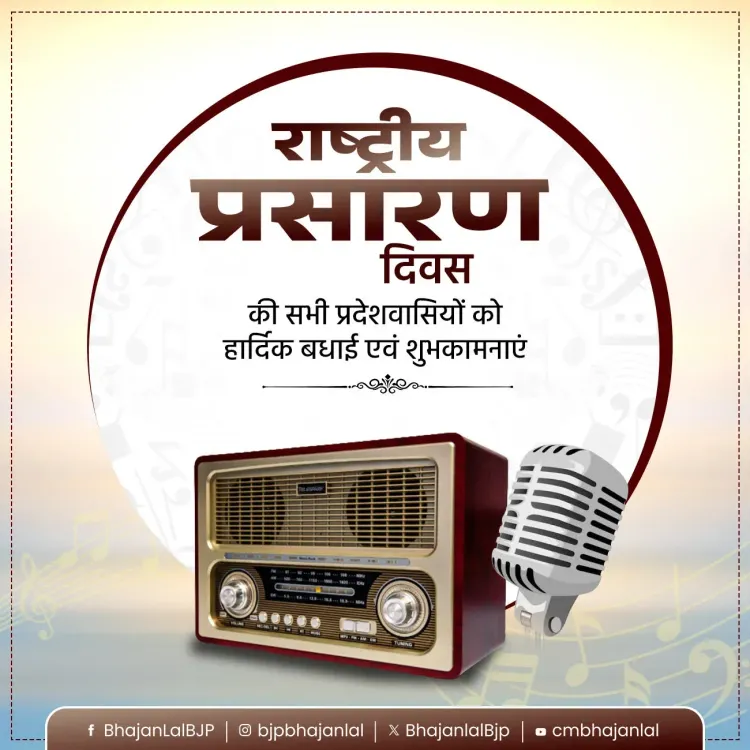
Rajasthan CM Bhajan Lal Sharma extended greetings to all residents of the state on the occasion.
Sharma credited PM Narendra Modi 's leadership for driving digital innovation in India's broadcast sector.
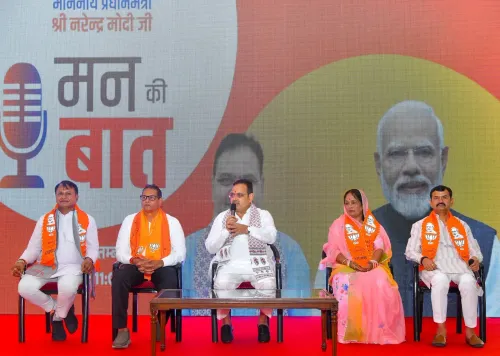
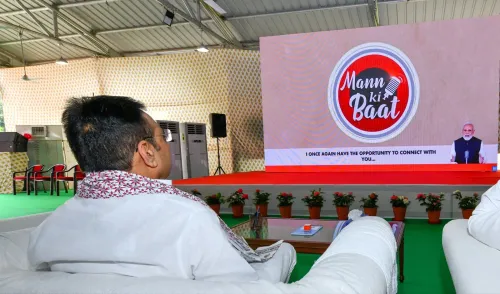
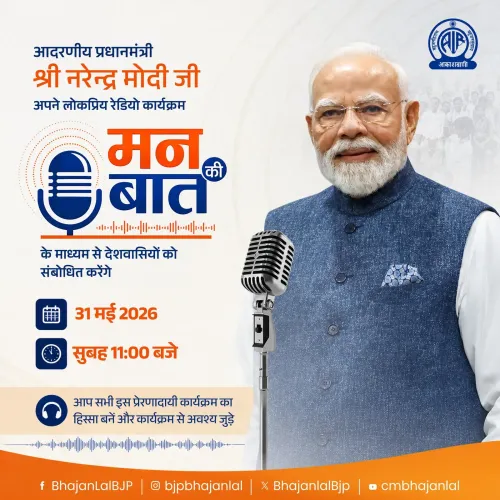
Mann Ki Baat , the Prime Minister's monthly radio address launched in 2014 , was highlighted as a model of direct democratic outreach.
Sharma paid tribute to broadcasting professionals, calling them karmayogis — dedicated workers — for their service to the nation.
Possible updates to the Prasar Bharati Act and digital broadcasting guidelines are anticipated in upcoming parliamentary sessions.
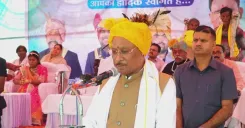
Rajasthan Chief Minister Bhajan Lal Sharma on Thursday, 23 July 2026, extended greetings to residents of Rajasthan on the occasion of National Broadcasting Day, highlighting the role of broadcast media in strengthening democratic values, cultural unity, and national integration across India.
Context
National Broadcasting Day is observed every year on 23 July to commemorate India's first experimental radio broadcast, which took place on 23 July 1927 from the Bombay station. The occasion is marked by tributes to broadcasting professionals and reflection on the medium's role in a diverse democracy.
In his post, Sharma wrote — 'सूचना, शिक्षा, संस्कृति और जनजागरण को जन-जन तक पहुंचाने' ['carrying information, education, culture, and public awareness to every person'] — underscoring broadcasting's foundational function in India's public life.
Policy Backdrop
Sharma specifically credited Prime Minister Narendra Modi's leadership for taking broadcast media to 'new heights of digital innovation, public participation, and dialogue.' He singled out Mann Ki Baat, the Prime Minister's monthly radio address launched in 2014, as an example of direct democratic engagement between a head of government and citizens.
Successive Indian governments have used public broadcasting to bridge linguistic and regional divides across a vast and diverse nation. Since 2014, the emphasis has shifted toward integrating traditional radio with digital platforms, expanding reach and interactivity.
Possible revisions to the Prasar Bharati Act and new digital broadcasting guidelines are expected to be taken up in upcoming parliamentary sessions, which could further reshape the regulatory landscape for public broadcasters.
Stakeholders and Impact
Sharma's message paid tribute to broadcasting professionals — referring to them as 'कर्मयोगी' ['dedicated workers'] — acknowledging their contribution to keeping citizens informed and culturally connected. The salute extends to journalists, technicians, producers, and on-air talent who sustain public broadcasting infrastructure.
For the general public, especially in a state as geographically large and linguistically varied as Rajasthan, radio and television remain critical channels for reaching rural and remote communities where digital internet penetration is still growing.
What's Next
As India's broadcasting sector navigates a transition from legacy terrestrial and satellite transmission to streaming and on-demand digital formats, the policy and regulatory framework governing Prasar Bharati — the public broadcaster — is under review. Any legislative update could redefine how public broadcasting fulfils its mandate of education, cultural preservation, and democratic participation.
The broader push toward digital outreach, reflected in initiatives like Mann Ki Baat, signals that the government views broadcasting not merely as an information conduit but as a tool for sustained civic engagement — a direction that state governments, including Rajasthan, are increasingly aligning with at the regional level.
Point of View
With Mann Ki Baat serving as the anchor reference. By invoking democratic participation and national unity in the same breath as Modi's broadcasting initiatives, Sharma reinforces the BJP's broader framing of public media as a tool of governance legitimacy rather than merely information delivery. The tribute to broadcast professionals also carries a soft political signal — cultivating goodwill within a media ecosystem that state governments depend on for outreach. Against the backdrop of anticipated Prasar Bharati reforms, such messaging from state leaders helps build a coordinated political consensus around the Centre's broadcasting agenda.
NationPress
21 Oct 2026
Frequently Asked Questions
Why is National Broadcasting Day celebrated on 23 July?
National Broadcasting Day is observed on 23 July every year because India's first experimental radio broadcast took place on that date in 1927 from the Bombay station, marking the beginning of organised public broadcasting in the country.
What did Rajasthan CM Bhajan Lal Sharma say on National Broadcasting Day 2026?
Bhajan Lal Sharma extended greetings to Rajasthan residents, praised broadcasting media's role in promoting education, culture, and national unity, and credited PM Narendra Modi's leadership for taking the sector to new heights of digital innovation and public participation.
What is Mann Ki Baat and why was it mentioned?
Mann Ki Baat is a monthly radio address by Prime Minister Narendra Modi, launched in 2014, in which he discusses national issues and citizen stories. Sharma cited it as an example of innovative direct communication that has strengthened democratic participation.
Who is Bhajan Lal Sharma?
Bhajan Lal Sharma is the Chief Minister of Rajasthan and a BJP leader who assumed office in December 2023. He is known for aligning state governance closely with central government priorities and BJP's ideological positions.
What changes are expected in India's broadcasting policy?
Possible revisions to the Prasar Bharati Act and new digital broadcasting guidelines are expected to be taken up in upcoming parliamentary sessions, which could reshape the regulatory and operational framework for India's public broadcasters.