CM Rekha Gupta Greets Delhi on Guru Har Krishan Sahib Ji's Prakash Purab
Synopsis
Delhi Chief Minister Rekha Gupta on 7 August 2026 offered greetings on the Prakash Purab of Guru Har Krishan Sahib Ji, the eighth Sikh Guru, invoking his legacy of seva, humility, and compassion. The child Guru served the sick during a Delhi smallpox epidemic in the 1660s, and historic gurdwaras in the capital mark his enduring presence.
Key Takeaways
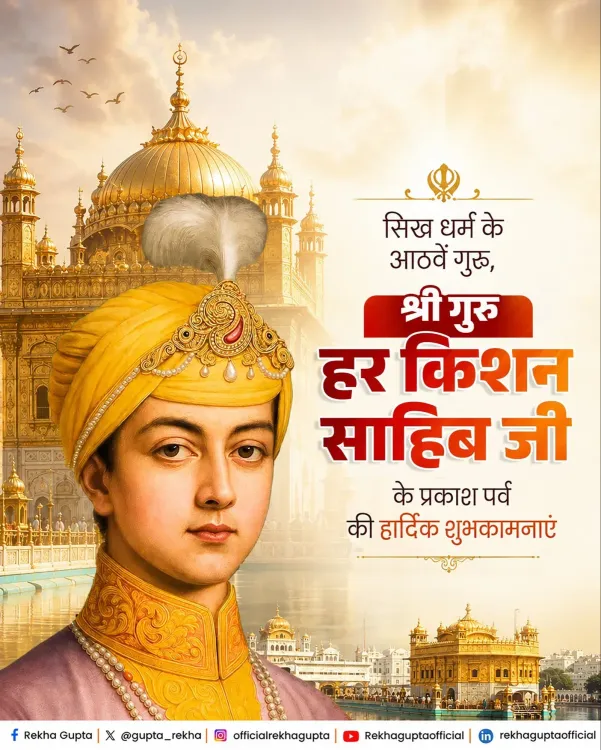
Delhi CM Rekha Gupta posted greetings on 7 August 2026 for the Prakash Purab of Guru Har Krishan Sahib Ji.
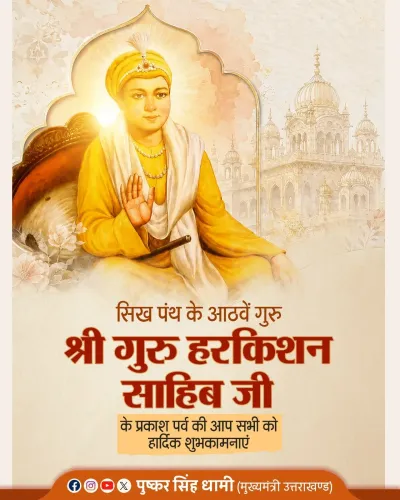
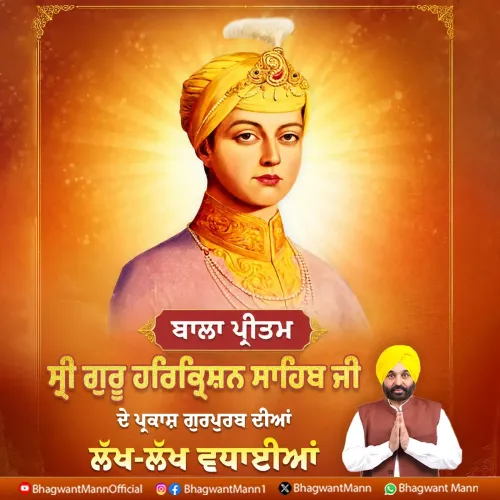
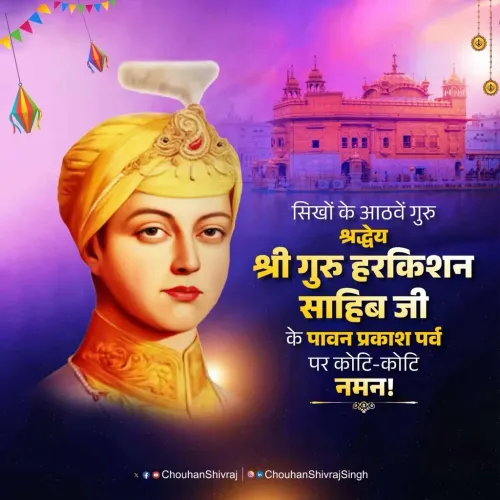
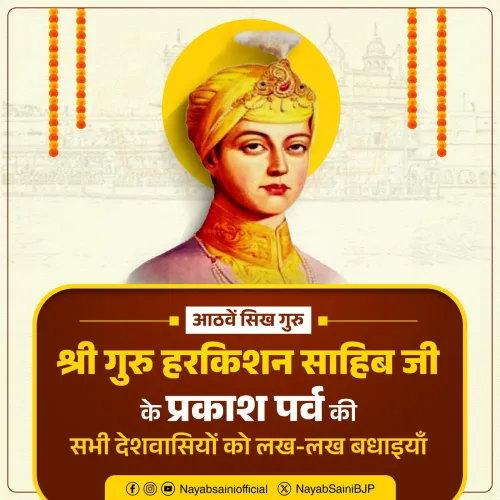
Guru Har Krishan Sahib Ji ( 1656–1664 ) was the eighth Sikh Guru, who became Guru at age five and is revered as Bala Pir — the child saint.
He is remembered for personally tending to smallpox patients in Delhi , embodying the Sikh value of seva (selfless service).
Gurdwara Bangla Sahib and Gurdwara Bala Sahib in Delhi are the principal sites of Prakash Purab observances linked to the Guru's time in the capital.
CM Gupta's message highlighted seva, namrata, daya, tyag aur manav kalyan — service, humility, compassion, sacrifice, and human welfare.
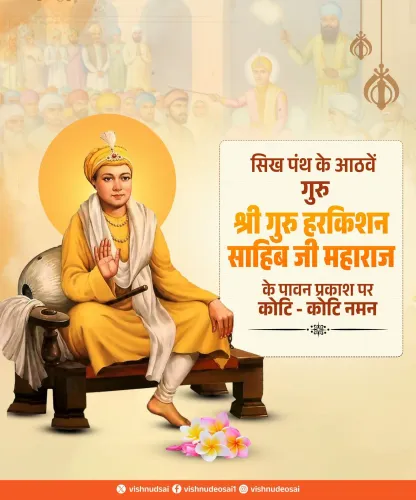
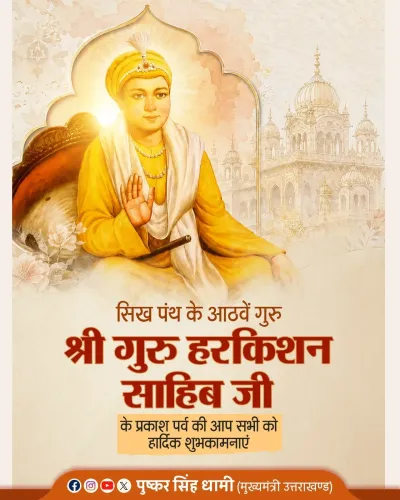
A message of seva, humility, and compassion — Delhi Chief Minister Rekha Gupta on Friday, 7 August 2026 extended warm greetings to all on the Prakash Purab of Guru Har Krishan Sahib Ji, the eighth Sikh Guru, revered across generations as Bala Pir — the child saint.
Posting on X, CM Gupta wrote: 'On the sacred Prakash Purab of Sri Guru Har Krishan Sahib Ji, the eighth Guru of the Sikh faith, revered as Bala Pir, heartfelt greetings to all. His divine message of seva, humility, compassion, sacrifice, and human welfare will forever illuminate the path of humanity.'
Who Was Guru Har Krishan Sahib Ji?
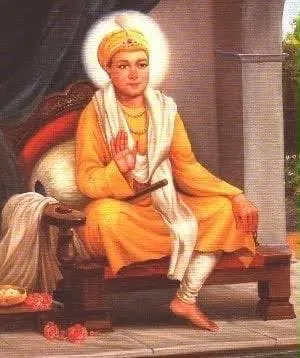
Born in 1656, Guru Har Krishan Sahib Ji became the eighth Guru of the Sikh faith at the age of just five — earning the title Bala Guru, the child Guru. His brief but luminous tenure, which ended in 1664, was defined by an extraordinary act of compassion: during a devastating smallpox epidemic in Delhi, he personally tended to the sick and suffering, embodying the Sikh principle of seva (selfless service) at its most literal. He did not survive the epidemic himself, giving his life in service to others.
Delhi's Living Connection to the Eighth Guru
Delhi carries this history in stone and spirit. Gurdwara Bangla Sahib and Gurdwara Bala Sahib — two of the capital's most revered shrines — are directly linked to the Guru's time in the city. Bala Sahib, in particular, marks the site where he passed away, and its sacred sarovar (tank) draws devotees year-round. On Prakash Purab, these gurdwaras become centres of prayer, langar, and community service, with thousands gathering to mark the occasion.
Across India, political leaders from all parties mark major Sikh Prakash Purabs with public messages — a long-standing tradition of acknowledging the Sikh community's contributions to the nation's social and spiritual fabric. For Delhi's Chief Minister, the gesture carries particular resonance: the capital is home to a significant Sikh population and to gurdwaras that are living monuments to the Guru's legacy.
The values CM Gupta invoked — seva, namrata, daya, tyag aur manav kalyan (service, humility, compassion, sacrifice, and human welfare) — are not merely ceremonial words. They are the founding principles of a tradition that has fed millions through langar, sheltered the displaced, and healed the sick for centuries. That legacy, as the Chief Minister noted, continues to light the way.
Point of View
Where historic gurdwaras tied to Guru Har Krishan Sahib Ji draw large congregations, the gesture carries local resonance beyond the ceremonial. The emphasis on universal values — seva and manav kalyan — also allows the message to reach across communities, framing Sikh teachings as a shared national inheritance rather than a sectarian occasion. It is routine in register but grounded in a genuinely consequential religious legacy.
NationPress
7 Aug 2026
Frequently Asked Questions
Who is Guru Har Krishan Sahib Ji?
Guru Har Krishan Sahib Ji was the eighth Guru of the Sikh faith, born in 1656. He became Guru at just five years old and is revered as Bala Pir (the child saint) for his compassion during a smallpox epidemic in Delhi, where he served the sick before passing away in 1664.
What is Prakash Purab?
Prakash Purab is the Sikh observance marking the birth anniversary of a Guru. The word 'Prakash' means divine light, and the day is celebrated with prayers, kirtan (devotional singing), langar (community meals), and processions at gurdwaras.
Which Delhi gurdwaras are linked to Guru Har Krishan Sahib Ji?
Gurdwara Bangla Sahib and Gurdwara Bala Sahib are the two principal gurdwaras in Delhi associated with the eighth Guru. Bala Sahib marks the site where Guru Har Krishan Sahib Ji passed away while serving smallpox patients in the city.
Why did Delhi CM Rekha Gupta post about Guru Har Krishan Sahib Ji?
CM Rekha Gupta posted greetings on 7 August 2026 to mark the Prakash Purab of Guru Har Krishan Sahib Ji. Indian political leaders across parties routinely acknowledge major Sikh religious occasions, and Delhi's historic ties to the eighth Guru make the observance especially significant for the capital.
What values is Guru Har Krishan Sahib Ji known for?
Guru Har Krishan Sahib Ji is remembered for seva (selfless service), namrata (humility), daya (compassion), tyag (sacrifice), and manav kalyan (human welfare) — values he demonstrated by personally caring for plague victims in Delhi despite the mortal risk.