CM Rekha Gupta Hails Cabinet Nod for NSAP at ₹53,428 Cr
Synopsis
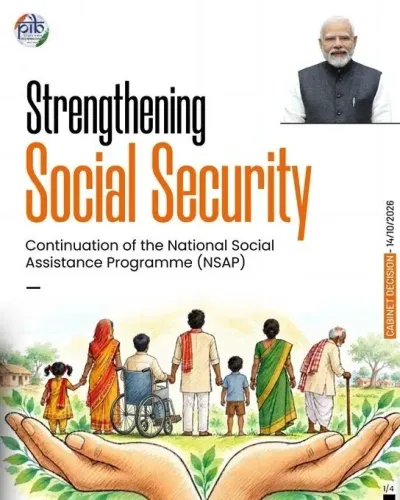
The Union Cabinet approved ₹53,428 crore to extend NSAP for five years, slashing the disability eligibility threshold from 80% to 40% and enrolling persons with disabilities from birth. Delhi CM Rekha Gupta praised PM Modi's decision as a landmark social security step for millions of families.
Key Takeaways
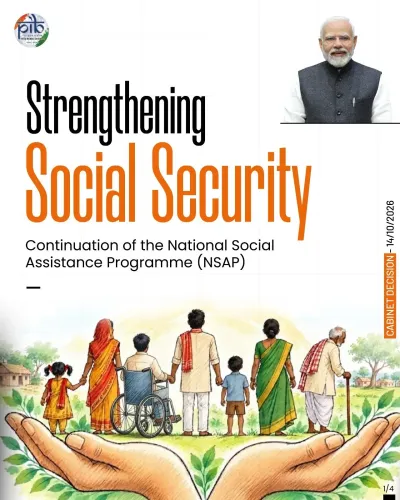
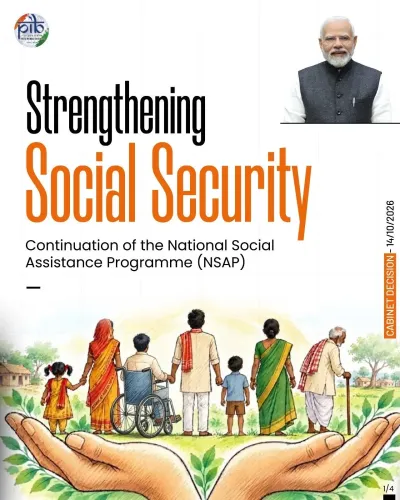
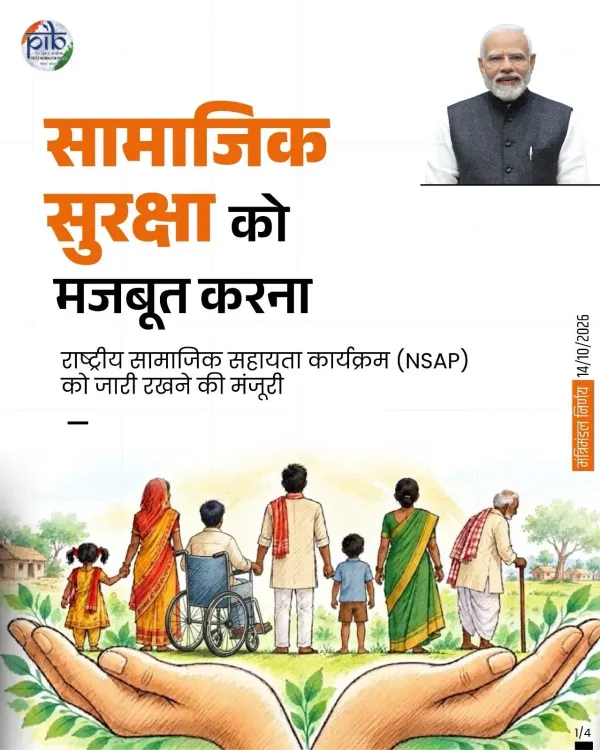
The Union Cabinet approved ₹53,428 crore for the continuation of the National Social Assistance Programme over the next five years .
The disability eligibility threshold has been reduced from 80% to 40% , significantly widening the pool of qualifying beneficiaries.
Persons with disabilities will now be eligible for pension coverage from birth , addressing a long-standing gap for children with congenital conditions.
NSAP was originally launched in 1995 by the Ministry of Rural Development to provide pensions to the elderly, widows, and persons with disabilities below the poverty line.
The changes align NSAP more closely with the Rights of Persons with Disabilities Act, 2016 , which expanded recognised disability categories from 7 to 21.
State governments will need to issue revised guidelines to operationalise the new threshold and birth-based eligibility before fresh enrolments can begin.
Millions of persons with disabilities — including children born with conditions that previously fell below the official threshold — are set to enter India's pension safety net for the first time, after the Union Cabinet approved a ₹53,428 crore continuation of the National Social Assistance Programme (NSAP) for the next five years. Delhi Chief Minister Rekha Gupta welcomed the decision on Wednesday, 14 October 2026, calling it a lifeline for lakhs of families who had long waited for the state's recognition.
What the Cabinet cleared — and who it reaches
Translating her post from Hindi: CM Gupta wrote that under Prime Minister Narendra Modi's leadership, the Union Cabinet approved the extension of NSAP with a provision of ₹53,428 crore. Critically, the disability eligibility threshold has been reduced from 80% to 40% — a change that dramatically widens the gate for who qualifies. And in a move that directly addresses parental anxiety, persons with disabilities will now be brought under the pension scheme from birth itself.
That last detail matters. Previously, eligibility was assessed on benchmarks that excluded moderate and congenital disabilities. A child born with a condition assessed at 50% disability, for instance, would have fallen outside the programme entirely. That gap closes now.
NSAP's three-decade arc and the 2016 disability law shift
The National Social Assistance Programme, launched in 1995 by the Ministry of Rural Development, has for over three decades channelled monthly pensions to the elderly, widows, and persons with disabilities living below the poverty line. It is one of India's few centrally sponsored schemes with direct beneficiary transfers that reach remote rural households.
The backdrop to today's eligibility change is the Rights of Persons with Disabilities Act, 2016, which expanded the recognised categories of disability from 7 to 21. That legislative shift created a mismatch: the law recognised a far wider range of conditions, but NSAP's 80% threshold still locked out most of the newly recognised beneficiaries. Dropping the bar to 40% begins to close that decade-long gap between law and welfare delivery.
What parents of disabled children stand to gain
CM Gupta specifically invoked the perspective of parents — calling the decision a 'new assurance for the future of their children.' That framing points to the birth-based inclusion clause, which means families will no longer need to wait for a child to reach adulthood or deterioration before qualifying for state support. For a parent raising a child with a congenital condition, enrolment from birth means documentation, institutional recognition, and a monthly transfer that can anchor healthcare and caregiving decisions from day one.
The next pressure point is implementation: states will need to issue revised guidelines reflecting the 40% threshold and the birth-based eligibility rule before new beneficiaries can be enrolled. The scale of additions is expected to emerge in the next Union Budget cycle's beneficiary count.
Three decades after NSAP was born, a single cabinet decision has redrawn who India's safety net is designed to catch — and for the first time, it reaches down to the very beginning of life.
Point of View
2016 had implicitly demanded for nearly a decade. By coupling it with birth-based eligibility, the Cabinet has moved from reactive welfare to preventive coverage, a subtle but significant philosophical shift. For the BJP, the timing also carries political utility: welfare expansion ahead of state election cycles reinforces the party's 'Antyodaya' messaging to marginalised constituencies. The real test, however, lies at the state level, where revised implementation guidelines must translate cabinet intent into actual pension transfers.
NationPress
14 Oct 2026
Frequently Asked Questions
What is the National Social Assistance Programme (NSAP)?
NSAP is a centrally sponsored scheme launched in 1995 by the Ministry of Rural Development that provides monthly pensions to elderly persons, widows, and persons with disabilities living below the poverty line in India.
What is the new disability eligibility threshold under NSAP?
The Union Cabinet has reduced the disability eligibility threshold from 80% to 40%, meaning persons with a certified disability of 40% or above can now qualify for the pension scheme.
Can children with disabilities get NSAP pension from birth?
Yes. The Cabinet decision includes a provision to bring persons with disabilities under the pension scheme from birth, providing coverage for children with congenital conditions from the very beginning.
How much money has been approved for NSAP and for how long?
The Union Cabinet approved ₹53,428 crore for the continuation of NSAP over the next five years.
Why was the NSAP disability threshold changed from 80% to 40%?
The Rights of Persons with Disabilities Act, 2016 expanded the recognised categories of disability from 7 to 21, but NSAP's old 80% threshold excluded most newly recognised beneficiaries. The reduction to 40% aligns the welfare programme with the expanded legal definition.