CM Rekha Gupta Hails Padma Awards as 'People's Padma'
Synopsis
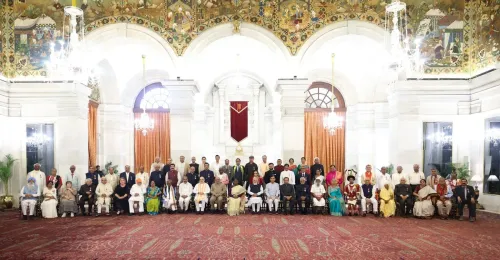
Delhi Chief Minister Rekha Gupta hailed the Padma Awards investiture at Rashtrapati Bhavan on 25 May 2026, describing the honours as PM Modi's 'People's Padma' — a national salute to selfless, unsung contributors to society and nation-building.
Key Takeaways
Delhi CM Rekha Gupta posted on 25 May 2026 celebrating the Padma Awards ceremony at Rashtrapati Bhavan .
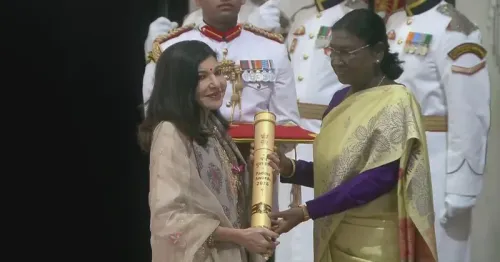
President Draupadi Murmu , India's first President from a Scheduled Tribe community, conferred the honours.
Gupta invoked the phrase 'People's Padma' to describe the Modi government's focus on grassroots, unsung contributors.
The Padma Awards — Padma Vibhushan, Padma Bhushan, and Padma Shri — were instituted in 1954 as India's highest civilian honours.
Since 2014 , the current administration has consistently expanded recognition to non-metropolitan and socially marginalised awardees.
The next Padma awardee list is expected to be announced ahead of Republic Day 2027 .
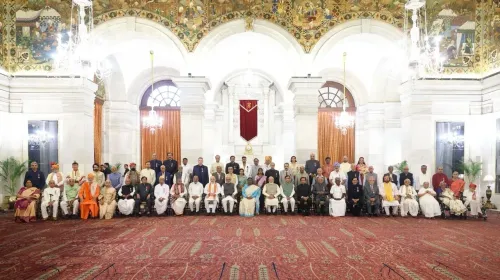
Delhi Chief Minister Rekha Gupta on Monday, 25 May 2026 celebrated the Padma Awards investiture ceremony at Rashtrapati Bhavan, calling the honours a salute to selfless nation-builders who have worked away from the spotlight. Gupta credited Prime Minister Narendra Modi's leadership for transforming the awards into what she described as a 'People's Padma' — recognition for grassroots contributors rather than the celebrated or the powerful.
Context
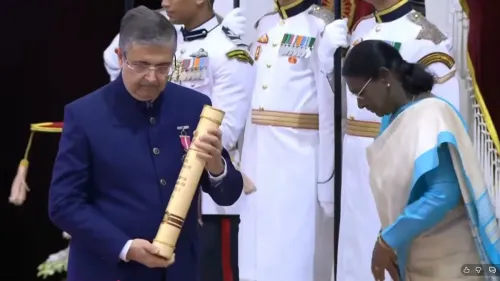
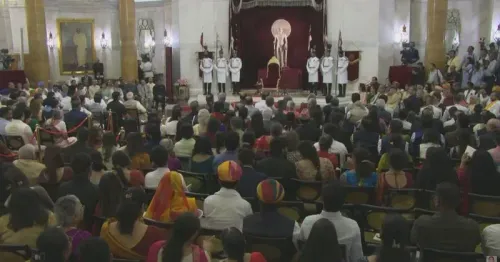
President Draupadi Murmu conferred the Padma Awards at Rashtrapati Bhavan in a formal investiture ceremony. Gupta's post, written in Hindi, described the occasion as an affirmation of 'akhand rashtriya chetna, seva-sadhana aur samajnishth jeevan mulyon ka abhinandan' [India's unbroken national consciousness, the spirit of service, and a celebration of society-centred values]. The Chief Minister tagged both the official Rashtrapati Bhavan handle and Prime Minister Modi in her post, underscoring the ceremonial gravity of the event.
Policy Backdrop
The Padma Awards — comprising Padma Vibhushan, Padma Bhushan, and Padma Shri — were instituted in 1954 as India's highest civilian honours, open to all citizens regardless of race, occupation, or social position. Since 2014, successive award cycles under the current central government have placed visible emphasis on recognising individuals from non-metropolitan backgrounds: unsung social workers, tribal healers, folk artists, and rural educators. This shift is widely described by the administration as giving the awards back to ordinary Indians — hence the phrase 'People's Padma', which Gupta invoked in her tribute.
President Murmu, who assumed office in July 2022 as the first individual from a Scheduled Tribe community to serve as President of India, presides over these investitures as the constitutional head of state. Her own biography — rooted in grassroots public service in Odisha — lends symbolic weight to the 'People's Padma' framing that BJP leaders have consistently used.
Stakeholders and Impact
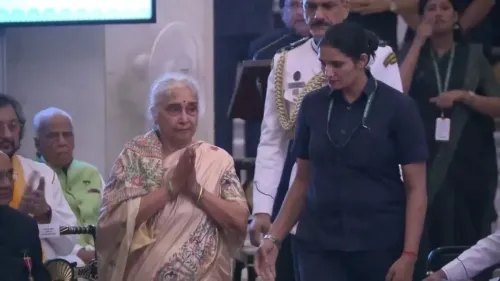
The primary beneficiaries of the awards are the recipients themselves — social workers, grassroots contributors, and individuals who have dedicated their lives to public service without seeking fame or institutional recognition. Gupta's post specifically described them as 'niswaarth karmayogi' [selfless workers devoted to their duty], who have committed their lives to 'samaj jagaran, lok seva aur rashtra karya' [social awakening, public service, and national work]. For these individuals and their communities, the investiture at Rashtrapati Bhavan represents the state's formal acknowledgement of work that often goes unnoticed in mainstream public discourse.
For the BJP and the central government, the 'People's Padma' narrative serves a broader political communication purpose: positioning the party as a champion of India's unrecognised majority rather than its elite. Senior leaders across the party, including state chief ministers such as Gupta, routinely amplify investiture ceremonies on social media to reinforce this message.
What's Next
The next milestone in the Padma Awards calendar will be the Republic Day 2027 announcement, when the government is expected to release the list of awardees for the following cycle. Any changes to the nomination process, eligibility criteria, or investiture schedule at Rashtrapati Bhavan will be closely watched by civil society groups and state governments alike. The consistent expansion of the awards to grassroots contributors suggests the current policy direction is likely to continue into the next cycle.
Point of View
Gupta aligns herself with the central government's brand while also signalling her own ideological positioning ahead of future electoral cycles in Delhi. The choice to post in Hindi and tag both Rashtrapati Bhavan and the Prime Minister maximises symbolic reach across the party's base. Taken together, such coordinated messaging from state leaders turns a constitutional ceremony into a sustained political communication campaign.
NationPress
9 Oct 2026
Frequently Asked Questions
What are the Padma Awards and when are they given?
The Padma Awards are India's highest civilian honours, comprising Padma Vibhushan, Padma Bhushan, and Padma Shri. They were instituted in 1954 and are announced annually around Republic Day, with the investiture ceremony held at Rashtrapati Bhavan.
What is 'People's Padma' and who coined the term?
'People's Padma' is a phrase used by the BJP-led central government since 2014 to describe a deliberate shift toward honouring grassroots social workers, tribal contributors, and rural achievers rather than celebrities or the urban elite. Delhi CM Rekha Gupta used the term in her 25 May 2026 post.
Who confers the Padma Awards in India?
The Padma Awards are conferred by the President of India at a formal investiture ceremony at Rashtrapati Bhavan. President Draupadi Murmu, who has held office since July 2022, presided over the 2026 ceremony.
Why did Delhi CM Rekha Gupta comment on the Padma Awards?
Gupta posted on X to celebrate the investiture ceremony and credit Prime Minister Narendra Modi's leadership for transforming the awards into recognition for selfless, unsung contributors to Indian society.
When will the next Padma Awards list be announced?
The next set of Padma awardees is expected to be announced ahead of Republic Day 2027, following the standard annual calendar for these honours.