CM Rekha Gupta Hails India Women's U18 Hockey Bronze at Asia Cup
Synopsis
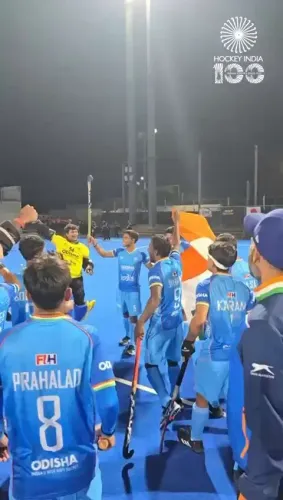
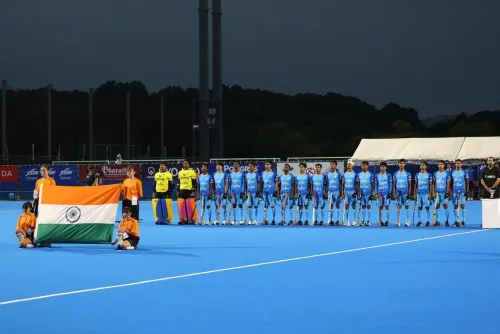
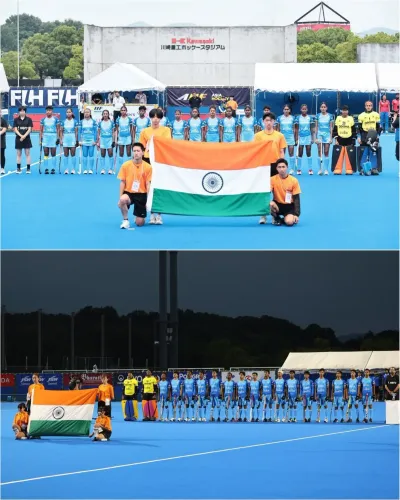
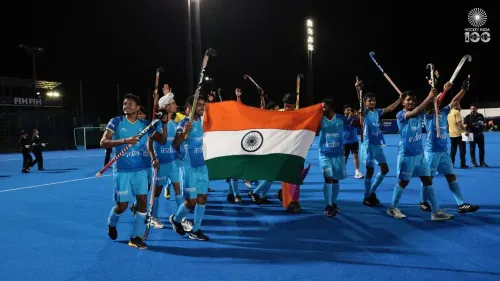
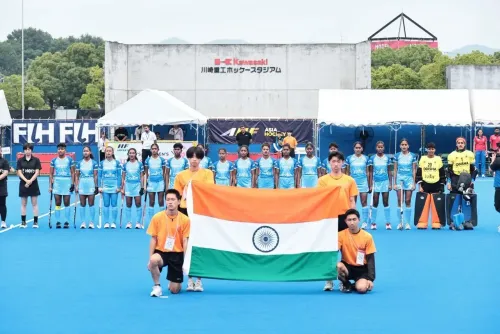
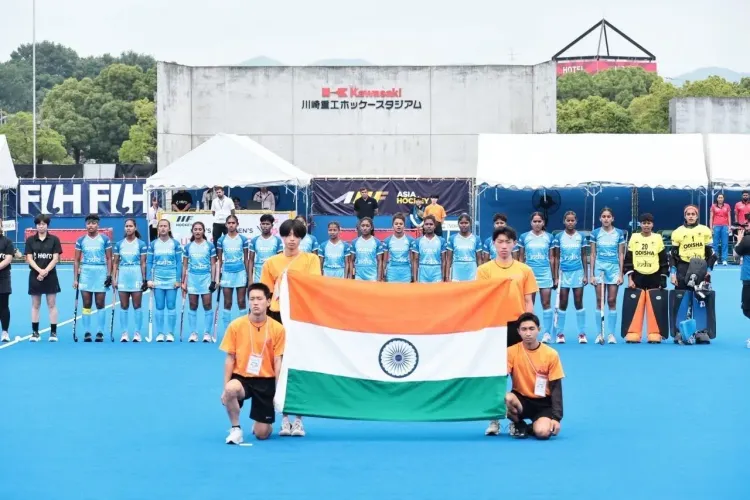
Delhi Chief Minister Rekha Gupta congratulated the Indian Women's U18 Hockey Team on their bronze medal at the U18 Asia Cup 2026, invoking 'Nari Shakti' and calling the result proof of India's deepening junior sporting talent pool.
Key Takeaways
Delhi Chief Minister Rekha Gupta publicly congratulated the Indian Women's U18 Hockey Team on June 6, 2026 .
India won the bronze medal at the U18 Asia Cup 2026 , finishing among the top three junior women's hockey nations in Asia.
Gupta credited the achievement to the spirit of Nari Shakti and the growing depth of sporting talent across India.
The result builds on a broader policy push through the Khelo India scheme, launched in 2017 , to develop grassroots athletic talent.
Hockey India and the Ministry of Youth Affairs and Sports have jointly worked to strengthen junior women's hockey pipelines.
Outstanding U18 players are expected to be considered for transition into senior national camps ahead of the next Hockey World Cup cycle.
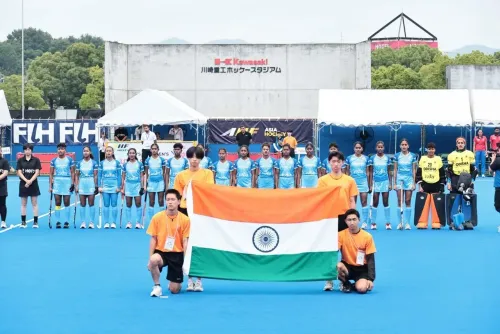
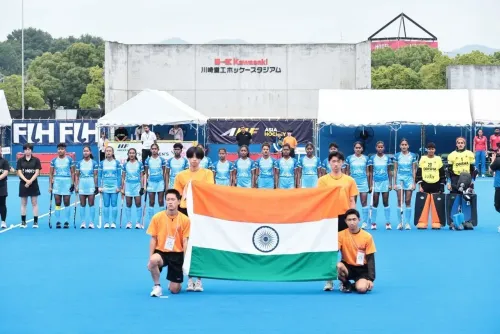
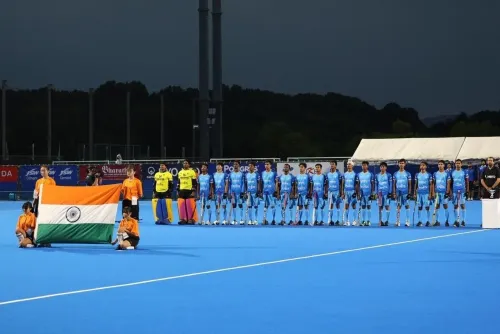
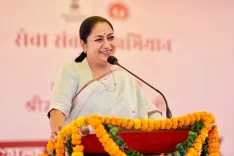
Delhi Chief Minister Rekha Gupta on Saturday, June 6, 2026, congratulated the Indian Women's U18 Hockey Team on winning the bronze medal at the U18 Asia Cup 2026, calling the achievement a testament to the spirit of 'Nari Shakti' and the growing depth of sporting talent across India.
Context
Gupta took to social media to celebrate the junior women's side, stating: 'Their achievement is a testament to the spirit of Nari Shakti and the growing depth of sporting talent across India.' She expressed hope that the young athletes would 'continue to shine and bring many more moments of pride to the nation.'
The U18 Asia Cup 2026 is a continental junior tournament that serves as a critical proving ground for the next generation of women's hockey players across Asia. A bronze medal finish places India among the top three nations in the under-18 category on the continent.
Policy Backdrop
The result reflects years of structured investment in grassroots sports development. The central government's Khelo India scheme, launched in 2017, was specifically designed to scout and nurture young athletes through annual competitions and dedicated infrastructure support across states.
Hockey India, the national federation, has worked alongside the Ministry of Youth Affairs and Sports to strengthen junior pipelines for both men's and women's categories. The senior women's team's bronze at the 2020 Tokyo Olympics is widely credited with elevating the profile of women's hockey and inspiring greater participation at the junior level.
The National Sports Policy, updated through successive schemes, has prioritised women's participation and junior categories as strategic pillars of India's broader ambition in non-cricket sports.
Stakeholders and Impact
The primary beneficiaries are the young athletes themselves, whose continental medal strengthens their case for inclusion in senior national camps. State sports departments — many of which run dedicated hockey academies — are likely to cite this result as validation of their investment in women's sport.
Successive central and state governments have expanded funding for women's categories through dedicated academies and scheme-linked support. Junior-level medals are frequently cited by policymakers as evidence of an expanding talent pipeline beyond traditional hockey strongholds such as Punjab, Odisha, and Jharkhand.
What's Next
Attention will now turn to the transition of standout U18 players into senior national camps as Hockey India builds its squad for the next Hockey World Cup cycle. State governments may also announce new academy initiatives or enhanced stipends on the back of the result.
For policymakers, the bronze is a data point in the ongoing argument for sustained, long-term investment in women's junior sport — one that advocates say yields dividends at the senior level over a five-to-ten-year horizon.
Point of View
Even though hockey's traditional strongholds lie in other states. Longer term, the U18 bronze is most meaningful as a pipeline indicator — the real test will be how many of these players break into the senior squad before the next World Cup cycle.
NationPress
24 Sept 2026
Frequently Asked Questions
Did India win the U18 Asia Cup 2026 women's hockey?
India won the bronze medal at the U18 Asia Cup 2026, finishing third among the continent's junior women's hockey teams.
What is Nari Shakti in the context of Indian sports?
'Nari Shakti,' meaning women's power, is a term used by Indian policymakers and politicians to celebrate and promote women's achievements, including in sports.
What is the Khelo India scheme?
Khelo India is a central government programme launched in 2017 to identify and train young athletes through annual competitions and sports infrastructure development across India.
What happens to U18 hockey players after the Asia Cup?
Top performers from the U18 Asia Cup are typically considered for inclusion in senior national training camps by Hockey India , particularly as the federation builds squads for upcoming World Cup cycles.