CM Rekha Gupta Orders FIR, Suspensions After Chawri Bazar Building Collapse
Synopsis
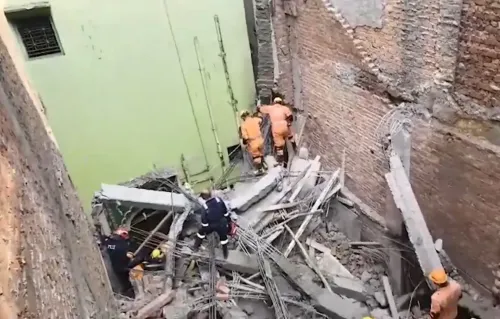
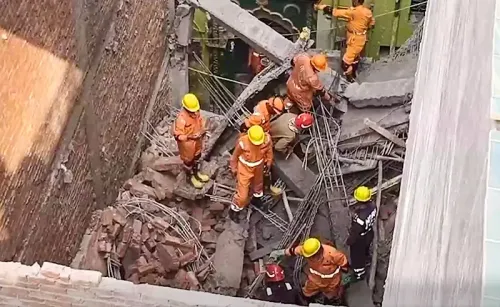
A building under construction collapsed at Chawri Bazar in Old Delhi on 5 November 2026. Delhi Chief Minister Rekha Gupta deployed MCD, DDMA, NDRF, Delhi Fire Services and Delhi Police for rescue, suspended the area AE and JE, and ordered an FIR against the contractor.
Key Takeaways
A building under construction at Chawri Bazar , Old Delhi collapsed on 5 November 2026 .
Five agencies — MCD, DDMA, NDRF, Delhi Fire Services, and Delhi Police — are conducting rescue operations described as 'war footing'.
Delhi CM Rekha Gupta ordered the suspension of the area Assistant Engineer (AE) and Junior Engineer (JE) responsible for site oversight.
An FIR has been registered against the contractor responsible for the under-construction building.
Chawri Bazar is a dense Old Delhi commercial zone with a history of structural safety enforcement failures.
A departmental inquiry and the contractor FIR will be the key accountability markers in the days ahead.
A building under construction in Chawri Bazar, one of Old Delhi's most densely packed commercial zones, collapsed on Thursday, 5 November 2026, triggering an emergency multi-agency rescue operation and swift administrative action from Delhi Chief Minister Rekha Gupta, who ordered the suspension of local engineers and an FIR against the contractor within hours of the incident.
Rescue teams deployed on a 'war footing'
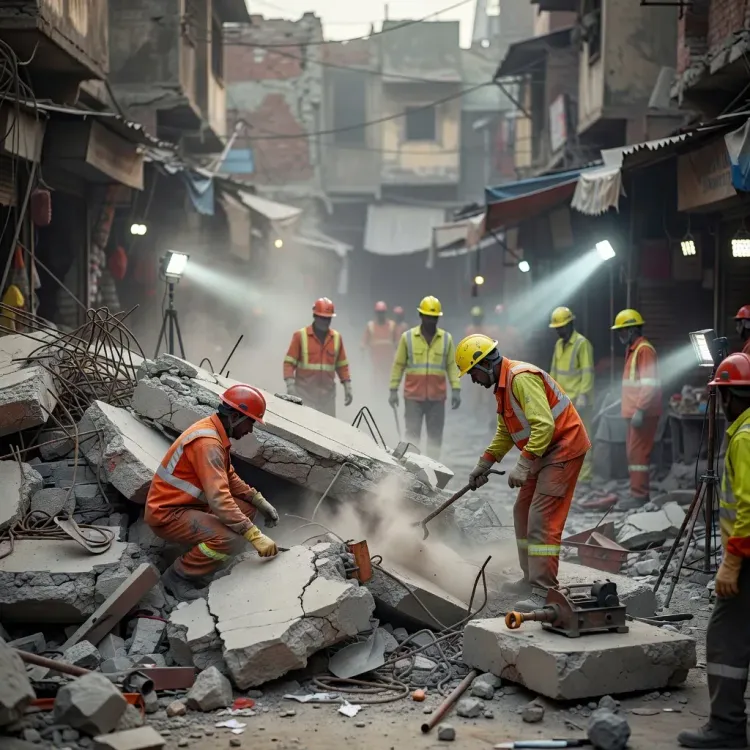
Five agencies — MCD, DDMA, NDRF, Delhi Fire Services, and Delhi Police — are on the ground carrying out search-and-rescue operations. CM Gupta described the response tempo as 'war footing,' underscoring the urgency to reach anyone still trapped beneath the rubble. The National Disaster Response Force (NDRF), which specialises in urban search-and-rescue during structural collapses, is leading technical extraction efforts alongside fire and police teams.
Chawri Bazar sits in the heart of Old Delhi, a historic commercial belt characterised by a dense mix of aged structures and active construction sites — a combination that authorities have long flagged as a structural safety risk. The Disaster Management Act, 2005 mandates coordinated multi-agency deployment by state disaster management authorities in precisely such scenarios, and the DDMA is acting as the coordination hub for today's response.
AE and JE suspended; FIR against contractor
Even as rescue operations continued, CM Gupta moved quickly on accountability. She ordered the suspension of the area Assistant Engineer (AE) and Junior Engineer (JE) — the MCD field officials responsible for monitoring construction compliance at the site. An FIR has been registered against the contractor, signalling that criminal liability is being pursued from the outset rather than after a prolonged inquiry.
The move follows a well-established but frequently criticised protocol: suspend the engineers at the bottom of the enforcement chain immediately, then pursue the contractor through the courts. Critics of this pattern have long argued that structural violations in Old Delhi's high-density zones persist because enforcement before a collapse is too weak. Whether the FIR leads to meaningful prosecution will be the real test of accountability this time.
A recurring crisis in Old Delhi's construction landscape
Building collapses in Delhi's older, high-density markets are not new. The Municipal Corporation of Delhi (MCD), which approves building plans and is responsible for site inspections, has faced repeated criticism for inconsistent enforcement of structural safety norms — particularly in congested areas where illegal extensions and lax supervision of under-construction buildings are commonplace.
Such incidents typically trigger short-term safety audit drives for other under-construction sites in the affected zone. Whether central Delhi's under-construction sites receive a sustained inspection campaign — or just a brief procedural flurry — will indicate how seriously the administration treats the broader structural risk. The findings of the departmental inquiry into the suspended engineers, and the progress of the FIR against the contractor, are the two threads worth watching in the days ahead.
For the families of those who lost their lives today, the question of justice runs deeper than any audit drive. CM Gupta extended 'heartfelt condolences' to the bereaved and said the 'safety and well-being of every citizen remain our highest priority' — words that now carry the weight of accountability.
Point of View
Or whether today's suspensions become a pressure valve that dissipates without structural reform. With the BJP running both Delhi and the Centre, the administration faces both an opportunity and scrutiny: any perception that Old Delhi's dense construction zones remain under-regulated will dog the party in a city with acute housing and safety anxieties. The departmental inquiry findings will be the real signal of intent.
NationPress
5 Nov 2026
Frequently Asked Questions
What happened at Chawri Bazar on 5 November 2026?
A building under construction collapsed at Chawri Bazar in Old Delhi, prompting a large-scale rescue operation and swift administrative action by Delhi Chief Minister Rekha Gupta.
Which agencies are conducting rescue operations at the Chawri Bazar collapse site?
Five agencies are on the ground: the Municipal Corporation of Delhi (MCD), Delhi Disaster Management Authority (DDMA), National Disaster Response Force (NDRF), Delhi Fire Services, and Delhi Police.
What action has CM Rekha Gupta taken after the Chawri Bazar building collapse?
CM Rekha Gupta ordered the suspension of the area Assistant Engineer (AE) and Junior Engineer (JE) and directed that an FIR be registered against the contractor responsible for the under-construction building.
Why do buildings collapse frequently in Old Delhi areas like Chawri Bazar?
Old Delhi has dense, ageing structures alongside active construction sites where enforcement of structural safety norms by the MCD has historically been inconsistent, creating recurring risks of collapse.
What is the NDRF's role in the Chawri Bazar building collapse rescue?
The National Disaster Response Force specialises in urban search-and-rescue during structural collapses; it is leading the technical extraction of anyone trapped in the rubble at the Chawri Bazar site.