Jaishankar Meets Guyana President, Extends $500 mn Credit Line
Synopsis
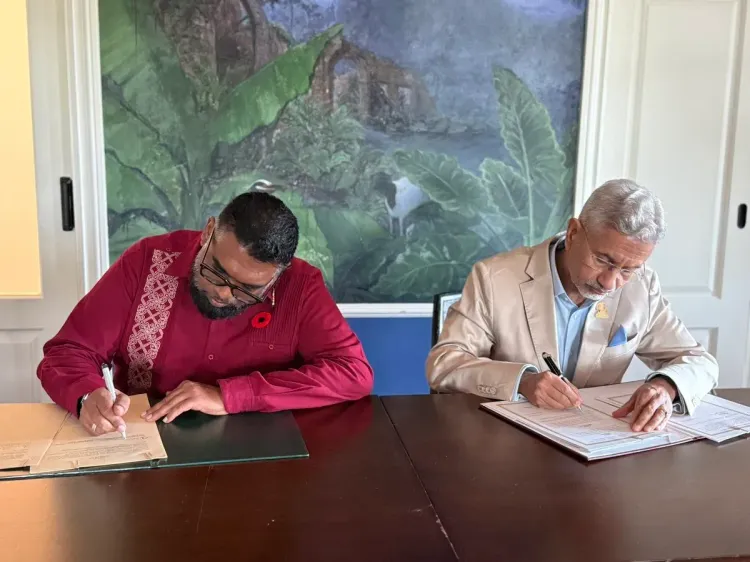
EAM Dr. S. Jaishankar met Guyana President Dr. Irfaan Ali on November 5, 2026, extending a USD 500 mn Line of Credit for roads, health and defence, and signing three agreements including cooperation on a UPI-like digital payments system — building on PM Modi's 2024 Georgetown visit.
Key Takeaways
USD 500 million Line of Credit extended to Guyana for roads, health, and defence projects.
Agreement signed on supply and installation of MSEs manufacturing projects .
Grant assistance committed for Quick Impact Projects across Guyana.
Formal cooperation agreed on Digital Public Infrastructure and a UPI-like payment system in Guyana.
Meeting reviewed 'steady progress' in bilateral ties since PM Modi's 2024 visit to Guyana .
Engagement reflects India's broader Global South outreach combining infrastructure finance with technology exports.
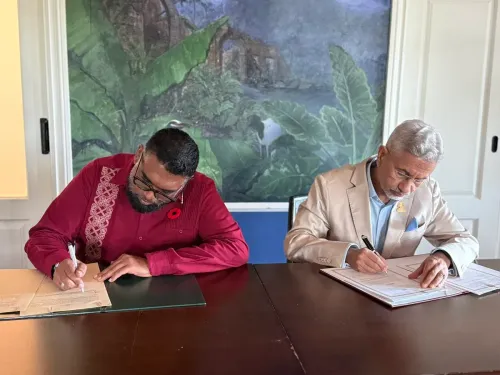
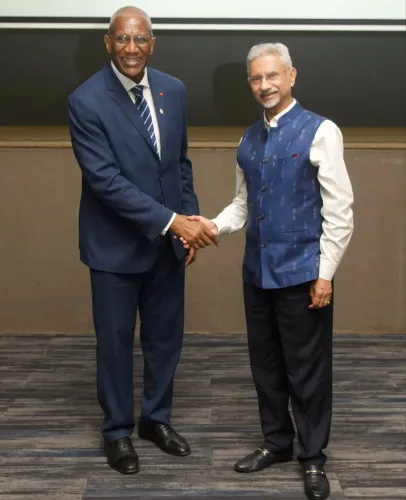
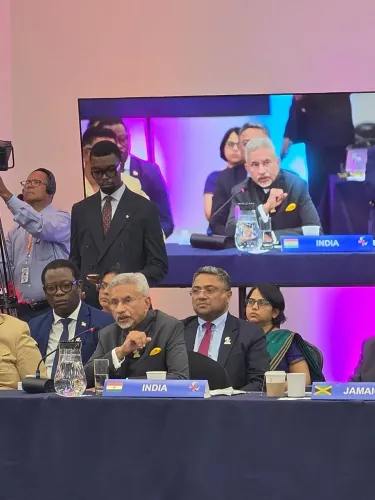
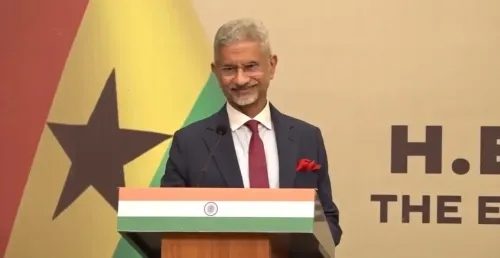
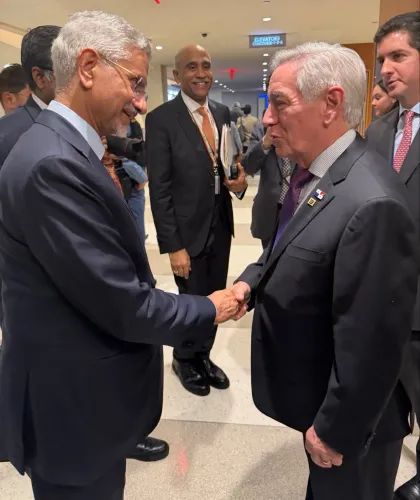
A USD 500 million Line of Credit for roads, health, and defence — and the promise of a UPI-like digital payments system in South America. Union External Affairs Minister Dr. S. Jaishankar met President Dr. Irfaan Ali of Guyana on Thursday, November 5, 2026, and the two sides left the room with a clutch of signed agreements that push India's Caribbean partnership into unmistakably concrete territory.
Building on Modi's 2024 Georgetown Visit
The meeting was explicitly framed as a follow-through. Prime Minister Narendra Modi visited Guyana in 2024 — a landmark moment in a bilateral relationship that stretches back to 1968 — and Thursday's engagement reviewed how much of that momentum has actually converted into action on the ground. By Jaishankar's account, the progress has been 'steady.' The renewed Line of Credit, worth USD 500 million, signals that New Delhi is prepared to back that assessment with concessional financing for hard infrastructure and defence procurement.
Three Agreements and a Digital Payments Bet
Beyond the headline credit line, three formal agreements were signed. The first covers the supply and installation of MSEs (Modular Solar Equipment / Manufacturing) projects. The second provides grant assistance for Quick Impact Projects — the small, fast-disbursing schemes India uses across the Global South to build visible goodwill at the community level. The third — arguably the most consequential for the long run — commits both nations to cooperation in Digital Public Infrastructure, including the functioning of a UPI-like payment system in Guyana.
That last item deserves a pause. India has spent years positioning its Unified Payments Interface as an exportable model, with live deployments already running in several countries. Guyana — a small but fast-growing economy turbocharged by an oil boom — is now next in line. If the system scales, it embeds Indian fintech architecture into the daily commerce of a CARICOM member state, and that is a form of strategic depth that no single infrastructure contract can match.
India's Global South Playbook, Caribbean Chapter
The package Jaishankar unveiled follows a recognisable template: a large concessional credit line anchors serious infrastructure ambitions, Quick Impact grants generate immediate visibility, and a digital stack transfer plants long-term interoperability. India has run versions of this playbook across Africa, Southeast Asia, and the Pacific. The Caribbean engagement, anchored by Guyana's oil wealth and its Indian-origin diaspora, is a relatively newer chapter — but Thursday's agreements suggest it is maturing fast.
What to watch now: the rollout timelines and tender awards under the fresh credit line, and whether the technical working groups needed to operationalise the UPI-like system are constituted quickly or quietly delayed. The agreements are signed; the implementation clock has started.
Point of View
Where payments interoperability creates durable, transactional ties that outlast any single political cycle. Anchoring the visit to PM Modi's 2024 Georgetown trip also serves a domestic political purpose, framing Jaishankar's operational follow-through as proof that high-level summitry actually delivers. The real test, as always, will be disbursement pace and whether the UPI pilot moves from a signed agreement to live transactions within a credible timeframe.
NationPress
5 Nov 2026
Frequently Asked Questions
What is the USD 500 million Line of Credit India announced for Guyana?
India extended a concessional USD 500 million Line of Credit to Guyana to finance projects in roads, health, and defence. It is an extension of an existing facility, reviewed following PM Modi's 2024 visit to Georgetown.
What agreements did India and Guyana sign during Jaishankar's visit in 2026?
Three agreements were signed: one on supply and installation of MSEs manufacturing projects , one providing grant assistance for Quick Impact Projects , and one on cooperation in Digital Public Infrastructure including a UPI-like payment system.
What is a UPI-like system and why is Guyana getting one?
A UPI-like system replicates India's Unified Payments Interface — a real-time digital payments platform — in a partner country. Guyana agreed to cooperate on deploying such infrastructure as part of India's broader digital public goods diplomacy across the Global South.
When did PM Modi visit Guyana, and what came out of that visit?
PM Narendra Modi visited Guyana in 2024 , marking a significant moment in ties that date back to 1968 . EAM Jaishankar's November 2026 meeting was framed as a review of progress achieved since that visit.
What are Quick Impact Projects in India's foreign assistance framework?
Quick Impact Projects are small, fast-disbursing grant-funded schemes India deploys in partner nations to deliver visible community-level benefits quickly. They are a standard tool in India's Global South development diplomacy.