CM Rekha Gupta Pays Tribute to BJP Stalwart Sundar Singh Bhandari
Synopsis
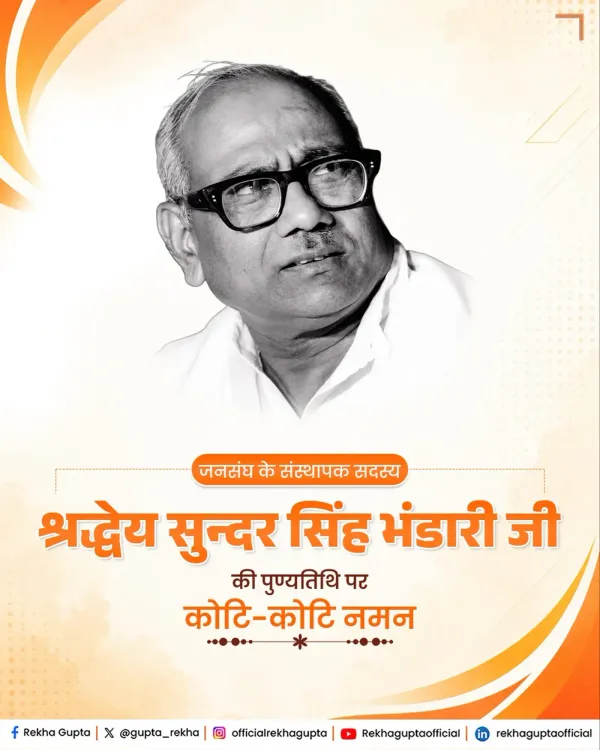
Delhi Chief Minister Rekha Gupta on 22 June 2026 paid tribute to veteran BJP leader Sundar Singh Bhandari on his death anniversary, honouring his pivotal role in building the organisation from the Bharatiya Jana Sangh era to the BJP and praising his national service, organisational dedication, and ideological fidelity.
Key Takeaways
Delhi CM Rekha Gupta posted a Hindi tribute to Sundar Singh Bhandari on his death anniversary on 22 June 2026 .
Bhandari was a veteran RSS pracharak who played a key role in the Bharatiya Jana Sangh and later the BJP .
He served as Governor of Bihar , Rajasthan , and Gujarat .
The BJP was founded in April 1980 as the successor to the Bharatiya Jana Sangh , which dissolved in 1977 .
Gupta's tribute emphasised three values: national service, organisational dedication, and ideological fidelity.
BJP leaders regularly mark Jana Sangh-era anniversaries to reinforce the party's organisational continuity and cadre commitment.
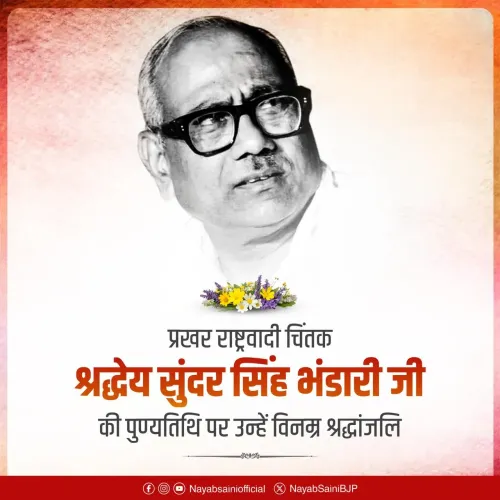
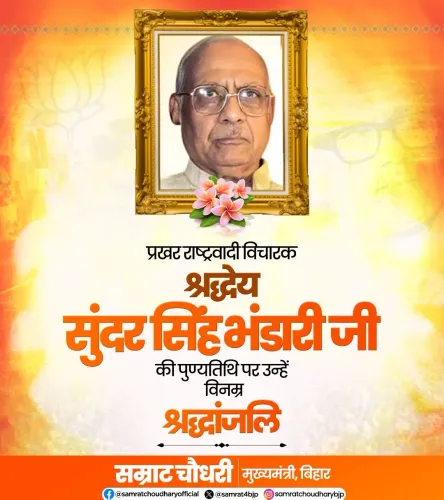
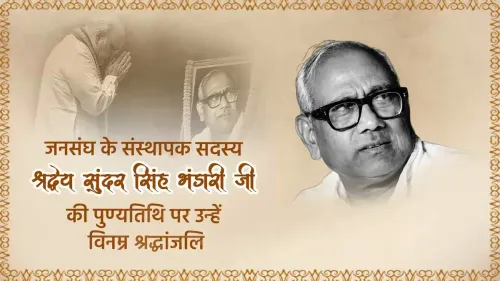
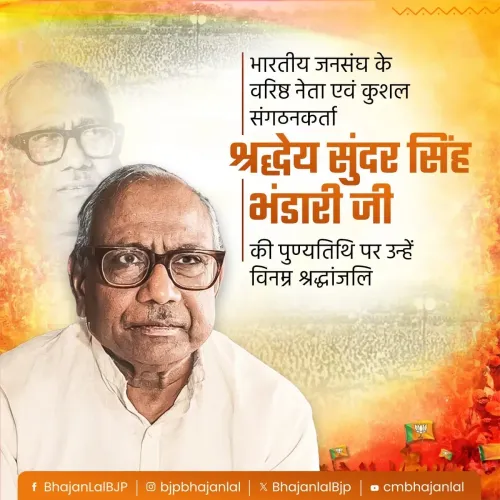
Delhi Chief Minister Rekha Gupta on Monday, 22 June 2026, paid tribute to veteran BJP leader Sundar Singh Bhandari on his death anniversary, honouring his foundational role in building the organisation from the Bharatiya Jana Sangh era to the Bharatiya Janata Party.
Context
Gupta's post, written in Hindi, offered a humble tribute — 'विनम्र श्रद्धांजलि' ['humble homage'] — to Bhandari, describing him as 'श्रद्धेय' ['revered']. She credited him with playing a 'महत्वपूर्ण भूमिका' ['important role'] in organisational construction across the Jana Sangh and BJP periods. The tribute underscores the BJP's practice of publicly commemorating leaders who shaped its ideological and structural foundations.
Bhandari was a veteran RSS pracharak who rose through the ranks of the Bharatiya Jana Sangh, the RSS-linked political party founded in 1951. He later served as Governor of Bihar, Rajasthan, and Gujarat, carrying forward the organisational ethos of the pre-1980 nationalist movement into constitutional roles.
Policy Backdrop
The Bharatiya Jana Sangh dissolved into the Janata Party in 1977 before its cadre regrouped to establish the Bharatiya Janata Party in April 1980. Leaders like Bhandari were central to maintaining ideological continuity and grassroots discipline across that transition. The BJP has consistently positioned itself as the direct institutional heir to the Jana Sangh, and death-anniversary tributes to figures from that era reinforce that narrative.
Gupta's tribute specifically highlights three qualities she attributes to Bhandari: 'राष्ट्रसेवा' ['national service'], 'संगठन के प्रति समर्पण' ['dedication to the organisation'], and 'वैचारिक निष्ठा' ['ideological fidelity']. These are the same values the BJP consistently invokes when framing its organisational identity for current cadre.
Stakeholders and Impact
The tribute is directed primarily at BJP workers and party leadership, reinforcing a sense of generational continuity and shared ideological purpose. Senior functionaries across the party regularly use such commemorations as internal memory-building exercises, reminding younger cadre of the discipline and commitment that defined the pre-1980 organisational period.
As Delhi Chief Minister and a prominent BJP voice in the capital, Gupta's public tribute also signals alignment with the party's broader culture of honouring Jana Sangh-era stalwarts — a practice observed at both the national and state levels during death and birth anniversaries of key figures.
What's Next
BJP units across states are likely to observe similar commemorations on this anniversary, consistent with the party's established pattern of coordinated remembrance for Jana Sangh-era leaders. Organisational workshops or state-level meetings scheduled around this period may also draw on Bhandari's legacy as a model of cadre discipline and ideological commitment. How the party channels such commemorations into active ground-level mobilisation in Delhi will be worth watching as the city's political calendar progresses.
Point of View
Aligning publicly with foundational party icons is also a signal of orthodoxy and loyalty to the broader Sangh ecosystem. The three values she highlights — national service, organisational dedication, ideological fidelity — are not incidental; they are the exact virtues the BJP uses to define model cadre behaviour. Such commemorations function simultaneously as tribute, internal messaging, and a subtle assertion that the party's current leadership is the rightful custodian of that legacy.
NationPress
22 Jun 2026
Frequently Asked Questions
Who was Sundar Singh Bhandari?
Sundar Singh Bhandari was a veteran RSS pracharak and BJP leader who played a key organisational role from the Bharatiya Jana Sangh era onward and later served as Governor of Bihar, Rajasthan, and Gujarat.
Why did Rekha Gupta pay tribute to Sundar Singh Bhandari?
Delhi Chief Minister Rekha Gupta paid tribute on his death anniversary, honouring his foundational contribution to building the BJP from the Bharatiya Jana Sangh era and praising his national service and ideological commitment.
What is the connection between Bharatiya Jana Sangh and BJP?
The Bharatiya Jana Sangh, founded in 1951, dissolved into the Janata Party in 1977. Its cadre regrouped to establish the Bharatiya Janata Party in April 1980, which positions itself as the Jana Sangh's direct successor.
What role did Sundar Singh Bhandari play in the BJP?
Bhandari was instrumental in the organisational construction of the party across the Jana Sangh and BJP periods, and later served as a constitutional functionary as Governor of three states.
Why do BJP leaders regularly tribute Jana Sangh-era figures?
BJP leaders use these commemorations to reinforce organisational continuity, cadre discipline, and ideological lineage, reminding current workers of the values and commitment that defined the party's pre-1980 foundations.